bunmei kaika
the rush to westernize
文明開化(ぶんめいかいか)
In one line
The shortest answer that works
Bunmei kaika was the rapid westernization of Japan in the early Meiji period.
文明開化とは、明治の初めに日本が急速に西洋化した動きのことです。
In 30 seconds
The standard explanation
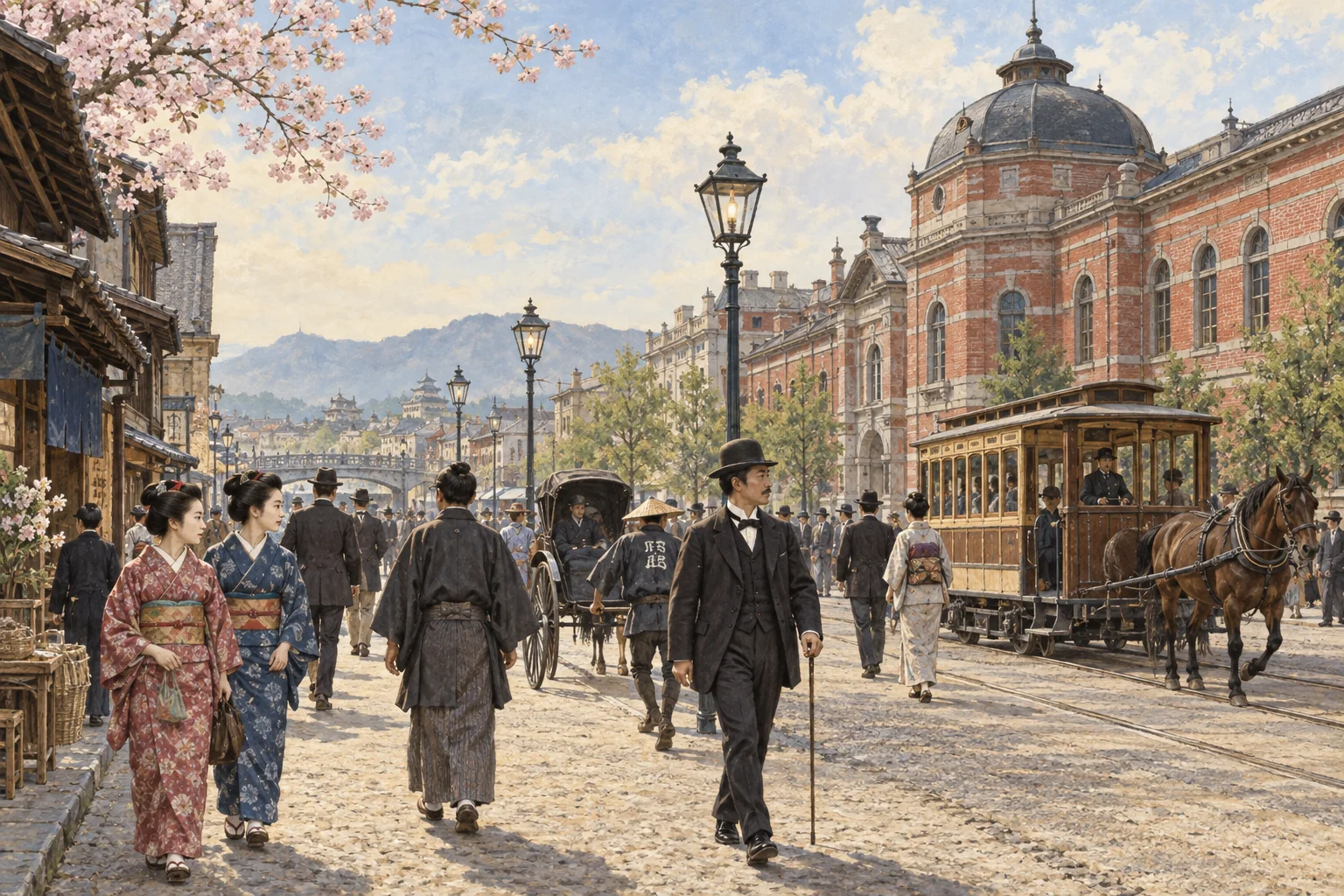
Bunmei kaika means civilization and enlightenment, the slogan for Japan's rapid adoption of Western technology, dress, institutions and habits after 1868. Railways, gas lamps, brick buildings, western clothing, the solar calendar and new schools all arrived within a couple of decades, and the change was concentrated in the cities.
文明開化とは「文明と啓蒙」を意味する言葉で、1868年以降の日本が西洋の技術、服装、制度、習慣を急速に取り入れた動きの標語でした。鉄道、ガス灯、煉瓦の建物、洋服、太陽暦、新しい学校が二十年ほどのうちに入ってきました。変化は都市に集中していました。
As a short speech
A full paragraph you can read aloud
Bunmei kaika, civilization and enlightenment, was the slogan of Japan's first decades after 1868, when the country set out to adopt Western technology and institutions at extraordinary speed. The first railway opened between Shinbashi and Yokohama in 1872.
The solar calendar replaced the old lunisolar one at the start of 1873, so Japan simply skipped most of December 1872. Men were encouraged to cut off the topknot, officials put on western suits, brick streets and gas lamps appeared in Tokyo, and a national school system was set up.
Beef, which most people had not eaten, was promoted as modern food. Two things are worth keeping in view. First, the change was largely urban, and rural life altered far more slowly. Second, many historians link it to security concerns: Japan had seen what happened to China and wanted to avoid the same position.
文明開化は1868年から続く最初の数十年の標語で、この時期の日本は西洋の技術と制度をきわめて速い速度で取り入れようとしました。最初の鉄道は1872年に新橋と横浜の間で開業しました。1873年の初めに太陽暦が旧来の太陰太陽暦に取って代わり、そのため日本は1872年の十二月の大半をそのまま飛ばしました。
男性は髷を切ることを勧められ、官吏は洋服を着るようになり、東京には煉瓦の街路とガス灯が現れ、全国の学校制度が定められました。ほとんどの人が食べていなかった牛肉が、新しい時代の食べ物として勧められました。心に留めておくべきことが二つあります。
第一に、この変化は主に都市のもので、農村の暮らしはずっとゆっくりとしか変わりませんでした。第二に、その背景には安全保障上の危機感があったと多くの歴史家は見ています。日本は中国に起きたことを見ており、同じ立場に置かれることを避けようとしました。
Questions people actually ask
And how to answer them.
Did ordinary people want this?
Reactions were mixed. City dwellers took up new goods quickly, while many rural communities resisted changes such as the new calendar, conscription and compulsory schooling, and there were protests. The government pushed hard from above.
受け止め方はさまざまでした。都市の人々は新しい品を素早く取り入れましたが、多くの農村は新しい暦、徴兵、義務教育といった変化に抵抗し、反対の動きも起きました。政府は上から強く推し進めました。
Why the calendar change?
Partly to align with the countries Japan was dealing with, and partly for government finances. The old calendar would have added a leap month in 1873, and the switch spared the government an extra month of officials' salaries. Both reasons are commonly cited.
ひとつには、日本が交渉していた国々に合わせるためであり、もうひとつは財政のためでした。旧暦のままなら1873年には閏月が入るはずで、切り替えによって官吏の俸給をひと月分払わずに済みました。どちらの理由もよく挙げられます。
Phrases you can use
- The first railway opened in 1872.最初の鉄道は1872年に開業しました。
- Japan switched to the solar calendar in 1873.1873年に太陽暦に切り替えました。
- The change was mostly in the cities.変化は主に都市のものでした。
- Officials started wearing western suits.官吏は洋服を着るようになりました。
Words you need
- to modernize近代化する
- to adopt取り入れる
- compulsory education義務教育
- solar calendar太陽暦
Watch
From YouTubeBackground (Japanese)
1872年に新橋と横浜の間で日本初の鉄道が開業し、1873年から太陽暦が用いられるようになりました。明治5年12月3日が明治6年1月1日とされたため、その年の十二月は途中で終わっています。「散切り頭を叩いてみれば文明開化の音がする」という俗謡が残っています。牛鍋屋が流行し、煉瓦造りの銀座通りが造られました。一方で、洋服はまず官吏や軍から広まり、庶民の日常が洋装になるには長い時間がかかりました。