shugendo
the mountain ascetic tradition and its yamabushi
修験道(しゅげんどう)
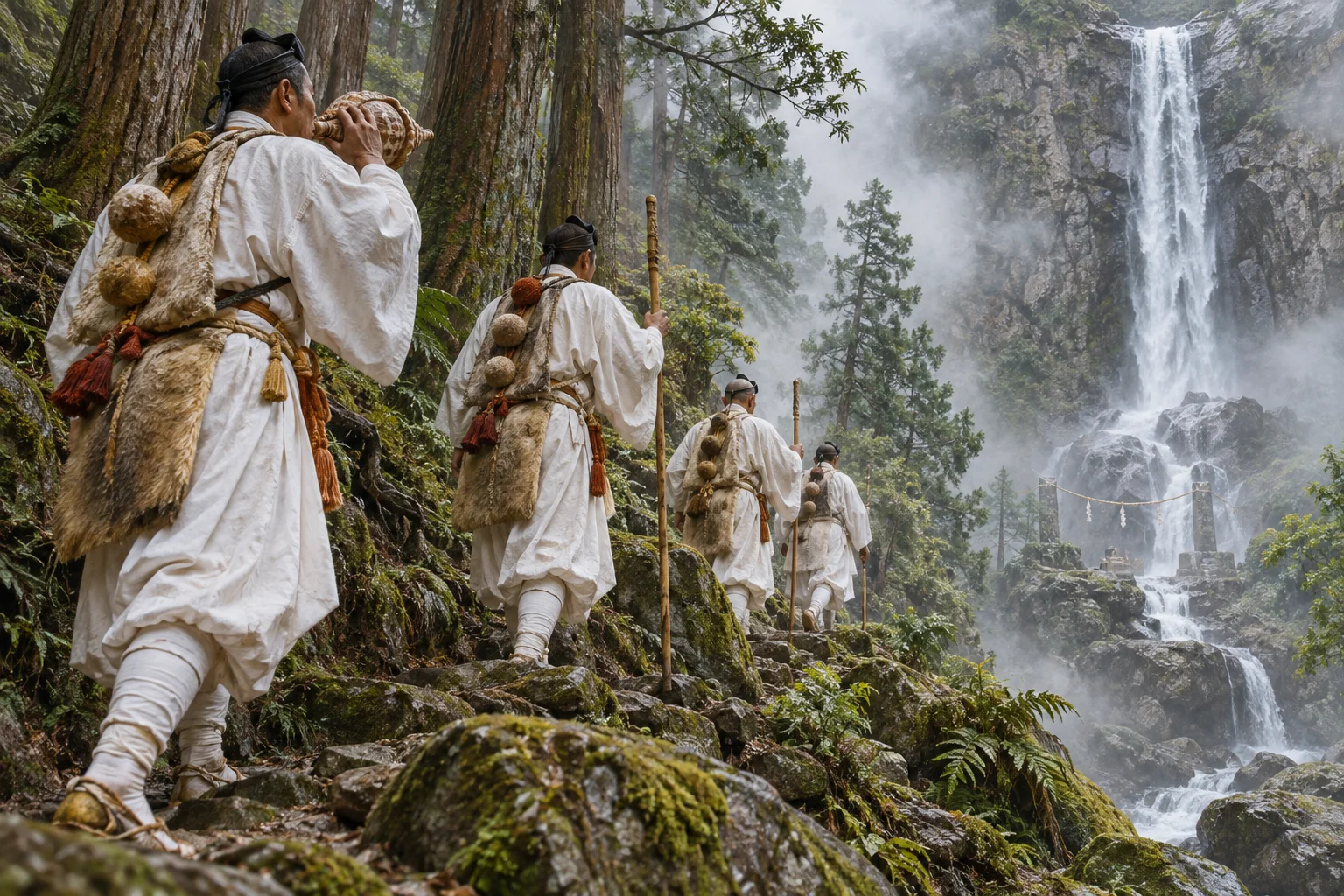
In one line
The shortest answer that works
Shugendo is a mountain training tradition whose practitioners walk sacred peaks to gain spiritual power.
修験道とは、聖なる山を歩いて力を得ようとする、山の修行の道です。
In 30 seconds
The standard explanation
Shugendo combines mountain worship, esoteric Buddhism and Shinto into a practice of walking and enduring. Its practitioners are called yamabushi, those who lie down in the mountains, and they wear a stole decorated with fluffy pompoms and blow a conch shell. The training is physical rather than doctrinal: climbing, cold water, fasting, and passing through places that stand for death and rebirth.
修験道は、山への信仰と密教と神道が結びついた、歩いて耐える修行の道です。行う人を山伏と呼びます。山に伏す者という意味で、梵天という房のついた結袈裟をかけ、法螺貝を吹きます。修行は教義よりも体を使うもので、登り、冷水に入り、断食し、死と再生を表す場所を通り抜けます。
As a short speech
A full paragraph you can read aloud
Shugendo is one of the clearest examples of how Japanese religion mixes. It grew out of the belief that mountains are sacred, absorbed esoteric Buddhism, and kept Shinto rites, so asking whether it is Buddhist or Shinto misses the point.
Its practitioners, yamabushi, are known by their conch shell horn, a stole with pompoms and a pilgrim's staff. Tradition credits its founding to a seventh-century ascetic called En no Gyoja, though what is told about him is legend rather than record.
The main training grounds are the Dewa Sanzan in the north and the mountains between Yoshino and Kumano in the south. The Meiji government banned the tradition in 1872 and its temples were absorbed into other schools, but it was revived after 1945. Anyone can now join a short training walk, and several temples and shrines run them for beginners.
修験道は、日本の宗教がどう混ざり合うかを、もっともはっきり示す例の一つです。山は聖なるものだという信仰から育ち、密教を取り込み、神道の祭りも保ちました。だから仏教か神道かと問うこと自体が的を外しています。
行う人は山伏と呼ばれ、法螺貝、房のついた結袈裟、金剛杖で見分けがつきます。開祖は七世紀の行者、役小角とされますが、その人について語られることは記録というより伝説です。
主な行場は、北の出羽三山と、南の吉野から熊野にかけての山々です。明治政府は1872年にこれを禁じ、寺は他の宗派に吸収されましたが、戦後に復興しました。今は短い修行体験に誰でも加われ、初心者向けの行程を用意している寺社もあります。
Questions people actually ask
And how to answer them.
Is it Buddhist or Shinto?
Both, and that is the point. It formed while the two were merged, so a yamabushi may recite a Buddhist mantra at a Shinto shrine on the same mountain. The Meiji separation of the two never fitted it well.
どちらでもあり、そこが要点です。神と仏が一体だった時代に形づくられたため、山伏は同じ山の神社で仏教の真言を唱えることもあります。明治の神仏分離は、この道にはうまく当てはまりませんでした。
Can a visitor try it?
Yes. Temples, shrines and pilgrim lodges in the Dewa Sanzan and around Yoshino run one-day and overnight training walks, some in English. You wear white, walk a long way, and eat simply; nothing dangerous is required of beginners.
できます。出羽三山や吉野のあたりの寺社や宿坊が、日帰りや一泊の修行体験を行っており、英語で受けられるものもあります。白い装束で長く歩き、質素に食べます。初心者に危ないことは求められません。
Are women allowed?
Almost everywhere, yes, and women train as yamabushi. One exception remains: the summit area of Mount Sanjogatake in Nara still bars women, a rule that is openly debated in Japan rather than settled.
ほとんどの場所で入れますし、女性の山伏もいます。例外は奈良の山上ヶ岳の山頂付近で、今も女人禁制が続いています。これは日本でも決着のついた話ではなく、議論が続いています。
Phrases you can use
- Those white-robed walkers are yamabushi.あの白い装束の人たちは山伏です。
- The horn is a conch shell.あの角笛は法螺貝です。
- The mountain itself is the object of worship.山そのものが信仰の対象です。
- Beginners can join a one-day walk.初心者向けの日帰りの行もあります。
- It is neither purely Buddhist nor purely Shinto.仏教とも神道とも言い切れないものです。
Words you need
- mountain ascetic山伏
- conch shell horn法螺貝
- training ground行場
- pilgrim's staff金剛杖
- esoteric Buddhism密教
Watch
From YouTubeBackground (Japanese)
修験道は、山を聖なるものとする信仰に密教と神道が重なって生まれた道で、開祖は七世紀の役小角と伝えられますが、その人物像の多くは伝説です。行う人を山伏と呼び、法螺貝を吹き、金剛杖を持ちます。主な行場は出羽三山と、吉野から熊野にかけての大峰です。明治政府は1872年に修験道を廃止し、寺院は天台宗や真言宗に組み入れられました。復興したのは戦後です。紀伊山地の霊場と参詣道は2004年に世界遺産に登録されています。