mikkyo
esoteric Buddhism in Japan
密教(みっきょう)
In one line
The shortest answer that works
Mikkyo is the esoteric Buddhism brought from China in the 800s, transmitted only from master to disciple.
密教は九世紀に中国から伝えられた仏教で、師から弟子へのみ伝えられる教えです。
In 30 seconds
The standard explanation
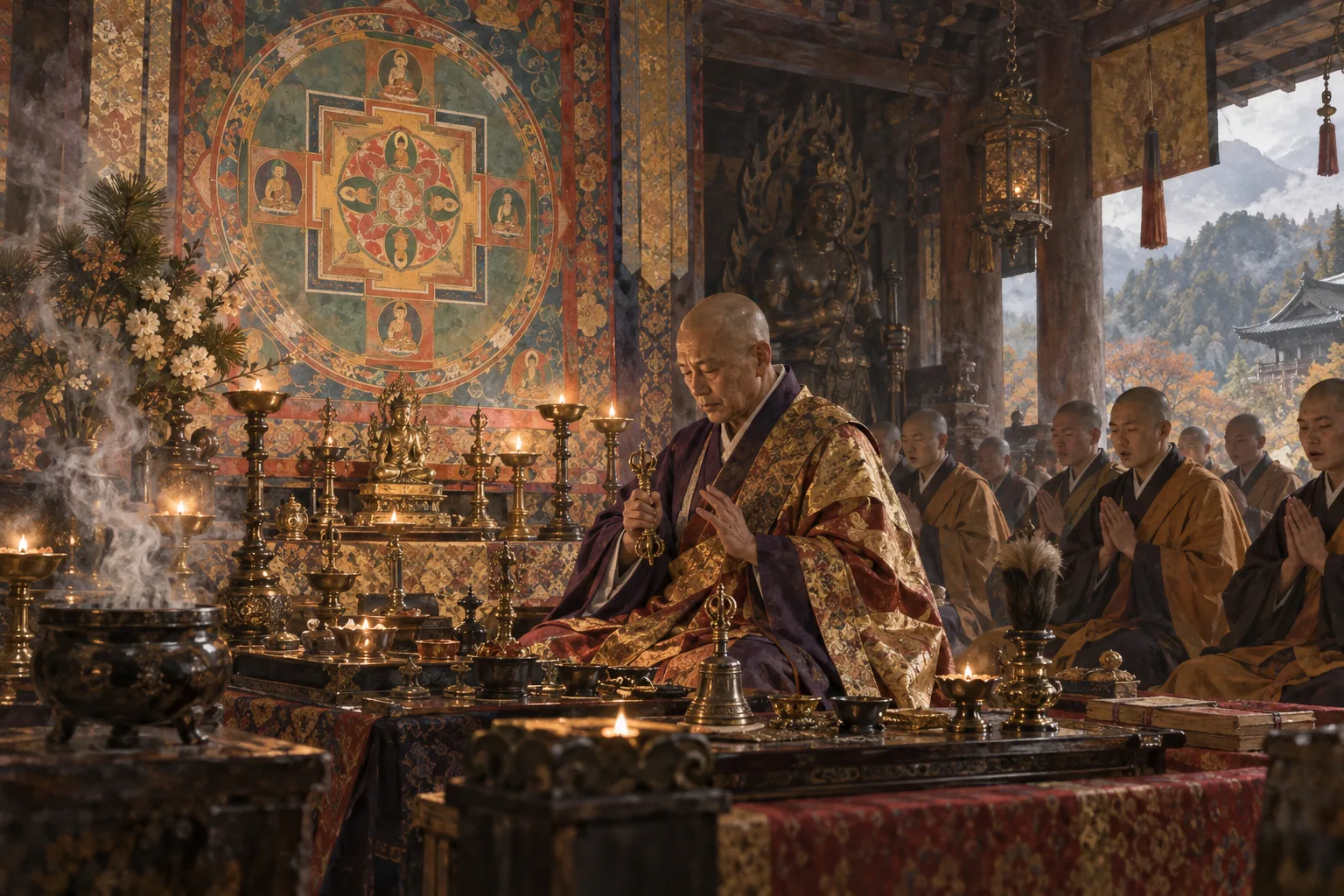
Esoteric Buddhism was brought to Japan in the early ninth century, above all by Kukai, who founded the Shingon school. Its practice uses the body, speech and mind together: forming gestures with the hands, reciting formulas, and holding an image in the mind. Its teachings are transmitted directly from master to disciple rather than learned from texts alone, which is what the word esoteric means here.
密教は九世紀の初めに日本へ伝えられました。中心になったのは、真言宗を開いた空海です。修行は身と口と意を同時に用います。手で印を結び、真言を唱え、心に仏を思い描く。教えは書物だけで学ぶものではなく、師から弟子へ直接伝えられます。密という語が指すのは、その伝え方です。
As a short speech
A full paragraph you can read aloud
Esoteric Buddhism gives Japan much of what a visitor finds visually striking in its temples. Kukai studied in Tang China and returned in 806 with a complete transmission, founding the Shingon school and its center on Mount Koya; Saicho brought related teachings into the Tendai school at about the same time.
The practice is unusual in that it works on three channels at once, the hands forming precise gestures, the mouth reciting formulas in Sanskrit sounds, and the mind holding a particular image, the idea being that a practitioner can align with the Buddha in this body rather than over countless lifetimes. Two great mandalas map the cosmos as an arrangement of Buddhas, and the fire ritual, in which requests written on wooden sticks are burned before a wrathful deity, is performed publicly and is easy to attend. The angry-faced statues, the mandalas and the fire are all from this stream.
寺で目を引くものの多くは、密教から来ています。空海は唐で学び、806年に完全な伝授を携えて帰り、真言宗を開いて高野山を拠点としました。ほぼ同じころ、最澄も関連する教えを天台宗に取り入れています。
この修行が変わっているのは、三つの道筋を同時に使う点です。手は正確な印を結び、口は梵語の音による真言を唱え、心は特定の仏を思い描く。数えきれない生を経るのではなく、この身のままで仏と重なりうる、という考えによるものです。
二つの大きな曼荼羅が、仏の配置として世界を描きます。護摩は、願いを書いた木を忿怒の姿の仏の前で焚く儀礼で、公開されることも多く、参列しやすいものです。怒りの相の像も、曼荼羅も、炎も、すべてこの流れにあります。
Questions people actually ask
And how to answer them.
Why is it called secret?
Because the transmission is personal. Rituals and their meanings are handed from master to disciple with initiation, on the view that they cannot be understood correctly from a text alone. Much of it is published now, but the initiation still matters.
伝え方が個人から個人へだからです。儀礼とその意味は、灌頂を経て師から弟子へ渡されます。書物だけでは正しく理解できない、という考えによります。今は多くが公刊されていますが、伝授を受けることの意味は変わっていません。
Can I take part in anything?
Yes. Fire rituals are held on set days at many temples and visitors may sit in and submit a wooden stick with a wish. Mount Koya runs temple lodgings where you can join the morning service.
あります。護摩は日を決めて行う寺が多く、参列して護摩木に願いを書いて納められます。高野山には宿坊があり、朝のお勤めに加われます。
How is it different from Zen?
Almost opposite in method. Zen strips away images and ritual and sits; esoteric Buddhism piles on gesture, sound and imagery and works through them. Both arrived from China and both are mainstream in Japan.
やり方はほぼ正反対です。禅は像も儀礼も削ぎ落として坐ります。密教は所作と音と像を重ね、それを通して進みます。どちらも中国から入り、どちらも日本の主流です。
Phrases you can use
- This is esoteric Buddhism.これは密教です。
- The teaching passes from master to disciple.教えは師から弟子へ伝えられます。
- The mandala maps the whole cosmos.曼荼羅は世界の全体を描いています。
- Wishes are written and then burned.願いを書いて焚き上げます。
- Kukai brought it back in 806.空海が806年に持ち帰りました。
Words you need
- esoteric Buddhism密教
- hand gesture印
- sacred formula真言
- fire ritual護摩
- initiation灌頂
Watch
From YouTubeBackground (Japanese)
密教は、空海が唐で学び806年に帰国して開いた真言宗と、最澄の天台宗に取り入れられた教えを指します。身に印を結び、口に真言を唱え、意に仏を観じる三密の修行を柱とし、この身のままで仏になれるという即身成仏を説きます。胎蔵界と金剛界の両界曼荼羅が世界観を図示し、護摩は炎で願いを届ける儀礼です。不動明王をはじめとする明王の像が日本に広まったのも密教の影響で、高野山は今も真言宗の中心です。