sakurajima
the active volcano that drops ash on a city of 600,000
桜島(さくらじま)
In one line
The shortest answer that works
Sakurajima is an active volcano in Kagoshima Bay, a few kilometers from a city that often lives with its ash.
桜島とは、鹿児島湾に浮かぶ活火山で、数キロ先の市街地にしばしば灰を降らせる山です。
In 30 seconds
The standard explanation
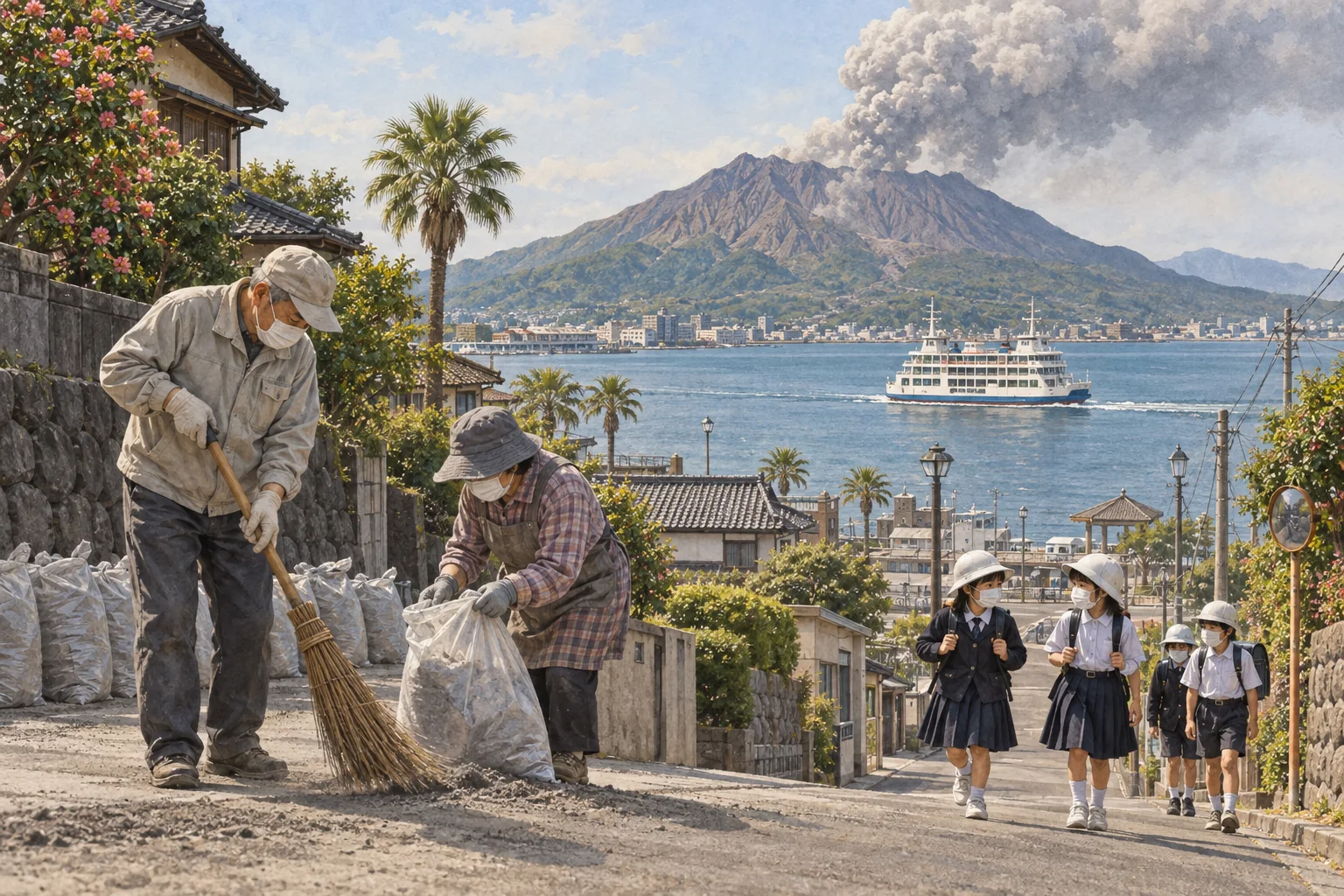
Sakurajima erupts frequently — in some years more than a hundred times — and sits directly across the bay from central Kagoshima. Ash falls on the city, so there are ash collection bags, street sweepers and forecasts of which way the ash will blow. It was an island until the 1914 eruption, whose lava joined it to the peninsula. People farm on it and live on it.
桜島は頻繁に噴火し、年に百回を超える年もあります。鹿児島の市街地は湾をはさんですぐ向かいです。灰が街に降るので、灰を入れる袋があり、道路清掃車が走り、灰がどちらへ流れるかの予報も出ます。もとは島でしたが、1914年の噴火で流れた溶岩が半島とつながりました。いまも人が住み、畑を作っています。
As a short speech
A full paragraph you can read aloud
Sakurajima is the thing visitors to Kagoshima cannot stop looking at: an active volcano a few kilometers across the bay from a city of about six hundred thousand people, erupting so regularly that the local news carries an ash forecast the way other places carry pollen counts. What surprises people is how ordinary the arrangement is.
Households get municipal bags for sweeping up ash and put them out for collection; cars keep a brush; school pools get cleaned; and when the wind turns, people check which district will get it. It has not always been quiet, either. The eruption of 1914 was large enough that its lava flow filled the strait on the eastern side, so what had been an island became a peninsula, and villages were buried.
You can visit: ferries run from Kagoshima city around the clock and take about fifteen minutes, there are observation points, hot springs and a buried shrine gateway standing with only its top above the ash. Farms on the slopes grow radishes that get very large and small sweet oranges, both sold as local products.
鹿児島を訪ねた人が、目を離せなくなるのが桜島です。六十万人ほどが暮らす街から湾をはさんで数キロの活火山で、あまりに規則正しく噴火するので、地元の放送は、よその土地が花粉を伝えるように、灰の予報を伝えます。人が驚くのは、その付き合い方がいかにふつうかという点です。
各家には市の配る灰の袋があり、掃き集めて出します。車にはブラシを積み、学校のプールは掃除され、風向きが変われば、どの地区に降るかを確かめます。静かな山だったわけでもありません。1914年(大正3年)の噴火は大きく、溶岩が東側の海峡を埋めたため、島だったものが半島とつながり、集落が埋もれました。
訪ねることもできます。鹿児島市からフェリーが終日動いていて、十五分ほど。展望所があり、温泉があり、灰に埋もれて上部だけが出ている鳥居が立っています。斜面の畑では、非常に大きくなる大根と、小さな甘い蜜柑が作られ、どちらも名産として売られています。
Questions people actually ask
And how to answer them.
Is it dangerous to visit?
The island is open and inhabited, with an exclusion zone around the crater and a warning level published daily. Visits follow the current level, and the ferry and roads operate normally.
島は開かれていて人も住んでいます。火口の周囲は立入禁止で、噴火警戒レベルが毎日公表されます。見学はその時のレベルに従うもので、フェリーも道路もふだん通り動いています。
What do people do about the ash?
Kagoshima city distributes yellow bags for it and collects them, road sweepers run after heavy falls, and residents keep the laundry indoors when the wind is blowing their way.
鹿児島市が黄色い袋を配って回収し、多く降ったあとは清掃車が走ります。風がこちらに向くときは、洗濯物を外に干しません。
Does it ever stop erupting?
Activity rises and falls. There have been quieter stretches of months, and years with several hundred explosive events. It is one of the most closely monitored volcanoes in Japan.
活動には波があります。数か月静かなこともあれば、爆発的な噴火が年に数百回に及ぶ年もあります。日本でも特に細かく観測されている火山の一つです。
A common misunderstanding
MYTHSakurajima is an island.
FACTIt was until 1914, when lava from a major eruption filled the strait on its eastern side and joined it to the Osumi peninsula. The name stayed.
Phrases you can use
- It's an active volcano across the bay from the city.街から湾をはさんだ活火山です。
- Ash often falls on the city.灰はよく街に降ります。
- The city hands out bags for collecting it.市が灰を集める袋を配っています。
- It stopped being an island in 1914.1914年に島でなくなりました。
- The ferry takes about fifteen minutes.フェリーで十五分ほどです。
Words you need
- active volcano活火山
- volcanic ash火山灰
- lava flow溶岩流
- eruption alert level噴火警戒レベル
- buried torii gate埋没鳥居
Watch
From YouTubeBackground (Japanese)
1914年(大正3年)の大正噴火により、桜島は大隅半島と陸続きになった。黒神地区には、この噴火で首の部分まで埋まった鳥居が「黒神埋没鳥居」として保存されている。鹿児島市は降灰を集めるための「克灰袋」を各世帯に配り、回収している。桜島大根はギネス世界記録に認定された世界一重い大根として、桜島小みかんは小粒で甘い蜜柑として知られ、どちらも地域の名産になっている。