ryu
the East Asian dragon
龍(りゅう)
In one line
The shortest answer that works
Ryu, or the Japanese dragon, is a wingless water deity, quite unlike the European dragon.
龍とは、翼を持たない水の神で、ヨーロッパの竜とはかなり違う生き物です。
In 30 seconds
The standard explanation
East Asian dragons are long serpentine creatures associated with water, rain and rivers. They have no wings, do not breathe fire, and are generally benevolent or at least powerful rather than evil. In Japan they appear on temple ceilings, at the water basins of shrines, and in the names of years.
東アジアの龍は蛇のように長い生き物で、水と雨と川に結びついています。翼はなく、火も吐かず、邪悪というより、おおむね善良か、少なくとも力ある存在です。日本では寺の天井、神社の手水舎、干支の名に現れます。
As a short speech
A full paragraph you can read aloud
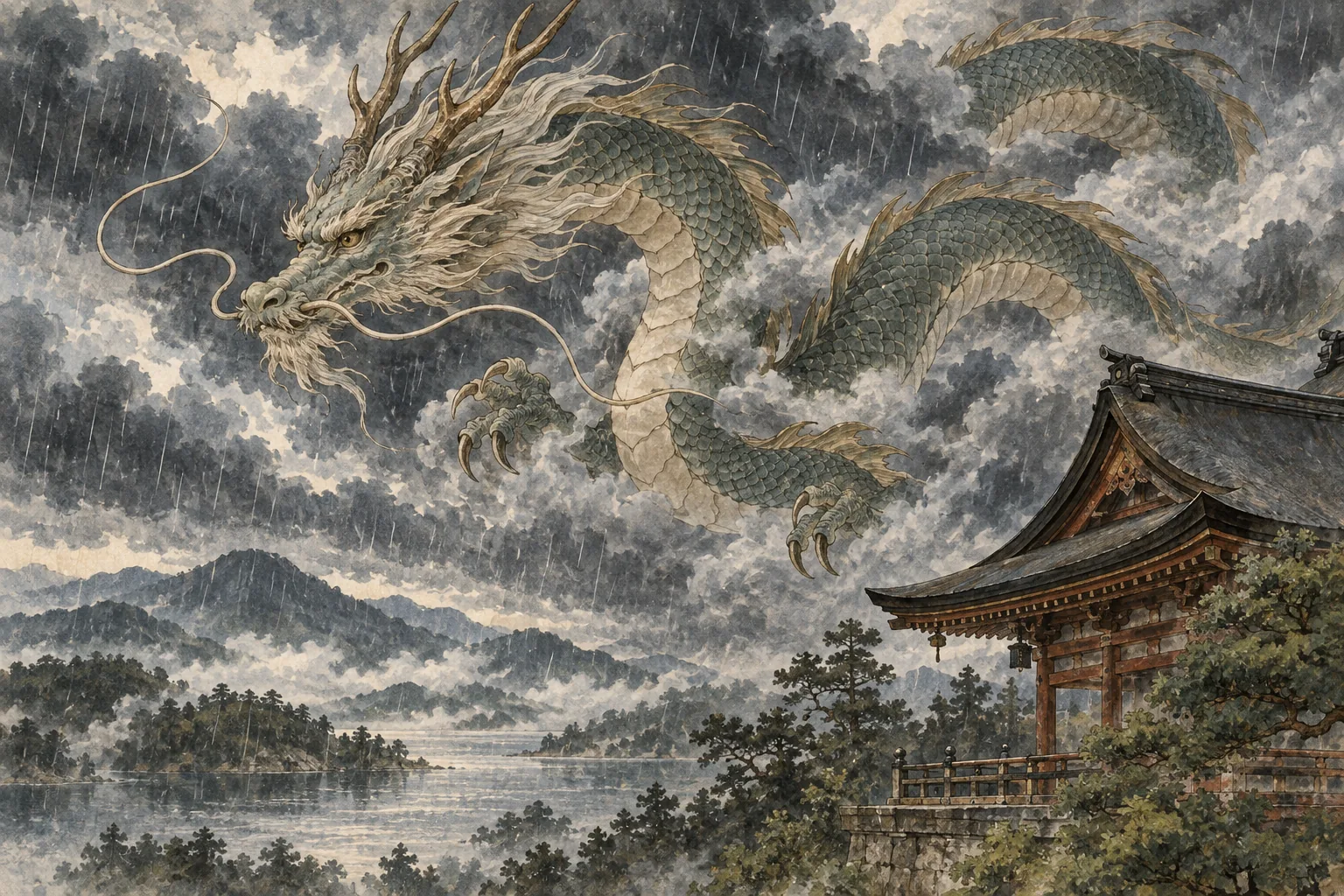
The word dragon does a lot of damage here, because the East Asian dragon and the European one are not the same animal. The Japanese dragon is long and serpentine, with four short legs, deer-like horns and whiskers, and no wings at all; it moves through air by power rather than by flying. It does not breathe fire.
It is a creature of water: of rain, rivers, lakes and the sea, which in a country dependent on rice made it a deity to petition rather than a monster to kill. This is why dragons are painted on the ceilings of temple halls, where they are said to guard against fire, and why the spouts at shrine water basins are often dragon heads.
Stories of a hero slaying one are rare, and the best known, the god Susanoo killing the eight-headed Yamata no Orochi, is about a giant serpent rather than a rain dragon. A dragon in a Japanese tale is more likely to be a lord of a lake who must be placated, or a being who grants a wish, or a form a deity takes.
ここでは「ドラゴン」という語がかなりの害をなします。東アジアの龍とヨーロッパの竜は同じ生き物ではないからです。日本の龍は蛇のように長く、短い四本の足、鹿のような角と髭を持ち、翼はまったくありません。飛ぶのではなく、力によって空を行きます。
火は吐きません。水の生き物です。雨、川、湖、海の。米に頼る国では、それは倒すべき怪物ではなく、願う相手としての神でした。だから寺の堂の天井に龍が描かれ、火災を防ぐとされるのであり、神社の手水舎の注ぎ口が龍の頭であることが多いのです。
英雄が竜を退治する話は少なく、最も有名なスサノオのヤマタノオロチ退治も、雨の龍というより大蛇の話です。日本の話に出てくる龍は、なだめるべき湖の主であるか、願いをかなえる存在であるか、神が取る姿であることのほうがずっと多いのです。
Questions people actually ask
And how to answer them.
Why no wings?
Because the East Asian dragon was never conceived as a flying reptile. It is a water spirit that ascends and descends with clouds and rain, and artists show it moving through cloud. Wings would be a European addition.
東アジアの龍は、そもそも飛ぶ爬虫類として考えられていないからです。雲と雨とともに昇り降りする水の霊であり、絵師は雲の中を進む姿で描きます。翼はヨーロッパ側の付け足しです。
Why are dragons painted on temple ceilings?
Because a dragon commands water, and a building made of wood fears fire. The painting is understood as protection. The most famous ones are in the lecture halls of Zen temples in Kyoto and are visible to visitors.
龍は水を司り、木の建物は火を恐れるからです。その絵は守りとして理解されています。よく知られているのは京都の禅寺の法堂にあるもので、拝観すれば見ることができます。
A common misunderstanding
MYTHJapanese dragons are the same as Western dragons.
FACTThey have no wings, do not breathe fire, and are water deities rather than monsters. Dragon-slaying heroes are rare in Japanese tradition.
Phrases you can use
- It has no wings.翼はありません。
- It doesn't breathe fire.火は吐きません。
- It's a deity of water and rain.水と雨の神です。
- That's why it's painted on the ceiling.だから天井に描かれています。
Words you need
- dragon龍
- scale (on skin)鱗
- rain雨
- ceiling painting天井画
Watch
From YouTubeBackground (Japanese)
龍は十二支の五番目で、実在しない動物が入っているのは龍だけです。京都の建仁寺や南禅寺など、禅寺の法堂の天井には大きな龍の絵があり、火を防ぐと説明されます。神社の手水舎の注ぎ口が龍であるのは、水を司る存在だからです。雨乞いの神事で龍に祈る例も各地にあります。日本語の「竜」と「龍」はどちらも使われ、人名や社名では「龍」の字が好まれる傾向があります。