netsuke
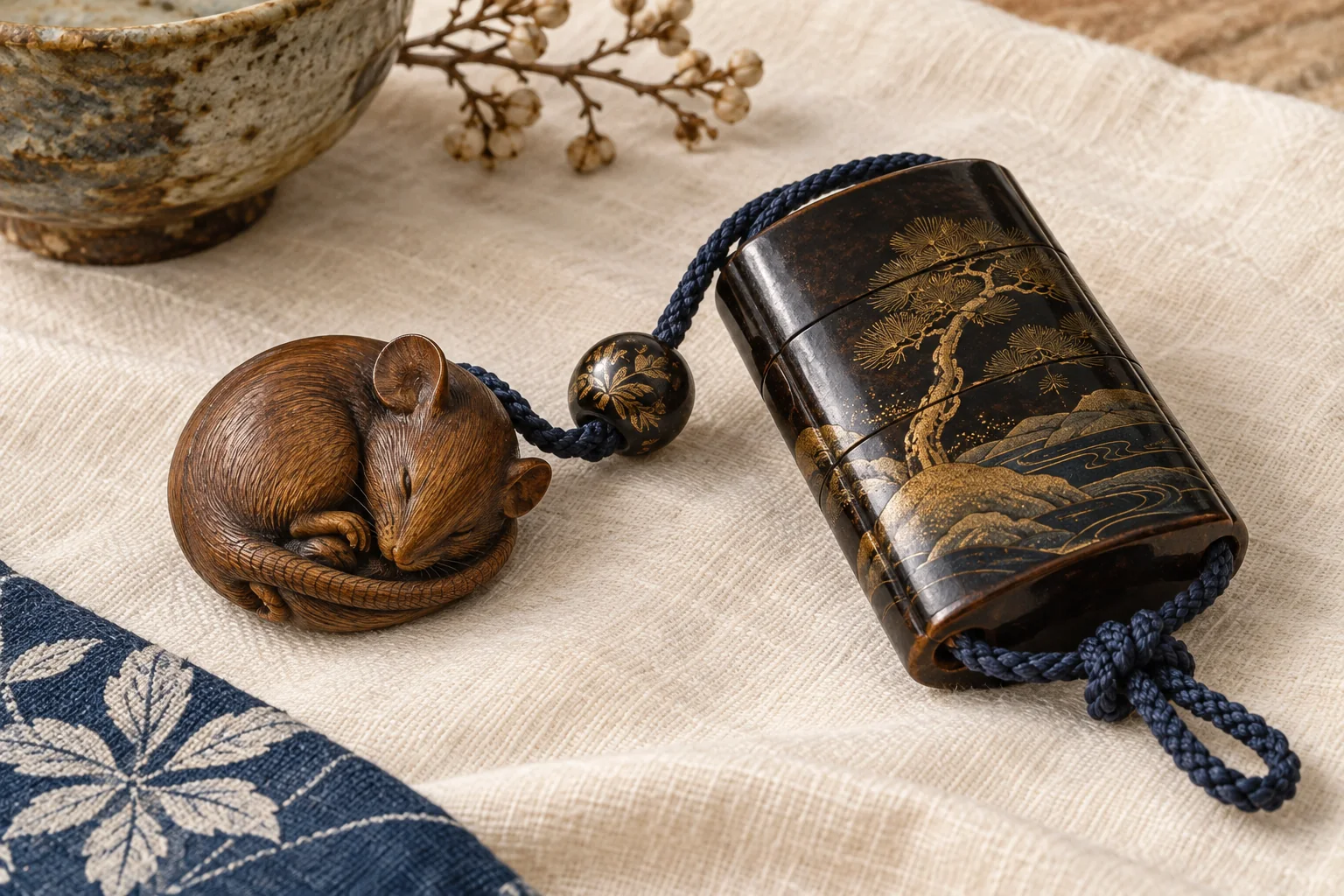
a small carved toggle once used to hang a pouch or case from a kimono sash
根付(ねつけ)
In one line
The shortest answer that works
Netsuke are carved toggles once used to hang a pouch from a kimono sash, now collected as sculpture.
根付とは、着物の帯から袋を吊るすための小さな彫刻の留め具で、今は美術品として集められています。
In 30 seconds
The standard explanation
A netsuke is a small carved toggle, usually of wood or ivory, that solved a real problem: a kimono has no pockets. A cord ran from a pouch, an inro medicine case or a tobacco pouch, up over the obi sash, and ended in a netsuke small enough to catch against the sash and stop the whole thing from sliding off. Early netsuke were plain and functional, but by the late Edo period they had become intricate miniature sculptures carved into animals, folk tales and everyday scenes, prized as art in their own right, especially abroad.
根付とは、木や象牙などで作られた小さな彫刻の留め具で、着物にはポケットがないという現実の問題を解決するために生まれました。印籠という薬入れやたばこ入れなどの小物に付けた紐は、帯の上を通り、帯に引っかかって全体が滑り落ちないよう、根付という小さな留め具で終わります。初期の根付は簡素で実用一辺倒でしたが、江戸時代後期になると、動物や昔話、日常の場面を彫り込んだ精巧な小さな彫刻へと発展し、特に海外で、それ自体が美術品として珍重されるようになりました。
As a short speech
A full paragraph you can read aloud
A netsuke solves a problem that doesn't exist in Western clothing: a kimono has no pockets. Men who needed to carry small essentials, tobacco, a seal, a medicine case called an inro, hung them from the obi sash on a cord that ended in a netsuke, a carved toggle that rested on top of the sash and held everything in place without a stitch or clasp.
What began as a purely practical fastener in the early Edo period grew, over roughly two centuries, into a detailed miniature art form, with carvers working animals, deities and folk-tale scenes into ivory, boxwood or lacquer small enough to close a fist around. Western collectors discovered them enthusiastically in the nineteenth century, and today, as fewer people wear kimono daily, netsuke live mostly in museum cases and private collections rather than on anyone's sash.
根付は、洋服にはそもそも存在しない問題を解決するために生まれました。着物にはポケットがないのです。たばこ入れや印章、印籠と呼ばれる薬入れなど、小物を持ち歩きたい男性は、それらを紐で帯につるし、その紐の先を、帯の上端に引っかかる根付で締めくくりました。
縫い目も留め具も使わずに、全体をその場に留めておくためです。江戸時代初期には純粋に実用的な留め具だったものが、その後およそ二百年をかけて、精巧な小さな彫刻の芸術へと育っていきました。彫り師たちは、動物や神仏、昔話の場面を、拳の中に収まるほどの大きさの象牙やつげ、漆の中に彫り込みました。
19世紀には西洋の収集家たちが夢中になってこれを見つけ出し、今日、着物を日常的に着る人が減るにつれ、根付はもう誰かの帯の上ではなく、多くが美術館の展示ケースや個人の収集の中で暮らしています。
Questions people actually ask
And how to answer them.
What exactly did a netsuke do?
It was the toggle at the end of a cord that held a pouch, tobacco case or medicine box hanging from the obi sash; since a kimono has no pockets, the netsuke let men carry small items by catching against the top of the sash instead.
帯から吊るす巾着やたばこ入れ、薬入れなどの紐の先につける留め具でした。着物にはポケットがないため、根付が帯の上部に引っかかることで、男性は小物を持ち歩くことができました。
Why did netsuke become so elaborate if they were just a fastener?
As Edo-period craftsmen competed for wealthy patrons, plain toggles gave way to detailed miniature carvings of animals, folklore and humor, turning a practical necessity into a genuine art form collected for its own sake.
江戸時代の職人たちが裕福な客を奪い合ううちに、簡素な留め具は動物や伝承、洒落を彫り込んだ精巧な小さな彫刻へと変わっていき、実用の必需品が、それ自体を集める価値のある芸術になりました。
Do people still wear netsuke today?
Almost nobody wears one functionally anymore, since kimono are rarely everyday wear and modern bags have pockets, but original and contemporary netsuke are actively collected, and some are still made purely as sculpture rather than for use.
着物が日常着でなくなり、現代の鞄にはポケットもあるため、実用として身につける人はほとんどいません。しかし古い根付も現代作家の根付も熱心に集められており、使うためではなく彫刻として今も作られているものがあります。
A common misunderstanding
MYTHNetsuke were purely decorative jewelry, like a brooch.
FACTThey started as a functional necessity, the toggle that let a pocketless kimono carry a hanging pouch or case without it sliding off the sash, and only became prized purely as art later on.
Phrases you can use
- This netsuke is carved from ivory.この根付は象牙で彫られています。
- It was tied to a cord and rested on top of the sash.紐の先に付け、帯の上に引っかけて使いました。
- Museums around the world collect netsuke.世界中の美術館が根付を収集しています。
- Kimono have no pockets, so people carried things this way.着物にはポケットがないため、こうして物を持ち歩きました。
- Some contemporary carvers still make netsuke.今も根付を彫り続ける現代の作家がいます。
Words you need
- carved toggle根付
- medicine case (hung from the sash)印籠
- sash帯
- carver彫り師
- boxwoodつげ
Watch
From YouTubeBackground (Japanese)
根付は、印籠やたばこ入れなどを帯から吊るす紐の先に付ける留め具として、江戸時代に発達したとされる。当初は簡素な木片や貝殻が使われたが、江戸後期には象牙やつげ、漆などを使った精巧な彫刻が作られるようになり、動物や神仏、故事にちなんだ意匠が好まれた。明治になると着物姿の男性が減り実用の需要は薄れたが、19世紀後半に西洋の収集家が「netsuke」として熱心に集め始め、今では大英博物館などにも多数所蔵されている。現代でも根付だけを専門に彫る作家がいる。