nakai
the ryokan staff member who attends to your room and meals
仲居(なかい)
In one line
The shortest answer that works
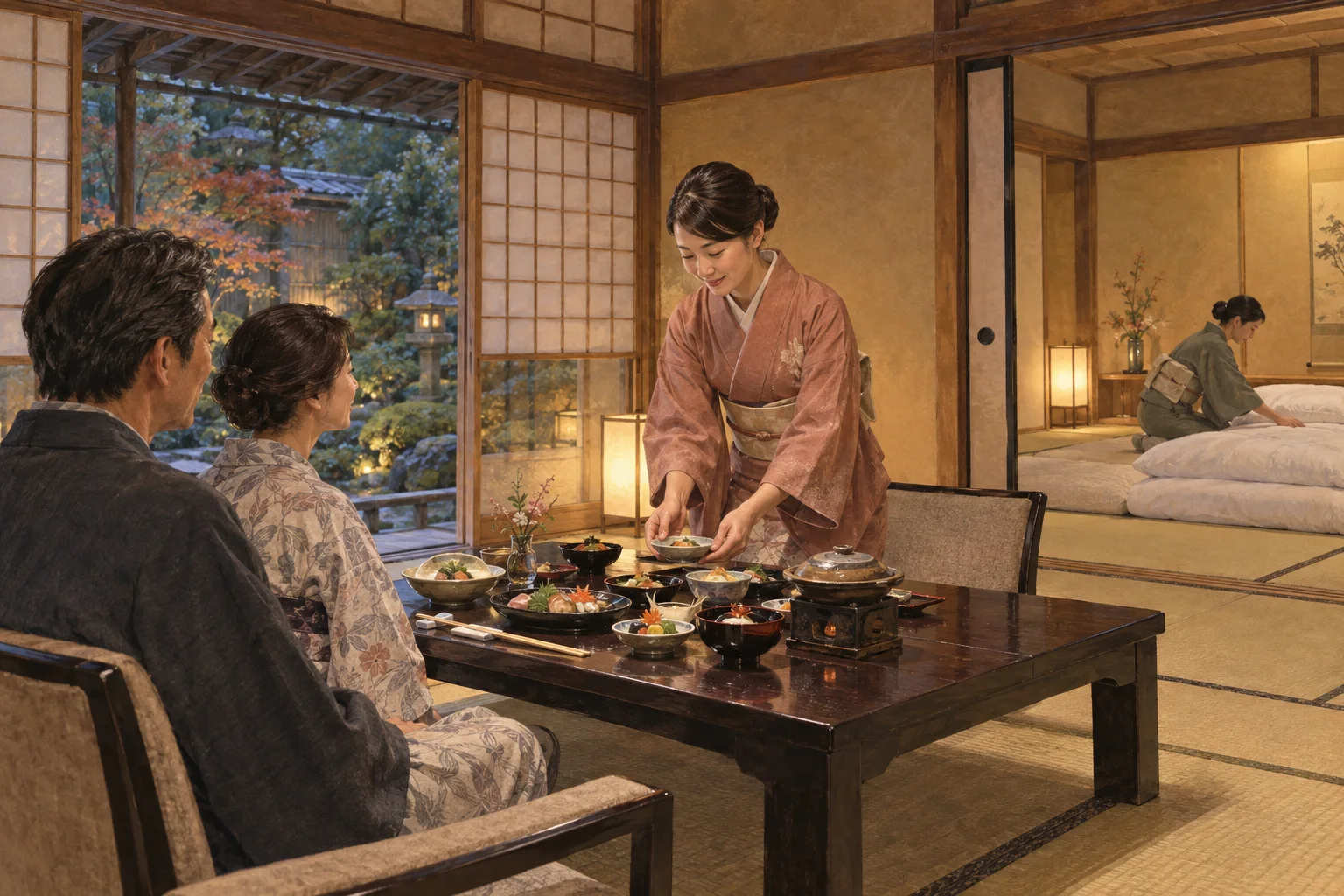
A nakai is the ryokan staff member, often in kimono, who looks after your room and meals.
仲居とは、旅館で客室の世話や食事の配膳を担う、着物姿で働くことが多いスタッフのことです。
In 30 seconds
The standard explanation
A nakai is the staff member at a traditional ryokan who looks after a guest's stay: greeting arrivals, serving meals in the room, and laying out the futon at night. At many ryokan, one nakai is assigned to the same guests for their whole stay, which makes the service feel personal rather than like a hotel. They usually wear kimono, but they're hotel staff, not entertainers — a common point of confusion for first-time visitors.
仲居とは、伝統的な旅館で宿泊客の世話をするスタッフで、到着時の出迎え、部屋や食事処での食事の給仕、夜の布団敷きなどを担当します。多くの旅館では、滞在中ずっと同じ仲居が特定の客を担当するため、ホテルとは違う、個人的なもてなしの雰囲気が生まれます。着物姿のことが多いですが、あくまでホテル業務のスタッフであり、芸者のような芸を披露する仕事ではありません。この点は初めて旅館に泊まる外国人が混同しやすいところです。
As a short speech
A full paragraph you can read aloud
A nakai is the staff member, traditionally a woman, who takes care of your stay at a Japanese ryokan. She meets you at the entrance, explains the bath and meal times, serves the often elaborate kaiseki dinner course by course in your room, and later lays out the futon on the tatami floor while you're at the bath.
At many ryokan, the same nakai stays with you from check-in to check-out, so the relationship feels more personal than a hotel's rotating staff. Because she's usually dressed in kimono and carries herself formally, first-time visitors sometimes mistake her for a geisha, but the two jobs have nothing to do with each other.
仲居とは、伝統的には女性が務めてきた、旅館での滞在中の世話をするスタッフです。玄関で出迎え、入浴や食事の時間を説明し、しばしば手の込んだ会席料理を部屋で一品ずつ給仕し、客が入浴している間に畳の部屋に布団を敷いてくれます。
多くの旅館では、チェックインからチェックアウトまで同じ仲居が担当するため、入れ替わり立ち替わりのホテルスタッフよりも個人的な関係に感じられます。着物姿で振る舞いも改まっているため、初めて旅館に泊まる人は芸者と勘違いすることがありますが、この二つの仕事はまったく関係がありません。
Questions people actually ask
And how to answer them.
Should I tip the nakai?
No — tipping isn't expected in Japan, and the service is already built into the room rate. At a small number of very high-end, old-style ryokan, guests occasionally leave a discreet cash gift called kokorozuke before the stay begins, but that's an exception, not something ordinary travelers need to worry about.
いいえ、日本ではチップの習慣がなく、サービス料は宿泊料金にすでに含まれています。ごく一部の高級な老舗旅館では、滞在開始前に「心付け」と呼ばれるお金を控えめに渡す慣習が今も残ることがありますが、これは例外であり、一般の旅行者が気にする必要はありません。
Is a nakai the same as a geisha?
No, and mixing them up is a common mistake. A nakai is ryokan staff whose job is hospitality — rooms, meals, and comfort. A geisha is a trained performer in music, dance, and conversation, hired separately for entertainment, usually not connected to a ryokan stay at all.
いいえ、混同されがちですがまったく違います。仲居は旅館のスタッフで、仕事は部屋や食事、快適さといったおもてなしです。芸者は音楽や舞、会話芸を修めた専門の演者で、もてなしとは別に、接待や宴席のために呼ばれる存在であり、通常は旅館の宿泊そのものとは結びついていません。
Can men do this job too?
The role has traditionally been done by women, and the word itself carries that history, but some ryokan today employ male staff in similar room-attendant roles, especially at larger inns with bigger service teams.
この役割は伝統的に女性が担ってきたもので、言葉自体にもその歴史が表れています。ただ、今日では一部の旅館で、特にスタッフの多い大きめの宿を中心に、男性が同じような客室係を務めている例もあります。
A common misunderstanding
MYTHA woman in kimono serving a formal dinner at a ryokan must be a geisha.
FACTShe's almost certainly the nakai, ryokan staff hired for hospitality, not a geisha, who is a separately hired performer with no connection to running a guest's room.
Phrases you can use
- What time would you like your futon laid out?お布団はいつ敷きましょうか。
- The nakai explained each dish as she served it.仲居さんが料理を一品ずつ説明しながら出してくれました。
- Could we ask the nakai about the bath hours?仲居さんにお風呂の時間を聞いてもいいですか。
- Thank you for taking such good care of us.とてもよくしていただき、ありがとうございました。
- Is the same nakai with us for the whole stay?滞在中はずっと同じ仲居さんが担当してくれるのですか。
Words you need
- ryokan旅館
- multi-course dinner会席料理
- futon布団
- hospitalityおもてなし
- tip, gratuityチップ
Watch
From YouTubeBackground (Japanese)
「仲居」という言葉は、客と台所や帳場との間を「仲立ち」することに由来するとされる。近年は旅館業界の人手不足が課題となっており、配膳をロボットに任せたり、複数の客室を一人で担当する体制に切り替えたりする宿も出てきている。一方で、昔ながらの一対一のもてなしを売りにする高級旅館では、仲居の存在そのものが宿を選ぶ理由になっている。宿によっては仲居に茶道や着付けの研修を課し、接客の質そのものを独自の売りにしているところもある。