maki-e
lacquer decoration made by sprinkling gold or silver powder onto wet lacquer
蒔絵(まきえ)
In one line
The shortest answer that works
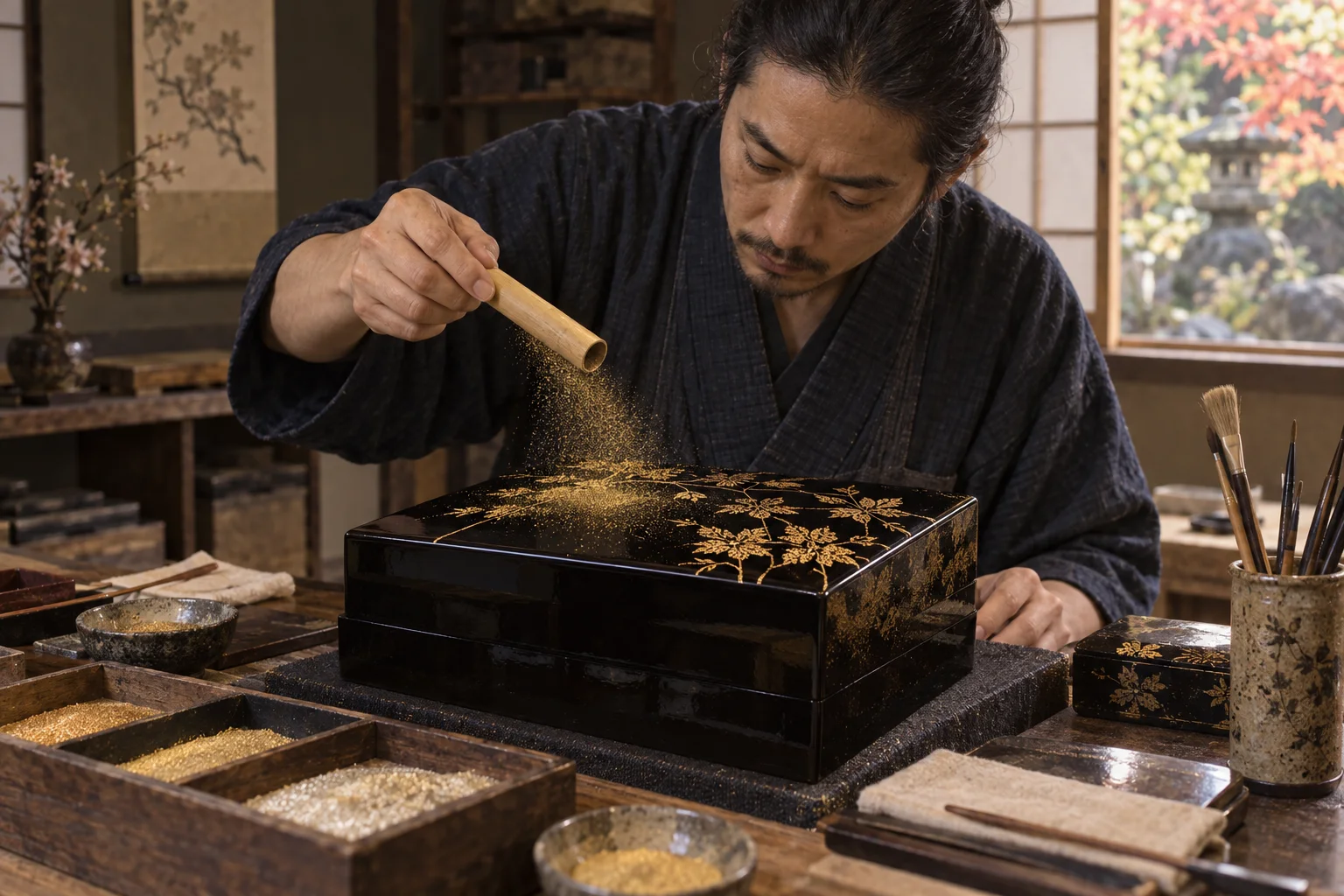
Maki-e is a lacquer technique that makes pictures by sprinkling gold powder onto wet lacquer.
蒔絵は、乾く前の漆に金粉を蒔いて絵を描く漆の技法です。
In 30 seconds
The standard explanation
Maki-e is a Japanese way of decorating lacquerware. The artist draws a design in lacquer and, before it dries, sprinkles gold or silver powder over it, so the powder sticks only to the design. The name means "sprinkled picture." It is used on boxes, trays, bowls and even fountain pens, and a fine piece can take many weeks to finish.
蒔絵は、漆器を飾る日本の技法です。職人は漆で図柄を描き、乾く前に金や銀の粉をその上に蒔いて、図柄の部分にだけ粉を付着させます。名前は「蒔いた絵」という意味です。箱、お盆、お椀、さらには万年筆にも使われ、上等な品は仕上がるまでに何週間もかかることがあります。
As a short speech
A full paragraph you can read aloud
When you see a black lacquer box decorated with golden plum blossoms or waves, it is often maki-e. The name means "sprinkled picture," and that describes the method. The craftsperson paints a design in lacquer and, while it is still wet, sprinkles fine gold or silver powder over it through a thin tube or with a soft brush.
The powder sticks only where the lacquer is. Depending on the style, the piece may then be coated again and polished. The roots of maki-e go back to the 700s, and it flourished in the Heian period, when nobles used it on furniture and writing boxes.
From the late 1500s, Japanese lacquer was exported to Europe, and in English, lacquerware itself came to be called "japan." For me, the surprising part is how much patience it takes to make something so small.
黒い漆の箱に金色の梅や波が描かれていたら、それは蒔絵であることが多いです。名前は「蒔いた絵」という意味で、そのまま作り方を表しています。職人は漆で図柄を描き、まだ乾かないうちに、細い筒ややわらかい筆を使って細かい金や銀の粉を蒔きます。
粉は漆のあるところにだけ付きます。技法によっては、その上からさらに漆を塗って研ぎ出します。蒔絵の源流は8世紀にさかのぼり、平安時代に、貴族が調度品や手箱に用いたことで大きく発展しました。
16世紀の終わりからは日本の漆器がヨーロッパに輸出され、英語では漆器そのものが「japan」と呼ばれるようになりました。こんなに小さなものを作るのにどれほどの根気がいるのか、私はそこに驚かされます。
Questions people actually ask
And how to answer them.
Is that real gold?
In traditional maki-e, yes. The gold is ground into a very fine powder, so a piece doesn't use much of it by weight. Cheaper souvenirs often use printed or painted designs instead.
伝統的な蒔絵なら、本物です。金をとても細かい粉にするので、重さで言えば一つの品に使う量は多くありません。手ごろなお土産品では、印刷や塗装で模様を付けたものも多くあります。
How is maki-e different from urushi?
Urushi is the lacquer itself, made from the sap of the lacquer tree. Maki-e is one way of decorating on top of it. So all maki-e is lacquerware, but not all lacquerware has maki-e.
漆は、ウルシの木の樹液から作る塗料そのものです。蒔絵は、その上に施す飾りの技法の一つです。ですから蒔絵はすべて漆器ですが、漆器がすべて蒔絵というわけではありません。
Why did Europeans call lacquerware "japan"?
Japanese lacquer was highly prized in Europe from the 1600s on, much as Chinese porcelain was. Just as porcelain came to be called "china," lacquerware and the European imitations of it came to be called "japan."
1600年代以降、日本の漆器はヨーロッパで、中国の磁器と同じように珍重されました。磁器が「china」と呼ばれるようになったのと同じく、漆器とヨーロッパで作られたその模造品が「japan」と呼ばれるようになりました。
Phrases you can use
- The gold on this box was sprinkled on by hand.この箱の金は、手で蒔いたものです。
- It's real gold powder set in lacquer.漆で留めた本物の金粉です。
- Please don't put it in the dishwasher.食器洗い機には入れないでください。
- Lacquerware doesn't like direct sunlight.漆器は直射日光が苦手です。
- In English, lacquerware was once called "japan."英語では、漆器をかつて「japan」と呼んでいました。
Words you need
- lacquer漆
- lacquerware漆器
- gold powder金粉
- sprinkle蒔く・振りかける
- polish研ぐ・磨く
Watch
From YouTubeBackground (Japanese)
蒔絵の源流は奈良時代にさかのぼり、正倉院に伝わる8世紀の大刀の鞘に施された「末金鏤(まっきんる)」がその先がけとされる。平安時代には貴族の調度品や手箱で大きく発展し、やがて研出蒔絵・平蒔絵・高蒔絵などの技法が生まれた。16世紀末からは、ポルトガルやオランダとの貿易を通じて多くの漆器がヨーロッパに渡り、英語で漆器を「japan」と呼ぶ言い方も生まれた。フランス王妃マリー・アントワネットも蒔絵の漆器を集めており、その一部は母マリア・テレジアから受け継いだものとされる。