kokugaku
the Edo-period study of Japan's own classics
国学(こくがく)
In one line
The shortest answer that works
Kokugaku was an attempt to read Japan's oldest texts on their own terms, without Chinese learning in between.
国学とは、日本の古い書物を、漢学を通さずにそれ自体として読み直そうとした学問です。
In 30 seconds
The standard explanation
For centuries the educated language of scholarship in Japan was Chinese. From the seventeenth century a group of scholars turned instead to Japan's own oldest texts, working out how to read the Kojiki and the Man'yoshu in the language they were written in. The best known, Motoori Norinaga, spent about thirty-five years on a commentary on the Kojiki alone.
日本の学問の言葉は、長いあいだ漢文でした。十七世紀以降、それとは別に、日本の古い書物そのものに向かった学者たちが現れます。古事記や万葉集を、書かれた言葉のまま読む方法を探したのです。よく知られる本居宣長は、古事記の注釈だけに三十五年ほどを費やしました。
As a short speech
A full paragraph you can read aloud
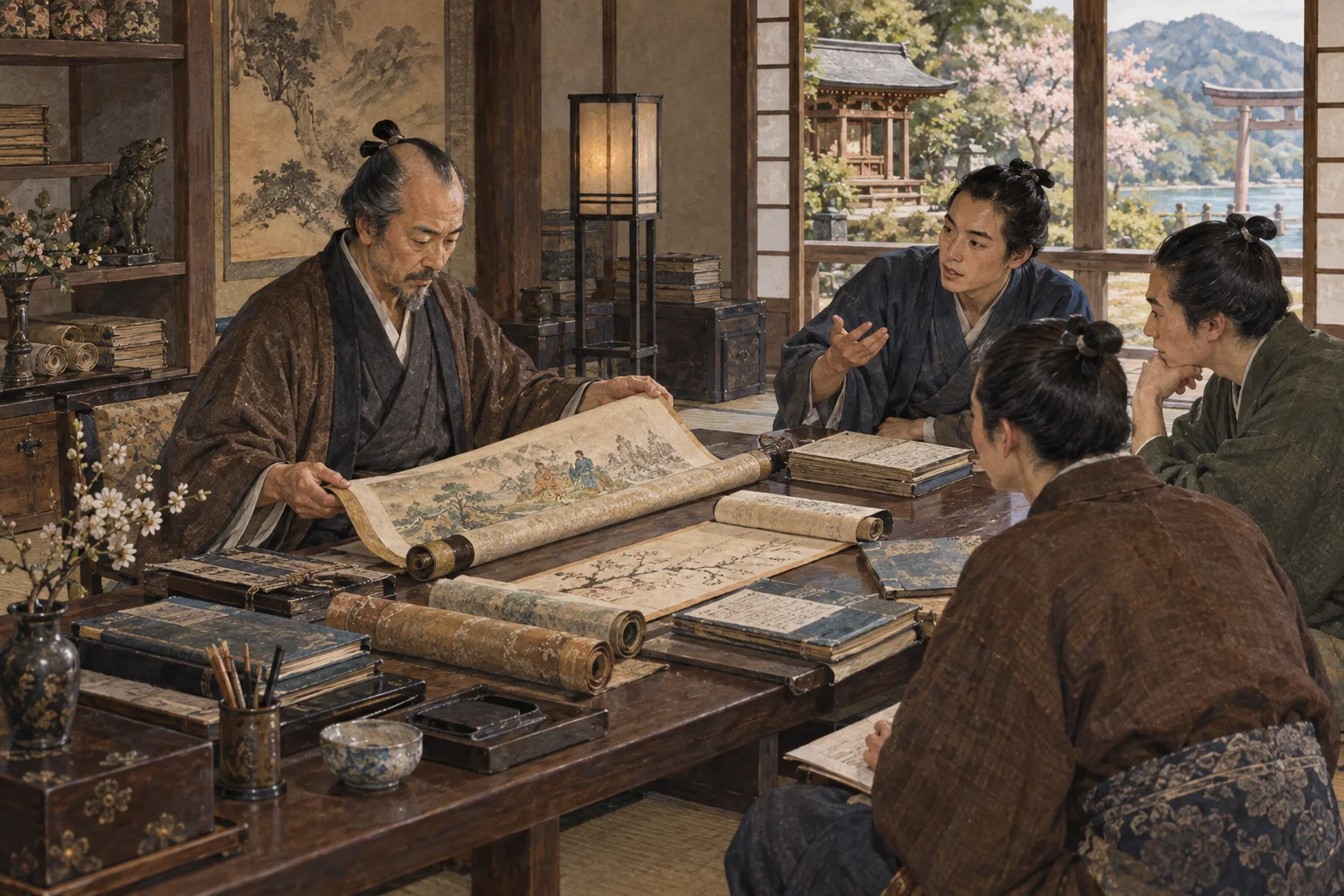
To understand kokugaku you have to picture what came before it. A serious Japanese scholar of the Edo period read Chinese, wrote in Chinese, and used Confucian texts as the measure of things. Kokugaku turned away from that and asked what Japan's own oldest writing said before any of it arrived.
The practical problem was enormous: the Kojiki of 712 was written in a mixture of systems nobody could reliably read any more. Motoori Norinaga spent about thirty-five years producing a commentary that made it readable, finishing in 1798.
Along the way he argued that the heart of Japanese literature was not moral instruction but mono no aware, a sensitivity to the way things move us, and that reading The Tale of Genji for its morals missed the point entirely. The movement is also part of political history: its emphasis on the emperor and on a Japan before foreign influence fed into the arguments of the 1860s.
国学を理解するには、その前に何があったかを思い浮かべる必要があります。江戸時代のまともな学者は、漢文を読み、漢文で書き、儒教の書物をものさしにしていました。国学はそこから向きを変え、それらが入ってくる前の、日本の最も古い書物は何を言っているのかと問いました。
実務の問題は大変なものでした。712年の古事記は、もはや誰も確かには読めない書き方で記されていたのです。本居宣長は、それを読めるようにする注釈に三十五年ほどをかけ、1798年に完成させました。
その過程で彼は、日本文学の核心は教訓ではなく、ものごとに心が動かされることとしてのもののあはれであり、源氏物語を道徳で読むのは的外れだと論じました。この学問は政治の歴史の一部でもあります。天皇と、外来の影響以前の日本を重んじる姿勢は、1860年代の議論に流れ込みました。
Questions people actually ask
And how to answer them.
What did they actually do all day?
Philology, mostly. They compared manuscripts, worked out how old words were pronounced and what they meant, and wrote commentaries. It is closer to the work of a modern textual scholar than to philosophy.
ほとんどは文献の研究です。写本を比べ、古い語の発音と意味を突き止め、注釈を書きました。哲学というより、今の文献学者の仕事に近いものです。
Was it anti-Chinese?
Some of its rhetoric was, and Norinaga wrote sharply about what he called the Chinese cast of mind. In practice these scholars had all been trained in Chinese learning and used its methods, which is one of the tensions inside the movement.
その言い方には、そう読める部分があります。宣長は漢意と呼んだものを厳しく批判しました。ただ実際には、彼らは皆が漢学の訓練を受けており、その方法を使っていました。この学問が抱えた矛盾の一つです。
What did it leave behind?
A readable Kojiki, the vocabulary Japanese still uses to talk about its own literature, and a set of ideas about the emperor that mattered politically in the nineteenth century. Norinaga's house in Matsusaka is preserved.
読める古事記、日本文学を語るときに今も使う語彙、そして十九世紀の政治に働いた天皇についての考えです。松阪には宣長の旧宅が保存されています。
Phrases you can use
- They studied Japan's own classics.日本の古典そのものを研究しました。
- Scholarship had been done in Chinese.学問は漢文で行われていました。
- He worked on it for thirty-five years.三十五年かけて取り組みました。
- The Kojiki could no longer be read.古事記はもう読めなくなっていました。
- The idea influenced later politics.この考えは後の政治に影響しました。
Words you need
- study of Japanese classics国学
- Chinese learning漢学
- commentary注釈
- ancient language古語
- sensitivity to thingsもののあはれ
Watch
From YouTubeBackground (Japanese)
国学は、漢学や仏教を通さずに日本の古典を読もうとした江戸時代の学問で、契沖、賀茂真淵、本居宣長、平田篤胤らの名が挙げられます。宣長は1798年に古事記伝を完成させ、読めなくなっていた古事記に読みの筋道をつけました。また源氏物語を教訓の書として読むことを退け、もののあはれという語でその本質を説明しました。国学が説いた天皇への尊崇は、幕末の尊王の思想に影響したとされます。松阪の本居宣長旧宅と記念館が残っています。