Kenrokuen
the Kanazawa garden named for the six qualities a perfect garden should have
兼六園(けんろくえん)
In one line
The shortest answer that works
Kenrokuen in Kanazawa is named for combining six qualities that a garden was thought unable to have all at once.
兼六園とは、庭が同時には満たせないとされた六つの条件を兼ね備える、という意味の名を持つ金沢の庭園です。
In 30 seconds
The standard explanation
Kenrokuen is a large strolling garden in Kanazawa, developed over generations by the Maeda lords. The name means combining the six, from a Chinese text listing six qualities a garden should have: spaciousness, seclusion, artifice, antiquity, water, and a distant view. The text says these conflict, so no garden has all six. The name claims this one does.
兼六園は金沢にある大きな回遊式庭園で、前田家が代々かけて造りました。名前は「六つを兼ねる」という意味で、中国の書物が挙げた、庭が備えるべき六つの条件に由来します。広いこと、奥深いこと、人の手が入っていること、古びていること、水があること、眺めがよいこと。その書物は、これらは両立しないので六つそろう庭はない、と述べています。この名は、ここはそろっていると言っているのです。
As a short speech
A full paragraph you can read aloud
Kenrokuen in Kanazawa is usually introduced as one of the three great gardens of Japan, which is true but tells you nothing. The name is the interesting part. It comes from a Song-dynasty Chinese text on the gardens of Luoyang, which lists six qualities a garden might have: spaciousness, seclusion, human artifice, an air of age, flowing water, and a distant view.
The text argues that these pull against each other. A garden large enough to feel spacious cannot feel secluded; one shaped heavily by human hands cannot feel ancient. So the claim in the name Kenrokuen, combining the six, is a bold one. The garden was developed over about a hundred and eighty years by the Maeda lords, and it was named in 1822.
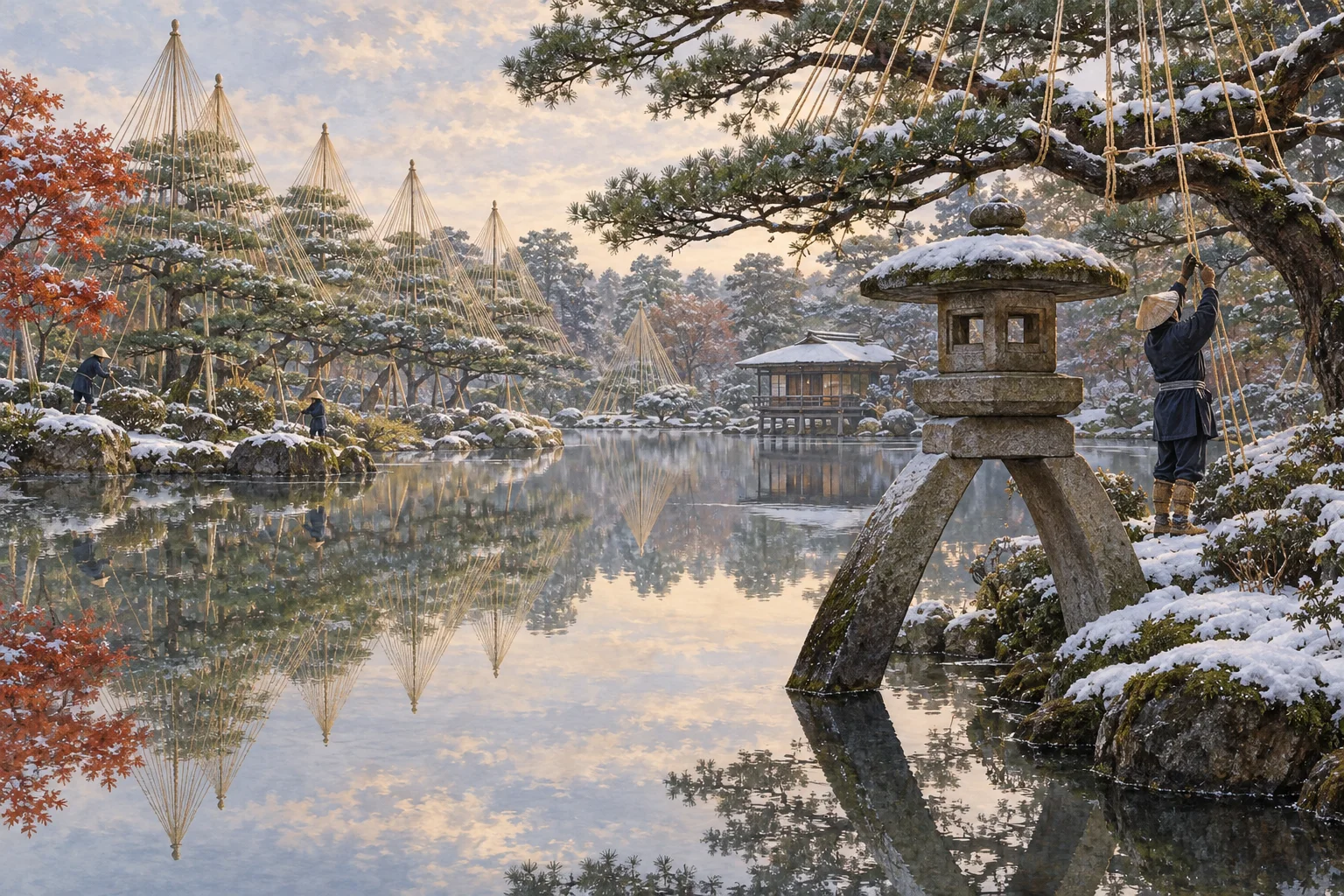
The best-known sight is a winter one: ropes strung from poles in cones over the pines, called yukitsuri, to stop heavy snow snapping the branches. It is a working piece of engineering that happens to be beautiful, which is a fair description of the whole garden.
金沢の兼六園は、たいてい日本三名園のひとつとして紹介されます。それは本当ですが、何も説明していません。面白いのは名前のほうです。宋の時代の中国の書物にある洛陽の庭園の記述に由来し、そこには庭が備えうる六つの条件が挙げられています。
広いこと、奥深く静かなこと、人の手が入っていること、古びた趣があること、水が流れていること、遠くまで見渡せること。その書物は、これらは互いに反すると論じます。広く感じるほどの庭は奥深さを持てず、人の手を強くかけた庭は古びた趣を持てない。
ですから兼六園、六つを兼ねるという名は、かなり大胆な主張です。庭は前田家が百八十年ほどかけて造り、1822年に命名されました。もっとも知られているのは冬の光景で、柱から縄を円錐に張って雪の重みで松の枝が折れるのを防ぐ雪吊りです。美しくもある実用の工夫で、それはこの庭全体にあてはまる言い方です。
Questions people actually ask
And how to answer them.
What are the three great gardens?
Kenrokuen in Kanazawa, Korakuen in Okayama and Kairakuen in Mito. The grouping is a conventional one rather than an official designation, and Japanese people will happily argue about whether it is the right three.
金沢の兼六園、岡山の後楽園、水戸の偕楽園です。慣習的なまとめ方で、公的な指定ではありません。この三つでよいのかは、日本人のあいだでも議論になります。
What are those ropes on the trees?
Yukitsuri. Kanazawa gets wet, heavy snow that can break branches, so ropes are strung from a central pole to support them. They go up in early November and come down in March, and the shapes are part of the winter view.
雪吊りです。金沢は湿って重い雪が降り、枝が折れるので、中心の柱から縄を張って支えます。11月の初めに施し、3月に外します。その形が冬の見どころになっています。
When is the best time to go?
Each season is genuinely different here: plum and cherry in spring, irises in early summer, leaves in autumn, and the ropes and snow in winter. If you can only go once and want the famous image, winter.
ここは季節ごとに本当に別のものになります。春は梅と桜、初夏は花菖蒲、秋は紅葉、冬は雪吊りと雪。一度きりで有名な景色を見たいなら冬です。
A common misunderstanding
MYTHThe name Kenrokuen refers to six specific features you can find in the garden.
FACTIt refers to six abstract qualities from a Chinese text, which the text says cannot coexist. The name is a claim that this garden reconciles them, not a list of six things to spot.
Phrases you can use
- The name means combining the six.名前は「六つを兼ねる」という意味です。
- Those six qualities were supposed to be impossible to combine.その六つは、同時には持てないとされていました。
- The ropes hold the branches up against heavy snow.あの縄は、重い雪から枝を守るためのものです。
- It's one of the three great gardens, though that's a conventional grouping.日本三名園のひとつですが、これは慣習的なまとめ方です。
- It took the local lords about a hundred and eighty years to build.藩主が百八十年ほどかけて造りました。
Words you need
- strolling garden回遊式庭園
- spaciousness宏大
- seclusion幽邃
- distant view眺望
- snow suspension ropes雪吊り
Watch
From YouTubeBackground (Japanese)
兼六の名は、中国・宋の『洛陽名園記』に基づく。同書は宏大・幽邃・人力・蒼古・水泉・眺望の六つを挙げ、これらが兼ね備わるのは湖園だけだと記す。命名は、加賀藩12代藩主・前田斉広の依頼を受けた松平定信によるもので、文政5年(1822年)に定信が「兼六園」の扁額を書いたとされる。庭は加賀藩の歴代藩主が長い年月をかけて造成した林泉回遊式庭園。冬の雪吊りは、13代藩主・前田斉泰が琵琶湖畔の唐崎から種を取り寄せて育てたとされる黒松のものがよく知られる。なお日本三名園という言い方は慣習的なもので、公的な指定ではない。