karaage
Japanese fried chicken
唐揚げ(からあげ)
In one line
The shortest answer that works
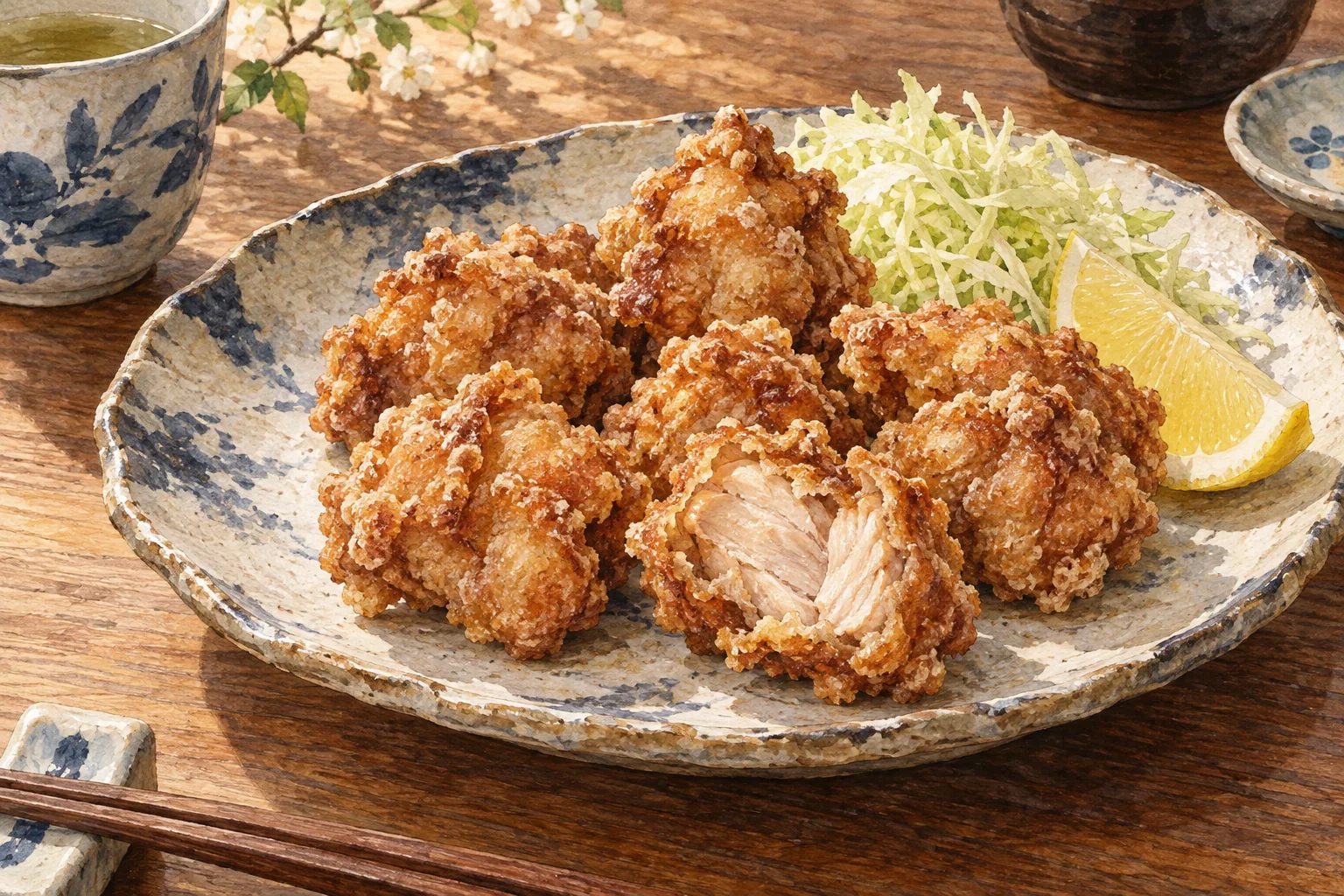
Karaage is bite-sized fried chicken marinated in soy sauce, ginger and garlic before frying.
唐揚げとは、ひと口大に切った鶏肉を醤油としょうが、にんにくに漬けてから揚げた料理です。
In 30 seconds
The standard explanation
Karaage is Japanese fried chicken. The meat is cut into bite-sized pieces, marinated in soy sauce with ginger and garlic, coated in potato starch or wheat flour and deep-fried. The coating is thin and the inside stays juicy. It appears everywhere: lunch boxes, izakaya menus, convenience store counters and school lunches.
唐揚げは日本のフライドチキンです。肉をひと口大に切り、醤油にしょうがとにんにくを加えた漬け汁につけ、片栗粉か小麦粉をまぶして揚げます。衣は薄く、中は汁気が残ります。弁当、居酒屋の品書き、コンビニのレジ横、給食と、どこにでもあります。
As a short speech
A full paragraph you can read aloud
Karaage is Japanese fried chicken, and it may be the most universally liked dish in the country. The method is simple. Chicken, usually thigh meat, is cut into pieces you can eat in one or two bites, soaked in soy sauce with grated ginger and garlic, dusted with starch and fried, often twice, so the surface is crisp and thin rather than thick and breaded.
The seasoning is in the meat rather than in the coating, which is the main difference from American fried chicken. You find it in lunch boxes, at izakaya where it is a standard first order, in supermarkets by weight and in convenience stores by the piece.
Specialist shops have spread across the country, and a few towns in Kyushu are known for having an unusual number of them. Lemon is normally served with it, and whether to squeeze it over everyone's portion is a running joke.
唐揚げは日本のフライドチキンで、この国でいちばん広く好かれている料理かもしれません。作り方は単純です。鶏肉、ふつうはもも肉を一口か二口で食べられる大きさに切り、おろししょうがとにんにくを入れた醤油に漬け、でんぷんをまぶして揚げます。
二度揚げすることも多く、衣は厚いパン粉ではなく、薄くてぱりっとしたものになります。味は衣ではなく肉についています。そこがアメリカのフライドチキンとの大きな違いです。
弁当にも入り、居酒屋では最初に頼む定番で、スーパーでは量り売り、コンビニでは一個から買えます。専門店は全国に広がり、九州にはその数が際立って多い町もあります。たいていレモンが添えられ、全員の分にかけてよいかどうかは、よくある冗談の種です。
Questions people actually ask
And how to answer them.
How is it different from American fried chicken?
The pieces are smaller and boneless, the flavor is in the marinated meat rather than a seasoned crust, and the coating is starch, so it is thin and crisp instead of thick and craggy.
一つずつが小さく骨がなく、味は衣ではなく漬けた肉についています。衣はでんぷんなので、厚くごつごつせず、薄くぱりっとしています。
What is the difference between karaage and tatsuta-age?
They overlap. Tatsuta-age specifically means marinating in soy sauce and mirin and coating in potato starch, which gives a whiter, rougher surface. In everyday speech many people use the two words loosely.
重なっています。竜田揚げは、醤油とみりんに漬けて片栗粉をまぶすものを指し、表面が白っぽく、ざらりとした仕上がりになります。日常の会話では、二つの語をあまり区別せずに使う人も多いものです。
Why is lemon always served with it?
The acid cuts the oil. Squeezing lemon over a shared plate without asking is a classic small offense at a drinking party, since anyone who wanted theirs plain has lost the choice.
酸味が油を切るからです。飲み会で、断らずに大皿の全部にレモンを絞るのは、ささやかな失敗の定番です。そのままで食べたかった人の選択肢が消えてしまうからです。
Phrases you can use
- One order of fried chicken, please.唐揚げを一つお願いします。
- Shall I squeeze the lemon over it?レモンをかけてもいいですか。
- It's crisp outside and juicy inside.外はぱりっと、中はジューシーです。
- This is the shop's specialty.この店の看板料理です。
- It's good cold too, so it goes in lunch boxes.冷めてもおいしいので、弁当に入ります。
Words you need
- to deep-fry揚げる
- marinade漬け汁
- potato starch片栗粉
- chicken thigh鶏もも肉
- crispぱりっとした
Watch
From YouTubeBackground (Japanese)
唐揚げの唐は中国を指す字ですが、今の形の料理が中国から伝わったという確かな証拠はなく、由来には諸説あります。家庭では下味に醤油、酒、しょうが、にんにくを使うのが一般的で、粉は片栗粉と小麦粉のどちらを使うか、家によって違います。専門店の多い町として大分県中津市などが知られ、ご当地の唐揚げを掲げる店は各地にあります。冷めてもおいしいことから、弁当のおかずの定番になりました。