iaido
drawing the sword as a discipline
居合道(いあいどう)
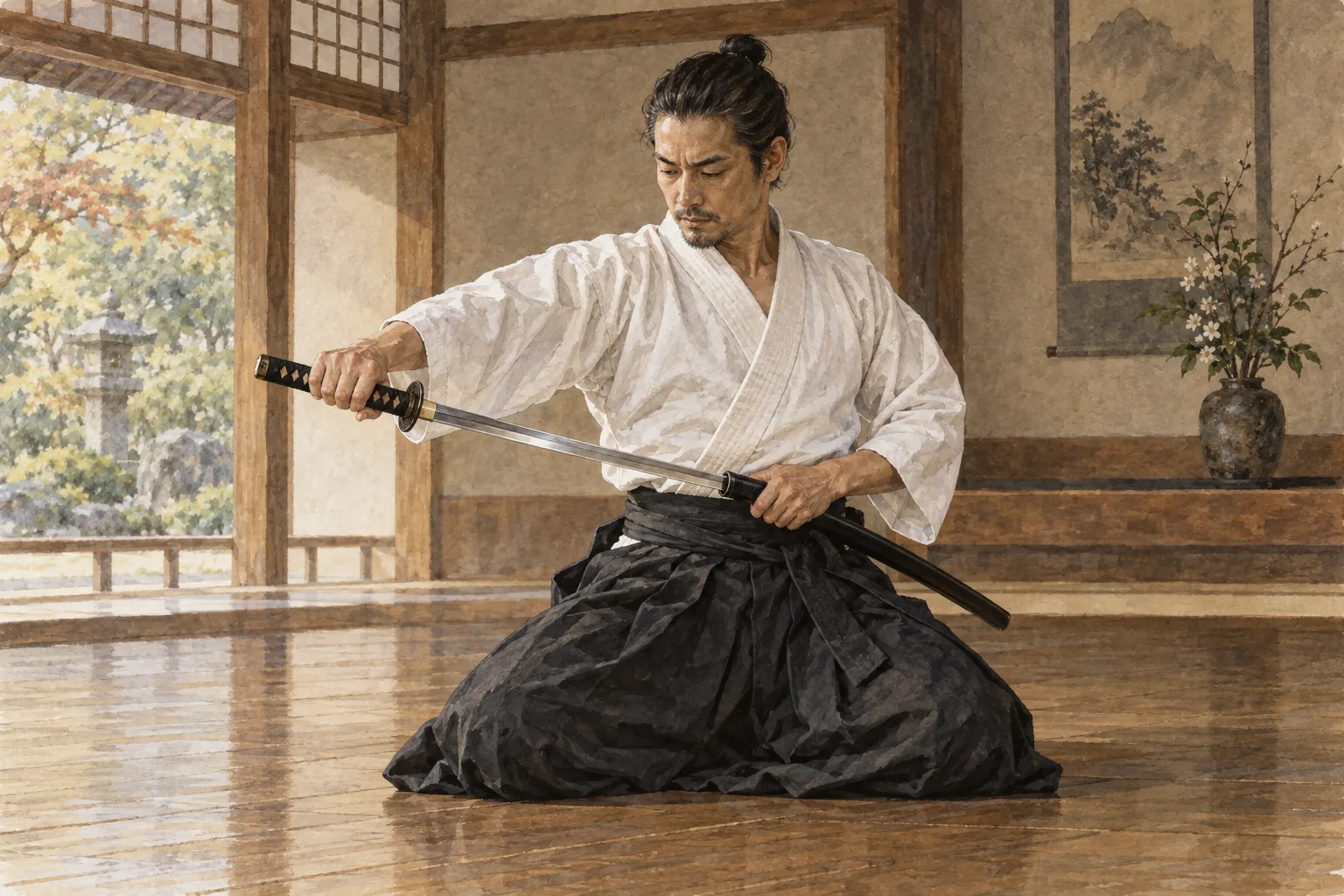
In one line
The shortest answer that works
Iaido is the art of drawing, cutting and resheathing a sword, practiced alone as a set of forms.
居合道とは、刀を抜き、斬り、納めるまでを、一人で形として行う武道です。
In 30 seconds
The standard explanation
Iaido is practiced solo. The practitioner begins seated or standing with the sword sheathed, then performs a sequence: draw, cut, flick the blade clean, and return it to the scabbard without looking. There is no opponent and no competition in the usual sense; grading and contests judge precision, posture and control.
居合道は一人で行います。刀を鞘に納めた状態から、座位または立位で始め、抜き、斬り、血を振り払い、目を向けずに鞘へ納めるまでを続けて行います。相手はおらず、ふつうの意味での試合もありません。審査や大会では、正確さ、姿勢、制御が評価されます。
As a short speech
A full paragraph you can read aloud
Iaido is the discipline of the sword drawn from the scabbard, and what surprises people is that it is practiced alone. A form begins with the sword sheathed and the practitioner seated or standing, and it consists of a sequence: the draw, which is itself the first cut, a finishing cut, a movement to shake blood from the blade, and the return of the sword to the scabbard without looking down at it.
That last part is harder than it sounds and is where beginners cut themselves. There is no sparring. Competition exists but takes the form of two people performing forms side by side while judges assess posture, timing, the angle of the cut and the control of the resheathing.
Beginners use a blunt unsharpened sword, and only experienced practitioners handle a live blade. The underlying premise is a specific situation: you are seated, someone moves against you, and everything has to happen in one motion from a sheathed sword.
居合道は鞘から抜く刀の道であり、人を驚かせるのは、それを一人で稽古することです。形は刀を鞘に納め、座るか立った姿勢から始まり、ひと続きの動きで構成されます。抜くこと、それ自体が最初の斬撃であり、続いて止めの斬撃、刃から血を振り払う動き、そして刀を見ずに鞘へ納めることです。
最後の部分は聞くより難しく、初心者が手を切るのはここです。組太刀のような打ち合いはありません。大会はありますが、二人が並んで形を演じ、審判が姿勢、間合い、斬りの角度、納刀の制御を見る形です。
初心者は刃のついていない模擬刀を使い、真剣を扱うのは経験を積んでからです。前提にあるのは特定の場面です。座っているところへ相手が動き、鞘に納まった刀から、すべてがひと続きの動作で行われなければならない、というものです。
Questions people actually ask
And how to answer them.
How can it be a martial art with no opponent?
The opponent is assumed, and every form specifies where they are and what they are doing. Practitioners argue that removing a live partner lets you refine the movement itself, and many also practice kendo to keep the experience of a resisting opponent.
相手は想定されていて、どの形にも相手の位置と動きが定められています。生身の相手を外すことで動作そのものを磨けるのだ、というのが稽古する側の説明です。抵抗する相手との経験を保つため、剣道も並行して稽古する人が多くいます。
Do they use real swords?
Beginners use an unsharpened practice sword. Experienced practitioners may use a live blade, and some also practice cutting rolled straw targets, which is a related but separate discipline.
初心者は刃のない模擬刀を使います。経験を積んだ人は真剣を用いることがあり、巻いた藁を斬る稽古をする人もいます。これは関連はしますが別の技術です。
Phrases you can use
- It's practiced alone, without a partner.相手をつけず一人で稽古します。
- The draw itself is the first cut.抜くこと自体が最初の斬撃です。
- You resheathe without looking.刀は見ずに納めます。
- Beginners use an unsharpened sword.初心者は刃のない刀を使います。
Words you need
- to draw (a sword)抜刀する
- scabbard鞘
- form / kata形
- posture姿勢
Watch
From YouTubeBackground (Japanese)
居合の源流は戦国期の抜刀術にあるとされ、林崎甚助を祖と伝える流派が知られています。現在は全日本剣道連盟が定めた制定居合の形があり、各流派の古流と並行して稽古されます。血を振り払う動作は「血振り」、納めることは「納刀」と呼ばれます。段位の審査は形の演武によって行われ、剣道と同じく高段位ほど合格が難しくなります。畳表を巻いて水に浸したものを斬る試し斬りは、居合とは区別して扱われます。