hara hachibunme
eating to eighty percent full
腹八分目(はらはちぶんめ)
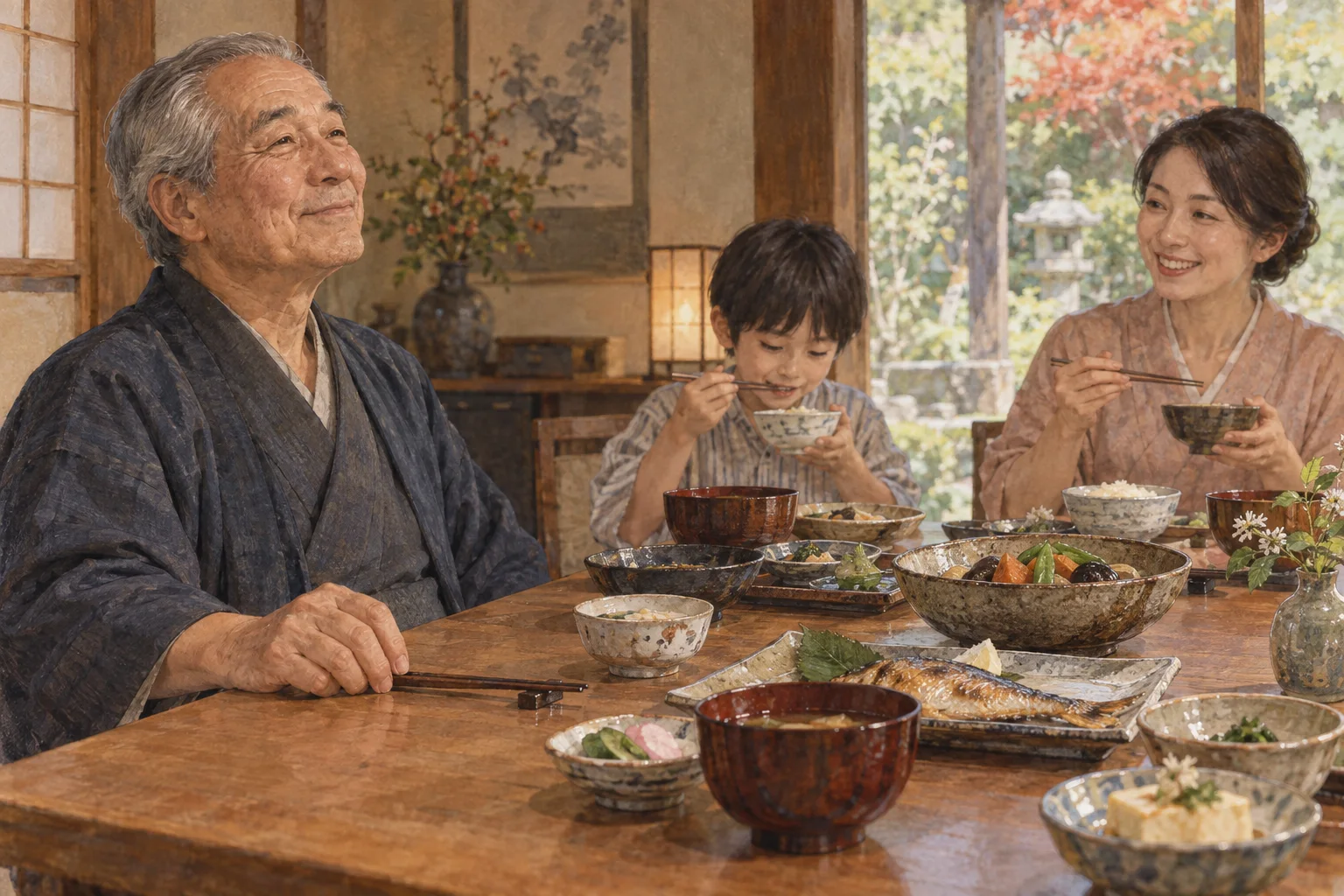
In one line
The shortest answer that works
Hara hachibunme means stopping at about eighty percent full rather than eating until you are stuffed.
腹八分目とは、満腹まで食べずに八分目で止めることです。
In 30 seconds
The standard explanation
Hara hachibunme means eating to about eighty percent of your capacity. It is a piece of everyday health advice, expressed in a saying that eating to eighty percent keeps the doctor away. It fits with how Japanese meals are served, in several small dishes rather than one large plate, which makes stopping easier.
腹八分目とは、満腹のおよそ八分目まで食べることです。日常の健康の知恵で、「腹八分目に医者いらず」という言い方で伝えられてきました。日本の食事が大皿一枚ではなく小さな器をいくつも並べる形であることとも合っていて、そのほうが止めやすくなります。
As a short speech
A full paragraph you can read aloud
Hara hachibunme means eighty percent of the stomach, and it is the everyday Japanese advice on how much to eat: stop before you are full. The saying attached to it is that eating to eighty percent means you need no doctor.
It is folk wisdom rather than a prescription, but it lines up with something real, which is that the sensation of fullness lags behind actual intake, so the point at which you feel satisfied is already past the point at which you have had enough. What makes it practical in Japan is the way food is served.
A meal arrives as several small dishes, each in its own bowl, rather than one large plate, so you are constantly making small decisions about whether to continue rather than clearing a single serving. Home portions are correspondingly modest, and rice is usually served in a small bowl that can be refilled rather than piled up at the start.
腹八分目とは腹の八割という意味で、どれだけ食べるかについての日本の日常の知恵です。満腹になる前に止める。これに添えられる言い方が「腹八分目に医者いらず」です。
処方ではなく言い伝えですが、実際のことと合っています。満腹の感覚は実際に食べた量より遅れてくるので、満足したと感じる時点では、もう十分な量を超えているのです。日本でこれが実行しやすいのは、食事の出し方によります。
食事は大皿一枚ではなく、それぞれの器に盛った小さな料理がいくつも並ぶ形で出てくるので、ひと皿を片づけるのではなく、続けるかどうかを何度も小さく判断することになります。家庭の一人前もそれに合わせて控えめで、ご飯は最初に山盛りにするのではなく、おかわりのできる小さな茶碗で出されるのがふつうです。
Questions people actually ask
And how to answer them.
Isn't it rude to leave food?
Leaving food is discouraged, which is a separate value and can pull against this one. The usual resolution is to take a smaller serving rather than to leave some, and at a restaurant you can ask for a smaller portion of rice when ordering.
食べ残しは避けるべきとされていて、これは別の価値で、腹八分目と引っ張り合うこともあります。ふつうの解き方は、残すのではなく最初から少なめによそうことです。飲食店では注文のときにご飯を少なめにと頼めます。
Is there any evidence behind it?
The general idea that stopping before fullness helps with weight and digestion is uncontroversial. Claims that a specific eighty percent figure extends lifespan go beyond what has been shown in people, so it is best presented as sensible practice rather than proven science.
満腹の前に止めることが体重や消化によいという一般的な考えは、広く受け入れられています。八割という具体的な数字が寿命を延ばすという主張は、人での裏づけを超えているので、証明された科学ではなく、理にかなった習慣として紹介するのが適切です。
Phrases you can use
- Stop before you're full.満腹になる前に止めます。
- Eighty percent keeps the doctor away.腹八分目に医者いらず、と言います。
- Ask for a smaller portion of rice.ご飯は少なめでとお願いできます。
- Small dishes make it easier to stop.小さな器に分かれていると止めやすいです。
Words you need
- full (after eating)満腹の
- portion一人前
- to help oneself to moreおかわりする
- moderation節度
Watch
From YouTubeBackground (Japanese)
「腹八分目に医者いらず」ということわざは広く知られ、健康の心得として語られます。江戸時代の養生の書物にも、食を控えることの効用が説かれています。日本の食事が一汁三菜のように小さな器を並べる形であることは、量を見て調整しやすい利点があります。一方で、食べ残しを避ける価値観と衝突することもあり、宴席では取り分ける量を自分で加減する形が取られます。定食屋でご飯の量を選べる店が多いのも、この考え方と合っています。