goshinboku
the sacred tree in a shrine precinct
御神木(ごしんぼく)
In one line
The shortest answer that works
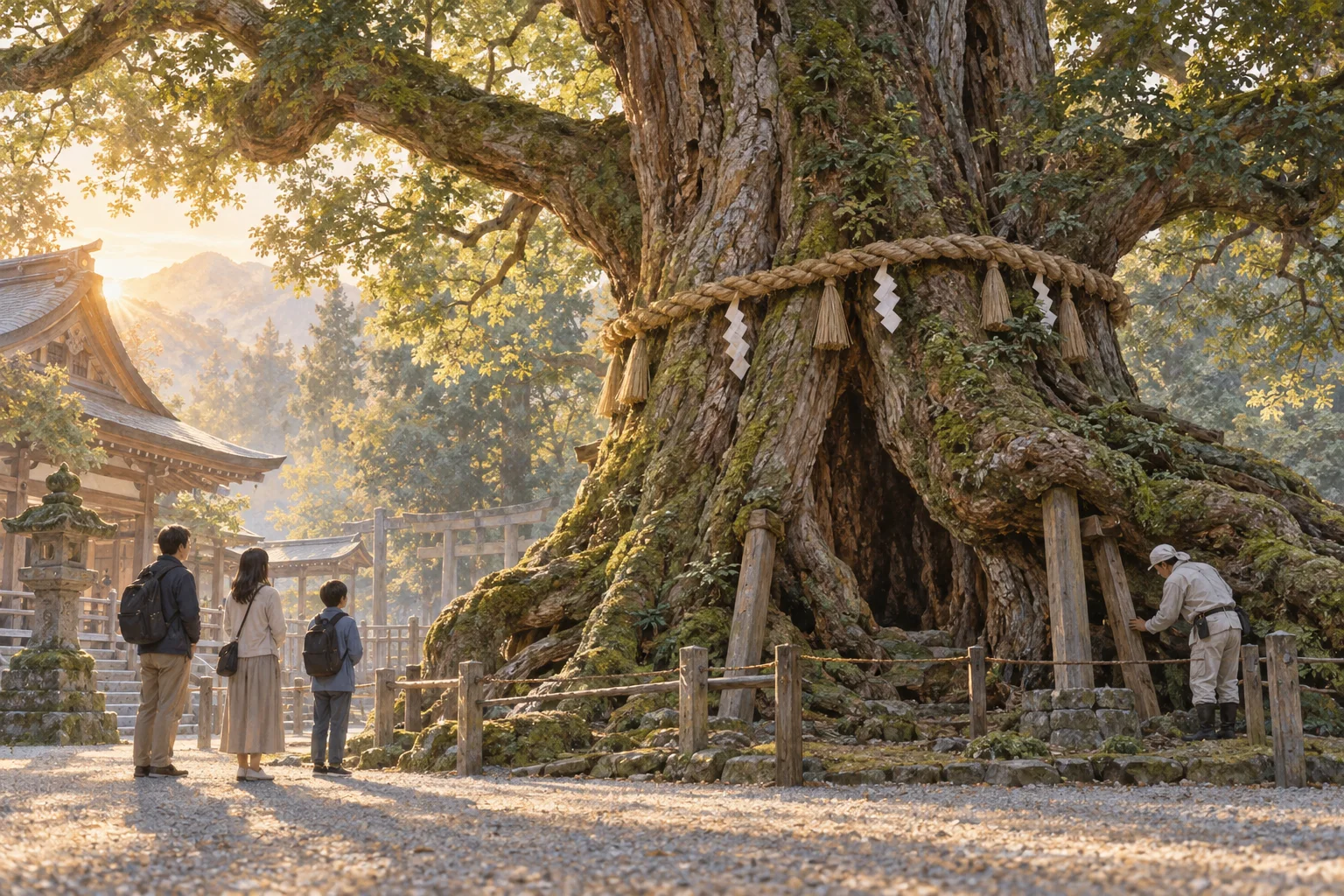
A goshinboku is a tree marked with rope at a shrine, treated as a dwelling place of the deity.
御神木とは、注連縄を巻かれた神社の木で、神が宿るとされるものです。
In 30 seconds
The standard explanation
Many shrines have an old tree wrapped with a straw rope and paper streamers. It is treated as a place where the deity can settle, and it is protected rather than felled. Some are many centuries old, and the surrounding grove is often the oldest woodland left in a built-up area.
多くの神社には、注連縄と紙垂を巻かれた古木があります。神が宿る場所として扱われ、伐られずに守られます。樹齢が何百年にもなるものがあり、その周りの社叢は、市街地に残された最も古い林であることが少なくありません。
As a short speech
A full paragraph you can read aloud
Walk into many shrines and you will find a tree singled out with a thick straw rope around its trunk and white paper streamers hanging from it. That is a goshinboku, a sacred tree. In Shinto, deities are not thought to be permanently housed in statues; they settle into things, and a tree of great age and size is a natural place for that.
The practical result is conservation. Trees inside shrine grounds have often been protected for centuries while everything around them was cut, built on and rebuilt, which is why the grove around a city shrine is often among the oldest and most biodiverse patches of ground in the area.
Some famous examples are estimated at over a thousand years old. Visitors are welcome to look and photograph, but touching or hugging the tree is not a traditional part of worship, and some shrines explicitly ask people not to, because bark and roots suffer from the attention.
多くの神社には、幹に太い注連縄を巻き、白い紙垂を下げた木があります。それが御神木です。神道では、神は像の中に常に住まうとは考えられていません。神は何かに宿るのであり、年を経た大きな木は、そのための自然な場所です。
その結果として起きているのが保全です。神社の境内の木は、周囲が伐られ、建てられ、建て替えられるあいだも、何百年と守られてきたことが多くあります。だから都市の神社を囲む社叢は、その周辺で最も古く、生きものの多い一画であることが多いのです。
樹齢千年を超えると見られる有名な木もあります。見ることも写真を撮ることも歓迎されますが、触れることや抱きつくことは昔からの参拝の作法ではなく、樹皮と根が傷むため、控えるよう掲げている神社もあります。
Questions people actually ask
And how to answer them.
Can I touch it?
Check for a sign. Some shrines welcome it, while others ask you not to, because repeated touching damages the bark and compacted soil harms the roots. Looking and bowing is always acceptable.
掲示を確かめてください。歓迎している神社もあれば、控えるよう求めている神社もあります。触れ続けると樹皮が傷み、地面が踏み固められて根が弱るからです。見て一礼するだけなら、どこでも差し支えありません。
What kinds of trees are they?
Often camphor, cedar, zelkova, ginkgo or pine, chosen because they grow large and live long. The species varies by region and climate rather than by doctrine.
クスノキ、スギ、ケヤキ、イチョウ、マツが多く、大きく育ち長く生きることから選ばれています。樹種は教えによるのではなく、地域と気候によって違います。
What happens if one falls in a typhoon?
The shrine holds a rite before removing it, and the timber is often reused for shrine fittings, amulets or a carved object rather than discarded. A successor tree may be planted in the same spot.
神社は取り払う前に神事を行い、材は捨てずに社殿の用材やお守り、彫りものに使われることが多くあります。同じ場所に後継の木を植えることもあります。
Phrases you can use
- That tree is sacred.あの木は御神木です。
- The rope marks it as a sacred object.注連縄は神聖なものである印です。
- It's said to be over five hundred years old.樹齢五百年以上と言われています。
- Please don't touch the trunk.幹には触れないでください。
- The grove is protected.この社叢は保護されています。
Words you need
- sacred tree御神木
- sacred rope注連縄
- shrine grove社叢
- age of a tree樹齢
- camphor treeクスノキ
Watch
From YouTubeBackground (Japanese)
御神木は、神が宿るとされる木で、注連縄と紙垂で示されます。神が特定の場所に降りるという考えは、岩を神聖視する磐座や、木を依代とする信仰と地続きです。神社の森は鎮守の森と呼ばれ、都市化の進んだ地域でも古い植生が残る場所として、生態学の調査対象になってきました。台風や落雷で倒れた御神木を、社殿の用材やお守りに加工する例があります。自治体が天然記念物に指定している木も少なくありません。