ganbanyoku
lying on heated stone to sweat, a dry alternative to soaking in a bath
岩盤浴(がんばんよく)
In one line
The shortest answer that works
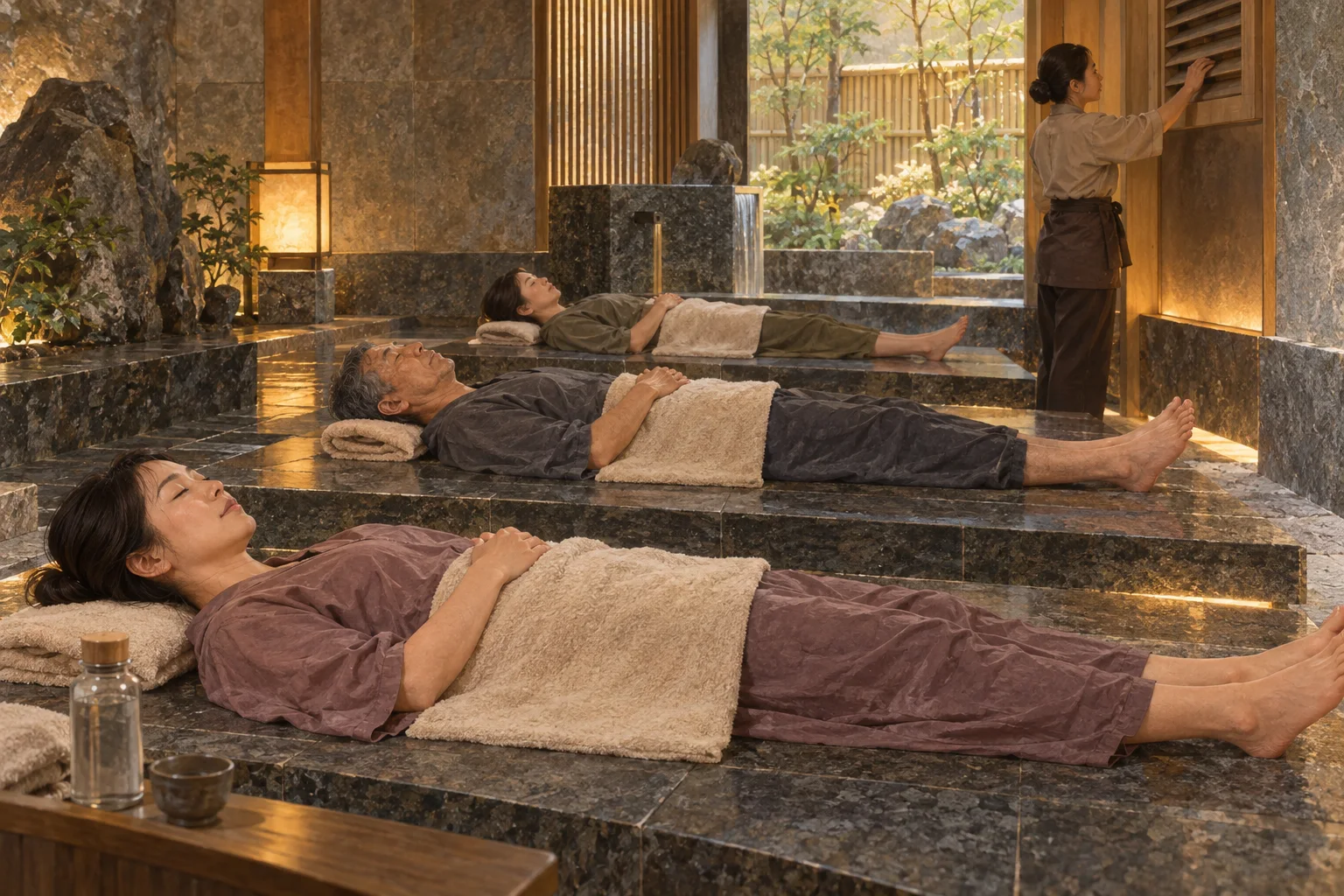
Ganbanyoku means lying on heated stone slabs to sweat gently, a dry alternative to soaking in a bath.
岩盤浴とは、熱した石の上に横たわってじっくり汗をかく、湯に浸からない温浴法です。
In 30 seconds
The standard explanation
Ganbanyoku is a hot stone treatment where guests lie directly on heated stone slabs, usually wrapped in a robe, rather than soaking in water. The heat is gentler and more even than a hot bath, so a session runs much longer, often thirty to fifty minutes, and produces a slow, steady sweat instead of a quick soak. It grew out of lying on naturally hot ground near certain hot springs, and is now sold nationwide as a standalone spa treatment, often confused with a sauna.
岩盤浴とは、湯に浸かるのではなく、熱した石の板の上に、たいていガウンを着たまま直接横になる温浴法です。熱の伝わり方が風呂より穏やかで均一なため、一回はずっと長く続き、30分から50分ほどかけて、ゆっくりと着実に汗をかきます。もとは一部の温泉地で、自然に熱くなった地面に横たわる古い習慣から生まれたとされ、今では独立した温浴施設として全国で提供されており、サウナとよく混同されます。
As a short speech
A full paragraph you can read aloud
Ganbanyoku is easy to lump together with a sauna, but the two heat the body differently. A sauna heats the air around you, often past eighty degrees; ganbanyoku heats you from below, through direct contact with a stone slab kept at a gentler forty to fifty degrees, radiating warmth slowly instead of blasting hot air.
Guests lie on the stone wrapped in a light robe for thirty to fifty minutes, turning over partway through, closer to a long nap than an endurance test. The practice traces back to older customs of lying on naturally heated ground near certain hot springs, and it commercialized nationwide from the early 2000s as a wellness routine, sold on relaxation and a slow, deep sweat rather than any specific medical claim.
岩盤浴はサウナと同じものだと思われがちですが、体を温める仕組みはまったく違います。サウナは周りの空気を、しばしば80度を超えるほど熱くしますが、岩盤浴は40〜50度ほどの、もっと穏やかな温度に保たれた石の板に直接触れることで、体を下から温めます。
熱風で一気に温めるのではなく、じわじわと熱が伝わってくるのです。客は薄いガウンを着たまま、30分から50分ほど石の上に横になり、途中で寝返りを打ちながら過ごします。持久戦というより、長い昼寝に近い時間です。
この習慣は、一部の温泉地で自然に熱くなった地面に横たわっていた古い風習にさかのぼるとされ、2000年代初め以降、特定の医学的な効能をうたうのではなく、リラックスとじっくりとした発汗を売りにする健康法として全国で商業化されました。
Questions people actually ask
And how to answer them.
Is ganbanyoku basically the same as a sauna?
No, a sauna heats the surrounding air, often above 80 degrees, while ganbanyoku warms you through direct contact with a much cooler heated stone, around 40 to 50 degrees, which is why sessions run longer and feel gentler.
いいえ、サウナは周りの空気を、しばしば80度を超えるほど熱くしますが、岩盤浴はもっと低い40〜50度ほどに熱した石に直接触れて体を温めます。そのため一回の時間が長く、より穏やかに感じられます。
Do I wear a swimsuit, like in a bath?
No, most facilities have you wear a light robe or provided clothing rather than a swimsuit, and you stay dry the whole time since there's no water involved at all.
いいえ、多くの施設では水着ではなく、薄いガウンや備え付けの服を着て過ごします。水をまったく使わないので、ずっと乾いたままです。
Is it actually good for your health?
It's marketed mainly for relaxation and a deep sweat, and there's no strong medical evidence behind specific health claims some facilities make, so it's best treated as a pleasant way to unwind rather than a proven treatment.
主にリラックスとじっくりとした発汗を売りにしていますが、一部の施設がうたう具体的な効能について強い医学的根拠があるわけではありません。効果が証明された治療というより、気持ちよく過ごす方法として捉えるのがよいでしょう。
A common misunderstanding
MYTHGanbanyoku is just a sauna with a different name.
FACTThe two heat the body in fundamentally different ways: a sauna heats hot air around you, while ganbanyoku heats you through direct, gentler contact with a stone slab, which is why sessions run much longer and feel less intense.
Phrases you can use
- How long should I stay on the stone?石の上にはどれくらいいればいいですか。
- Turn over halfway through the session.途中で体の向きを変えてください。
- This is drier than a regular bath.これはふつうの風呂より乾いています。
- Drink water before and after.前後にしっかり水を飲んでください。
- The stone is heated to about 45 degrees.この石は45度ほどに熱してあります。
Words you need
- hot stone bathing岩盤浴
- heated stone slab熱した石の板
- to sweat graduallyじわじわ汗をかく
- robeガウン
- saunaサウナ
Watch
From YouTubeBackground (Japanese)
岩盤浴は、一部の温泉地で自然に熱くなった地面や石の上に横たわる古い風習にさかのぼるとされ、秋田県の玉川温泉はそうした場所の一つとして知られる。商業施設としての岩盤浴が全国に広まったのは2000年代初め以降で、健康法や美容法として、スーパー銭湯や専門店に併設されることが多い。サウナとの違いは温め方で、サウナが高温の空気で包むのに対し、岩盤浴は40〜50度ほどの石に直接触れて体を温めるため、長時間でも比較的穏やかに過ごせるとされる。