fukoku kyohei
the Meiji-era slogan "rich country, strong army"
富国強兵(ふこくきょうへい)
In one line
The shortest answer that works
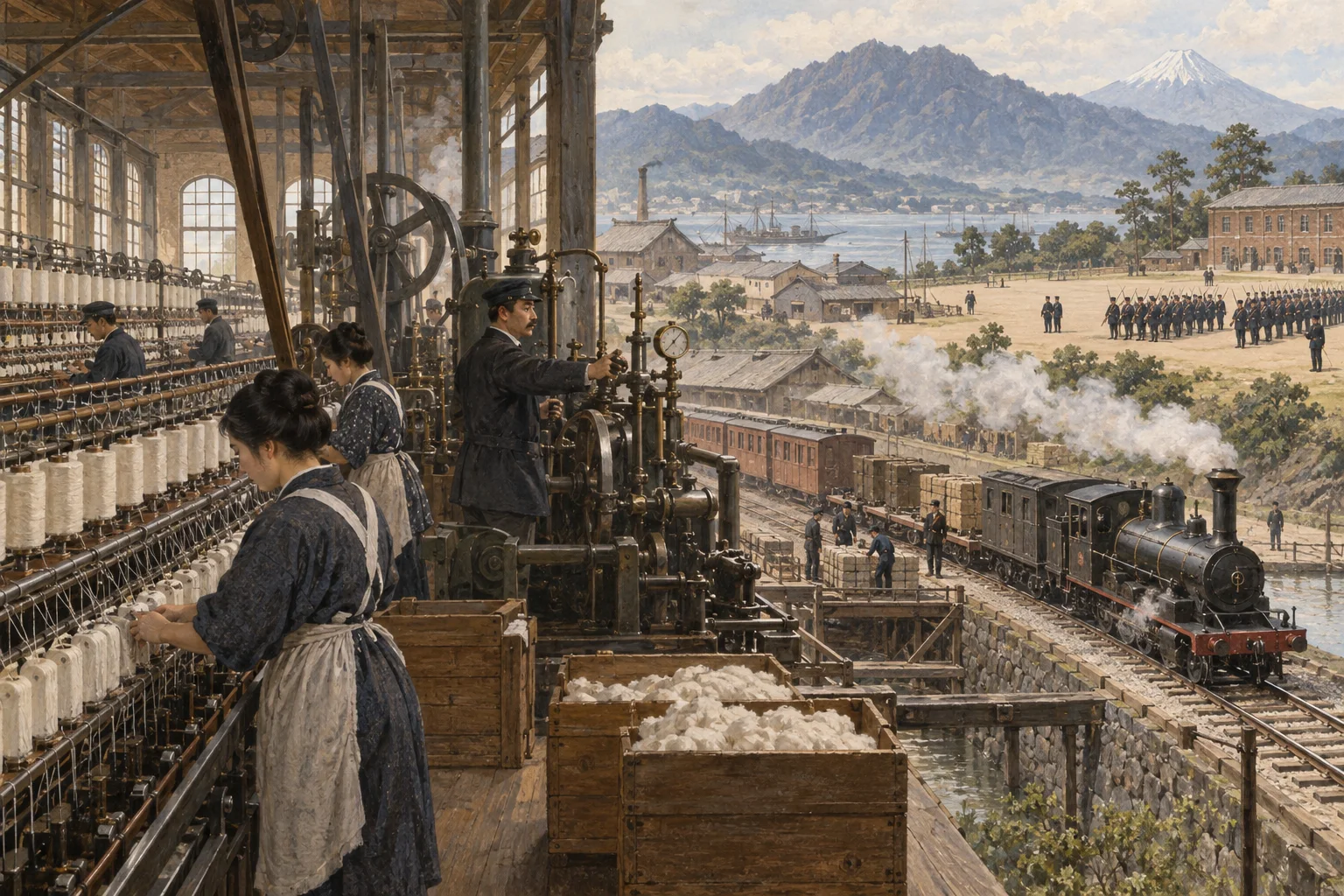
Fukoku kyohei, "rich country, strong army," was the slogan guiding Japan's push to industrialize and build a modern military.
富国強兵とは「豊かな国と強い軍」を意味する標語で、日本の近代化と軍備を導く指針となりました。
In 30 seconds
The standard explanation
After 1868, the new Meiji government adopted fukoku kyohei as a guiding principle: build up industry and the economy so the country could afford, and justify, a modern conscript military. It paired with related slogans for promoting industry and adopting Western institutions. The phrase itself is an old one, borrowed from ancient Chinese statecraft, but the Meiji government gave it a specific modern meaning tied to avoiding colonization.
1868年以降、新しい明治政府は富国強兵を指針の一つとして掲げました。産業と経済を築き上げ、その力で近代的な徴兵の軍を持つことを可能にし、正当化する考えです。産業を興す殖産興業や、西洋の制度を取り入れる方針とも組み合わされました。この言葉自体は古く、古代中国の統治思想から借りたものですが、明治政府はこれに、植民地化を避けるという当時ならではの意味を込めました。
As a short speech
A full paragraph you can read aloud
Fukoku kyohei, rich country, strong army, is the four-character slogan most often used to summarize what the Meiji government was trying to do after 1868. The words are not a Meiji invention; the phrase goes back to ancient Chinese statecraft, but the new Japanese government picked it up and gave it a very specific, urgent meaning: build enough industry and wealth to afford a modern military, because the alternative, as officials saw from watching China's experience with Western powers, was being colonized.
In practice this meant a national conscription law in 1873, government-backed factories and railways, and heavy state investment in shipping, mining and steel, often summarized alongside the companion slogan shokusan kogyo, promoting industry. It is worth remembering as an official policy rather than a spontaneous popular feeling, because the burden fell unevenly: conscription and the taxes that paid for it were unpopular in the countryside, and several tax revolts broke out in the 1870s even as the policy built the industrial and military base that helped Japan avoid colonization and that later also supported its expansion overseas.
富国強兵という四文字の標語は、1868年以降の明治政府が何をしようとしていたかを要約するときに最もよく使われる言葉です。この言葉自体は明治政府が作ったものではなく、古代中国の統治思想にさかのぼりますが、新しい日本の政府はこれを取り上げ、はっきりとした差し迫った意味を込めました。
近代的な軍を持てるだけの産業と富を築くこと、なぜなら、役人たちが中国が西洋列強に対してたどった経験を見て学んだように、それができなければ植民地にされかねないからです。実際には、1873年の徴兵令、官営の工場や鉄道、海運・鉱業・製鉄への大きな国の投資となって表れ、殖産興業という対になる標語と合わせて語られることが多いものです。
これは自然に湧いた民衆の気持ちというより、国の政策だったことを忘れないほうがよいでしょう。負担は均等ではなかったからです。徴兵とそれを支える税は地方で不人気で、1870年代には各地で税に反対する一揆も起きました。それでもこの政策は、日本が植民地化を免れる助けとなる産業と軍の基盤を築き、その基盤はのちに海外への膨張も支えました。
Questions people actually ask
And how to answer them.
Did ordinary people support this policy?
Not uniformly. Conscription and the taxes funding industrialization were unpopular in rural areas, and several tax and conscription-related uprisings broke out in the 1870s, even though the policy is usually remembered as a national success.
一様ではありません。徴兵や、工業化を支える税は地方で不人気で、1870年代には税や徴兵にからむ一揆が各地で起きました。この政策は国としては成功したと語られることが多いですが、負担は均等ではありませんでした。
Where does the phrase actually come from?
It is an old phrase from ancient Chinese statecraft texts, not something the Meiji government coined. What was new was applying it as an urgent national slogan aimed specifically at avoiding colonization by Western powers.
古代中国の統治にまつわる書物にある古い言葉で、明治政府が新しく作った言葉ではありません。新しかったのは、西洋列強による植民地化を避けるという差し迫った国の目標として、この言葉を標語に使ったことです。
What's the difference between this and shokusan kogyo?
Shokusan kogyo, promoting industry, refers more narrowly to building factories, mines and railways. Fukoku kyohei is the broader goal that industrial growth was meant to serve — a strong enough economy to support a modern military.
殖産興業は工場や鉱山、鉄道を興すことを指す、より狭い言葉です。富国強兵は、その産業の発展が仕えるべきより大きな目標で、近代的な軍を支えられるだけの経済力を指します。
Phrases you can use
- It became the government's guiding slogan.これが政府の指針となる標語になりました。
- Industrialization was meant to fund a modern military.産業の発展は、近代的な軍を支えるためのものでした。
- The burden of conscription fell hardest on farmers.徴兵の負担は農民にとりわけ重くのしかかりました。
- It was driven by fear of colonization.植民地化への恐れがこれを後押ししました。
- The phrase is centuries older than the Meiji era.この言葉自体は明治より何世紀も古いものです。
Words you need
- rich country, strong army富国強兵
- promoting industry殖産興業
- conscription徴兵
- industrialization工業化
- colonization植民地化
Watch
From YouTubeBackground (Japanese)
富国強兵は、もとは古代中国の法家の統治思想に見える語とされ、明治政府がこれを取り上げて近代化の標語とした。1873年の徴兵令により満20歳の男子に兵役の義務が課され、同時期に官営模範工場や鉄道、鉱山の整備が進められた殖産興業政策と一体で語られることが多い。負担は地方に重く、徴兵や地租にからむ一揆が1870年代の各地で起きている。西洋列強によるアジア諸国の植民地化を見た危機感が、この政策の背景にあったとされる。