dojo-yaburi
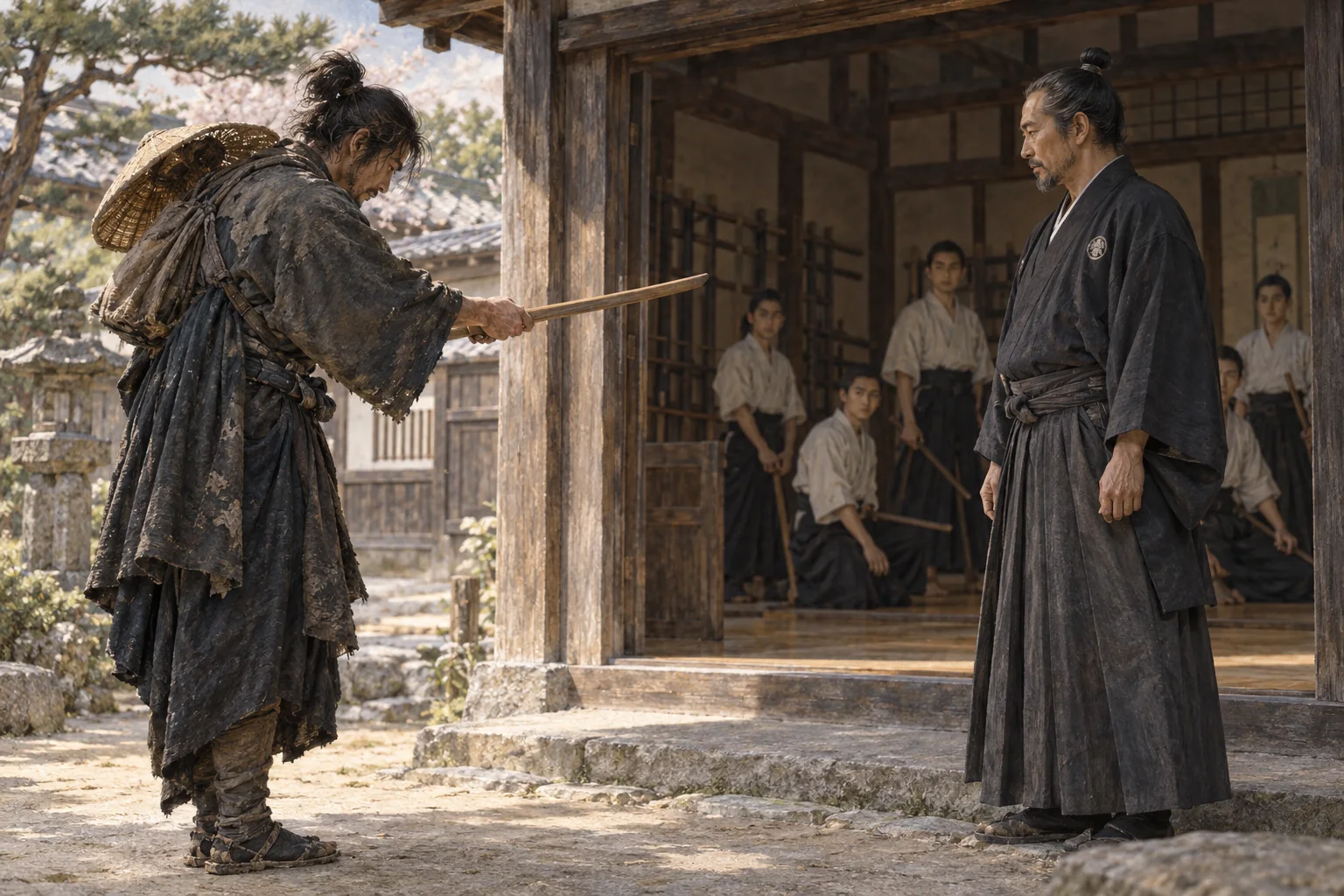
the movie trope of a stranger challenging a rival dojo to a duel
道場破り(どうじょうやぶり)
In one line
The shortest answer that works
Dojo-yaburi is the trope of a stranger storming into a rival dojo to fight for its reputation.
道場破りとは、見知らぬ武芸者が他流の道場に乗り込み、その看板をかけて戦うという定番の筋書きです。
In 30 seconds
The standard explanation
In period films and manga, a dojo-yaburi is a wandering martial artist who walks into a rival school uninvited, demands a match, defeats the instructor, and walks off with the school's honor, sometimes literally taking its signboard. Historians who have looked for real records of this exact ritual, complete with a broken or stolen sign, have found surprisingly little. What the historical record does show is something calmer: formally arranged matches between schools, and young samurai sent on training tours by their own domain.
時代劇や漫画での道場破りとは、見知らぬ流れの武芸者が招かれもせず他流の道場に乗り込み、試合を強要して師範を倒し、時には看板そのものを持ち去って学校の名誉を奪う、という定番の筋書きです。ところが、看板を壊したり持ち去ったりするこの通りの儀式を裏付ける記録を探した歴史家たちは、ほとんど見つけられていません。実際の記録が示すのは、もっと落ち着いたものです。流派どうしが事前に取り決めた試合や、藩から武者修行に出された若い藩士の姿です。
As a short speech
A full paragraph you can read aloud
Dojo-yaburi, literally dojo-breaking, is one of the most familiar scenes in samurai fiction: an unknown swordsman walks into a rival school, forces a match nobody agreed to, beats the instructor, and leaves having broken or carried off the school's signboard as proof of victory. It makes for a great scene, but historians who have gone looking for real records of exactly this ritual, the forced challenge and the stolen sign, have come up mostly empty.
Edo-period diaries and memoirs do describe cross-school matches, but usually ones arranged and agreed to in advance between schools that already respected each other, or young samurai sent on a training tour by their own domain to test their skill elsewhere. There's at least one striking real exception: a swordsman named Oishi Susumu is said to have used an unusually long shinai to defeat one Edo dojo after another in the late Edo period, causing enough of a stir that it was remembered for generations. So the trope isn't invented from nothing, but the tidy sign-breaking ritual is mostly a later dramatic invention.
道場破り、文字どおり道場を破るという行為は、時代劇でもっともなじみのある場面の一つです。見知らぬ剣客が他流の道場に乗り込み、誰も同意していない試合を強い、師範を倒し、勝利の証として看板を壊すか持ち去って去っていく。映画としては見応えのある場面ですが、まさにこの通りの儀式、強引な挑戦と看板の略奪を裏付ける記録を探した歴史家たちは、ほとんど何も見つけられずにいます。
江戸時代の日記や随筆には流派どうしの試合の記述がありますが、多くは互いに一目置く流派どうしがあらかじめ取り決めて行ったものか、藩から他流の腕を試すために送り出された若い藩士によるものです。少なくとも一つ、際立った実例と伝わる話があります。
大石進という剣客が、通常より長い竹刀を使って、江戸後期の江戸の道場を次々と破って回り、何世代にもわたって語り継がれるほどの評判になったと伝わります。つまりこの型は完全な作り話ではありませんが、看板をきれいに壊すという儀式そのものは、多くが後年の劇的な創作だと言えます。
Questions people actually ask
And how to answer them.
Did people really destroy a dojo's signboard after winning?
There's little solid historical evidence for that exact ritual. What records from the Edo period actually describe are pre-arranged matches between schools, not uninvited challengers smashing signs.
その通りの儀式を裏付ける確かな史料はほとんどありません。江戸時代の記録が実際に伝えているのは、招かれもせず看板を壊す挑戦者ではなく、流派どうしがあらかじめ取り決めた試合です。
So the whole idea is just fiction?
Not entirely. A famous late Edo-period swordsman, Oishi Susumu, is said to have used an unusually long shinai to defeat one dojo after another in Edo, becoming a genuine legend, even without the sign-breaking ritual attached.
完全に作り話ではありません。江戸後期の剣客、大石進は通常より長い竹刀を使い、江戸の道場を次々と破ったとされ、看板を壊す儀式こそ伴いませんが、本物の伝説になりました。
Does anything like this still happen in modern martial arts?
No, modern schools settle rivalry through organized tournaments and sanctioned interschool matches rather than uninvited challenges, and there's no equivalent of taking a rival's signboard.
いいえ、今の道場では、招かれない挑戦ではなく、組織立った大会や公認の流派間試合を通じて実力を比べます。相手の看板を持ち去るような行為に相当するものはありません。
A common misunderstanding
MYTHEvery old dojo faced literal storm-in duels where the loser handed over their signboard.
FACTHistorians find little documented evidence for that exact ritual. The real custom was mostly pre-arranged cross-school matches or training tours ordered by a samurai's own domain, though a few real wandering challengers, like the long-shinai swordsman Oishi Susumu, did go from dojo to dojo and became legendary.
Phrases you can use
- That scene is a classic dojo-yaburi setup.あの場面は典型的な道場破りの筋書きです。
- Historians doubt the signboard part actually happened.看板を壊す部分は史実か疑わしいとされています。
- Cross-school matches were usually arranged in advance.流派間の試合はたいてい事前に取り決められていました。
- He was sent on a training tour by his domain.彼は藩の命で武者修行に出されました。
- At least one real swordsman did go from dojo to dojo.実際に道場から道場へ渡り歩いた剣客もいました。
Words you need
- challenge match between schools他流試合
- training tour武者修行
- signboard看板
- wandering swordsman諸国を回る剣客
- domain, feudal fief藩
Watch
From YouTubeBackground (Japanese)
道場破りという言葉が指す、看板を賭けて他流の道場を襲うという定番の筋書きは、フィクションで繰り返し描かれてきたが、当時の日記や随筆にその通りの儀式を裏付ける記述はほとんど見当たらないとされる。江戸時代に実際に確認できるのは、流派どうしが認め合って行う他流試合や、藩が若い藩士に武芸を試させるために送り出した武者修行である。例外的な実例として、江戸後期(天保年間)に大石進という剣客が通常より長い竹刀を用いて江戸の道場を次々と破って回ったと伝わり、大きな評判になったとされる。