chabudai
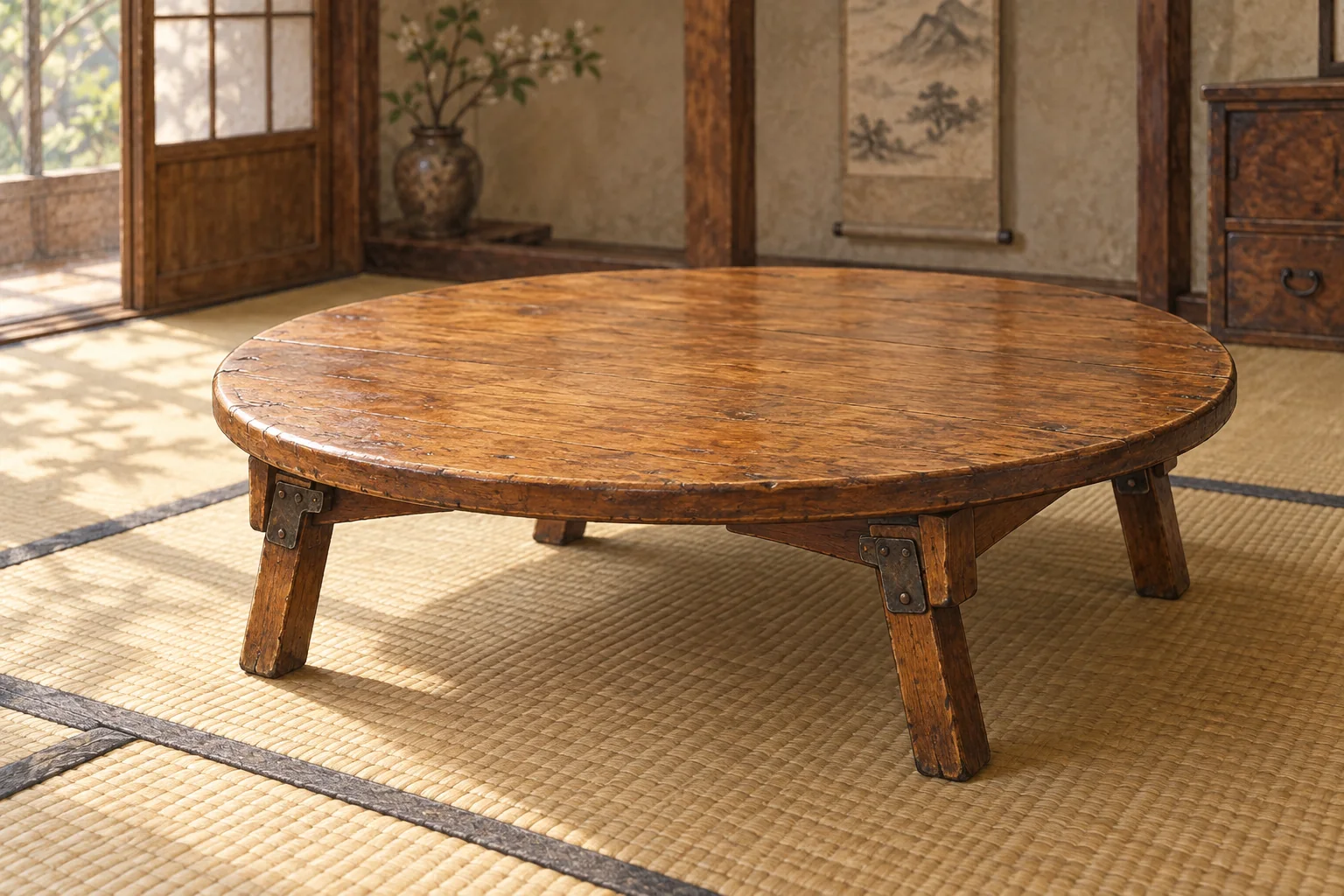
a low folding dining table
ちゃぶ台(ちゃぶだい)
In one line
The shortest answer that works
A chabudai is a low table, often round, that a family eats around while sitting on the floor.
ちゃぶ台とは、家族が床に座って囲む低い食卓で、丸いものが多いです。
In 30 seconds
The standard explanation
A chabudai is a short-legged table, often round, with legs that fold so it can be leaned against a wall after the meal. It was the everyday dining table of Japanese homes for much of the twentieth century, and it changed family life, because before it each person ate from a separate tray. Today most families use a Western table, but the low table survives in tatami rooms and in many nostalgic films about old Japan.
ちゃぶ台とは脚の短い食卓で、丸いものが多く、脚を折って食後に壁に立てかけられます。二十世紀の大半、日本の家庭の日常の食卓で、家族の暮らしを変えました。それ以前は一人ひとりが別々の膳で食べていたからです。今ではほとんどの家庭が洋式のテーブルを使いますが、低い卓は和室と、昔の日本を懐かしむ多くの映画の中に生きています。
As a short speech
A full paragraph you can read aloud
A chabudai is a low dining table, usually round and about knee-high, that a family sits around on the floor. Its legs fold flat, so after dinner it can be stood against the wall and the room becomes a bedroom. It looks timeless, but it is a fairly modern piece of furniture.
Until around the late nineteenth century, most Japanese households ate from individual small trays, each person with their own, arranged by rank. The chabudai spread in the early twentieth century and put everyone around a single table, which many people see as a small revolution in how families related to each other.
It reigned until Western dining tables and chairs took over in the decades after the war. The image of a father flipping the chabudai in anger is a famous cliché from old manga and television, so much so that the phrase is used today for anyone who overturns a decision at the last minute.
ちゃぶ台とは低い食卓で、たいてい丸く膝の高さほどで、家族が床に座って囲みます。脚は平らに折りたためるので、夕食のあとは壁に立てかけて部屋を寝室にできます。昔からあるように見えますが、実はかなり新しい家具です。
十九世紀の終わりごろまで、日本の多くの家庭では一人ひとりが自分の小さな膳で、序列に従って並んで食べていました。ちゃぶ台は二十世紀の初めに広まり、全員を一つの卓に集めました。これを家族の関係の小さな革命と見る人は多いです。
戦後の数十年に洋式の食卓と椅子が主流になるまで、ちゃぶ台の時代が続きました。父親が怒ってちゃぶ台をひっくり返す場面は古い漫画やテレビの有名な決まり文句で、今では土壇場で決定を覆す人のことを「ちゃぶ台返し」と言うほどです。
Questions people actually ask
And how to answer them.
Why is it round?
Not all are, but a round top has no head of the table, which suited the idea of the whole family eating together as equals, and it fits more people in a small room. Rectangular chabudai exist too, and the low tables in tatami rooms today are usually rectangular.
すべてが丸いわけではありませんが、丸い天板には上座がなく、家族全員が対等に食べるという考えに合い、狭い部屋に多くの人が着けます。四角いちゃぶ台もあり、今の和室の座卓はたいてい四角です。
What did people use before the chabudai?
Individual trays with short legs, called zen, one per person, sometimes a box that stored that person's own bowls and chopsticks. The father sat in the top position and meals were rather formal. The shared table loosened that.
「膳」と呼ばれる脚の短い一人用のお盆で、その人の椀や箸をしまう箱になっているものもありました。父親が上座に座り、食事はかなり形式的でした。共有の卓がそれを緩めたのです。
What does chabudai-gaeshi mean?
Literally flipping the chabudai. It pictures an angry father upending the dinner table, and in modern use it means wrecking a plan or a deal that everyone thought was settled. Politicians and managers are accused of it.
文字どおり、ちゃぶ台をひっくり返すことです。怒った父親が食卓を覆すさまを表し、今の用法では、皆が決まったと思っていた計画や取引を壊すことを意味します。政治家や経営者がそう非難されます。
Phrases you can use
- We eat at a low table, sitting on the floor.うちは床に座って低い卓で食べます。
- The legs fold, so we put the table away after dinner.脚が折れるので、夕食後は卓を片づけます。
- Before this, everyone ate from their own tray.これ以前は、みんな自分の膳で食べていました。
- He overturned the whole plan at the last minute.彼は土壇場で計画をひっくり返しました。
- It's the kind of table you see in old Japanese films.古い日本映画に出てくるような卓です。
Words you need
- low tableちゃぶ台・座卓
- folding legs折りたたみ式の脚
- individual tray膳
- sit around the table卓を囲む
- overturnひっくり返す
Watch
From YouTubeBackground (Japanese)
ちゃぶ台の語源には諸説あり、中国語の卓袱(しっぽく)や、飯を意味する俗語との関係が言われますが、定説はありません。明治の終わりから大正・昭和初期にかけて都市の家庭に広まり、それまでの銘々膳や箱膳に代わって家族が一つの卓を囲む食事の形を作りました。戦後の高度経済成長期に椅子式の食卓が普及すると急速に姿を消し、今では民具として博物館や昭和を再現した施設で見るものになっています。「ちゃぶ台返し」はスポーツ根性漫画の父親像と結びついて広まった言い回しで、実際の作中には数えるほどしか登場しないとも指摘されています。現在は決まりかけた話を覆す意味で、政治や企業の記事にもふつうに使われます。