Atami
the hot spring town that collapsed and came back
熱海(あたみ)
In one line
The shortest answer that works
Atami is a seaside hot spring town near Tokyo that boomed, declined, and rebuilt itself as a weekend destination.
熱海とは、東京に近い海辺の温泉町で、栄えて傾いたのち、週末の行き先として立て直された町です。
In 30 seconds
The standard explanation
Atami is on the Izu coast in Shizuoka, about fifty minutes from Tokyo by shinkansen. In the postwar decades it thrived on company trips and group banquets, then lost that business in the 1990s and saw many hotels close. Since around 2010 it has recovered by attracting younger, smaller groups. It is one of the easiest hot spring towns to reach from Tokyo.
熱海は静岡県、伊豆の海沿いにあり、東京から新幹線でおよそ五十分です。戦後の数十年は社員旅行と宴会で栄え、1990年代にその客を失って、多くのホテルが閉じました。2010年ごろから、若い少人数の客を呼び込むことで持ち直しています。東京から行きやすい温泉町の一つです。
As a short speech
A full paragraph you can read aloud
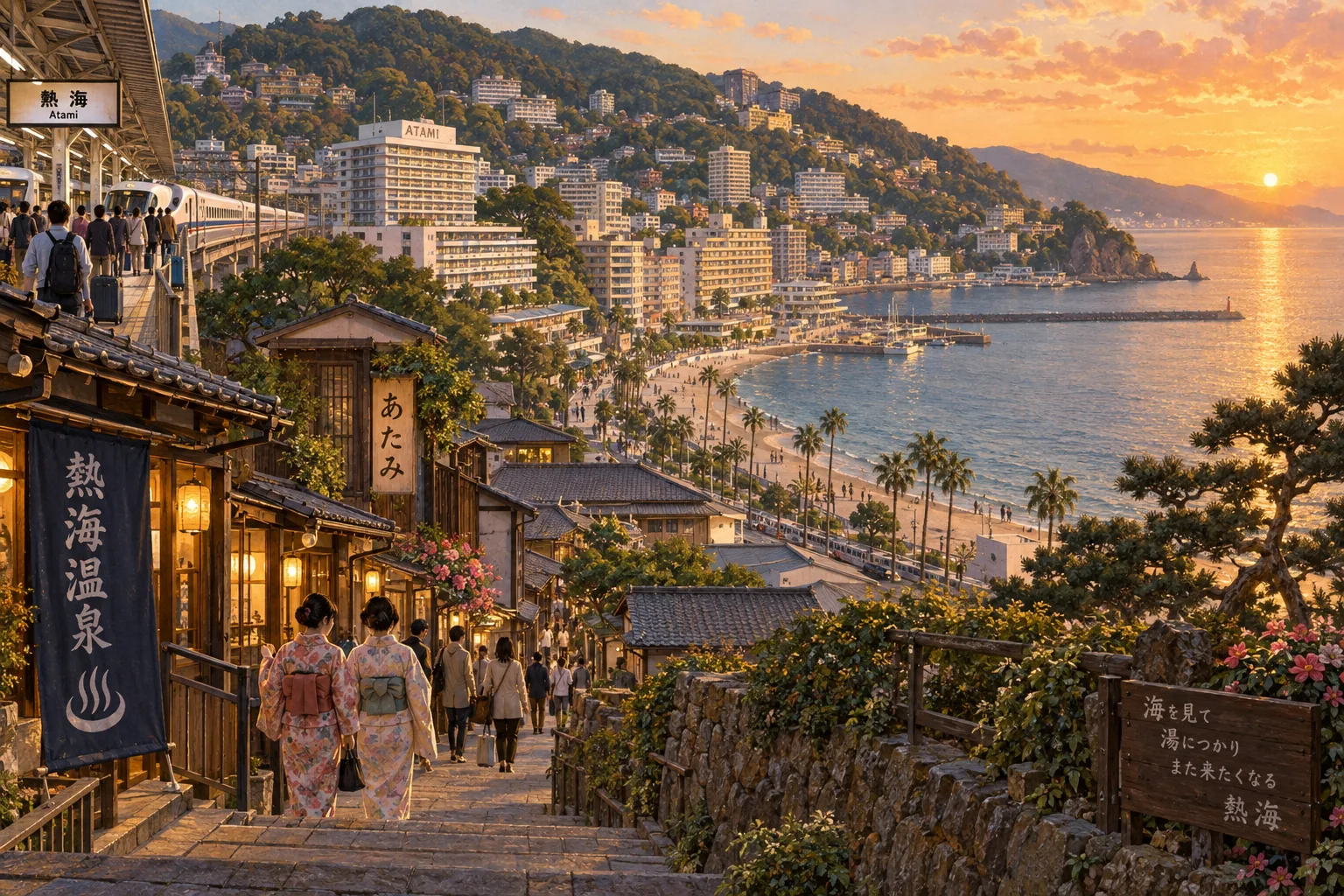
Atami's story is the story of Japanese tourism in miniature. It is a hot spring town built up a steep slope above a bay on the Izu coast, fifty minutes from Tokyo on the shinkansen. Through the postwar decades it lived on company trips: a bus of colleagues, a large hotel, a banquet hall, a set meal and a lot of beer.
When the economy turned in the 1990s, companies stopped paying for those trips, the big hotels emptied, and Atami became the standard example of a resort town in decline, with concrete buildings standing empty on the hillside. What happened next is the interesting part. The town stopped chasing large groups and went after small ones: couples, friends, young people down for a night, day visitors using the public baths.
Old buildings were converted, cafes opened, and visitor numbers recovered over about a decade. It does not sell itself on elegance or remoteness. It is close, cheap enough, has a beach and summer fireworks, and is the answer for anyone in Tokyo who wants a hot spring tomorrow.
熱海を知っておくと役に立つのは、その歩みが日本の観光の縮図だからです。伊豆の海沿い、湾を見下ろす急な斜面に建ち上がった温泉町で、東京から新幹線で五十分。戦後の数十年、この町は社員旅行で生きていました。同僚を乗せたバス、大きなホテル、宴会場、決まった膳、そしてたくさんのビール。
1990年代に景気が変わると、会社は旅行の費用を出さなくなり、大きなホテルは空き、熱海は寂れた観光地の典型として語られるようになります。斜面には空のコンクリートの建物が並びました。面白いのはその先です。町は大人数を追うのをやめ、小さな客に向き直りました。
夫婦、友人どうし、一泊で来る若い人、日帰りで外湯に入る人。古い建物が作り直され、喫茶店が開き、十年ほどかけて客数が戻りました。上品さや山奥の趣を売りにする町ではありません。近く、そこそこ安く、浜があり、夏には花火が上がる。明日温泉に行きたい東京の人への、分かりやすい答えです。
Questions people actually ask
And how to answer them.
How do I get there?
Shinkansen from Tokyo station, about fifty minutes to Atami station. Local trains take about two hours and cost much less.
東京駅から新幹線で熱海駅まで五十分ほどです。在来線なら二時間ほどで、運賃はずっと安くなります。
Can I visit without staying the night?
Yes. Several inns open their baths to day visitors, there are public bathhouses, and the town is compact enough for an afternoon.
行けます。日帰りの入浴を受け入れる宿がいくつもあり、公衆浴場もあります。町は小さく、午後だけでも回れます。
Is the water good?
It is salty and warming, from seaside springs, and there are many sources around the bay. Several hotels have baths looking straight out at the sea.
海辺の湯らしく塩気があり、体がよく温まります。湾の周りに多くの源泉があり、海を正面に見る風呂のある宿もあります。
A common misunderstanding
MYTHAtami is a ruined town full of abandoned hotels.
FACTThat image took hold in the 2000s. Visitor numbers have recovered substantially since, and the town center has been reworked for smaller groups.
Phrases you can use
- It's fifty minutes from Tokyo by shinkansen.東京から新幹線で五十分です。
- It boomed on company trips, then collapsed.社員旅行で栄え、そして傾きました。
- It came back by targeting smaller groups.少人数の客に向き直って戻ってきました。
- You can go just for the day.日帰りでも行けます。
- The water is salty — it's a seaside spring.海辺の湯なので塩気があります。
Words you need
- hot spring town温泉街
- company trip社員旅行
- day-use bathing日帰り入浴
- banquet hall宴会場
- decline and revival衰退と再生
Watch
From YouTubeBackground (Japanese)
熱海市の宿泊客数は1960年代に年間500万人規模に達したのち、2011年ごろには半分以下に落ち込み、その後、回復に転じた。市は2000年代に財政再建団体に転落する危機を経験している。徳川家康が湯治に訪れたという伝えがあり、江戸時代には将軍家に湯を運ばせた「御汲湯」の記録が残る。毎年、複数回にわたって海上花火大会が開かれている。