
“Music to one’s ears”の意味や使い方は?~1878年2月19日、エジソンが蓄音機の特許を取得した日~
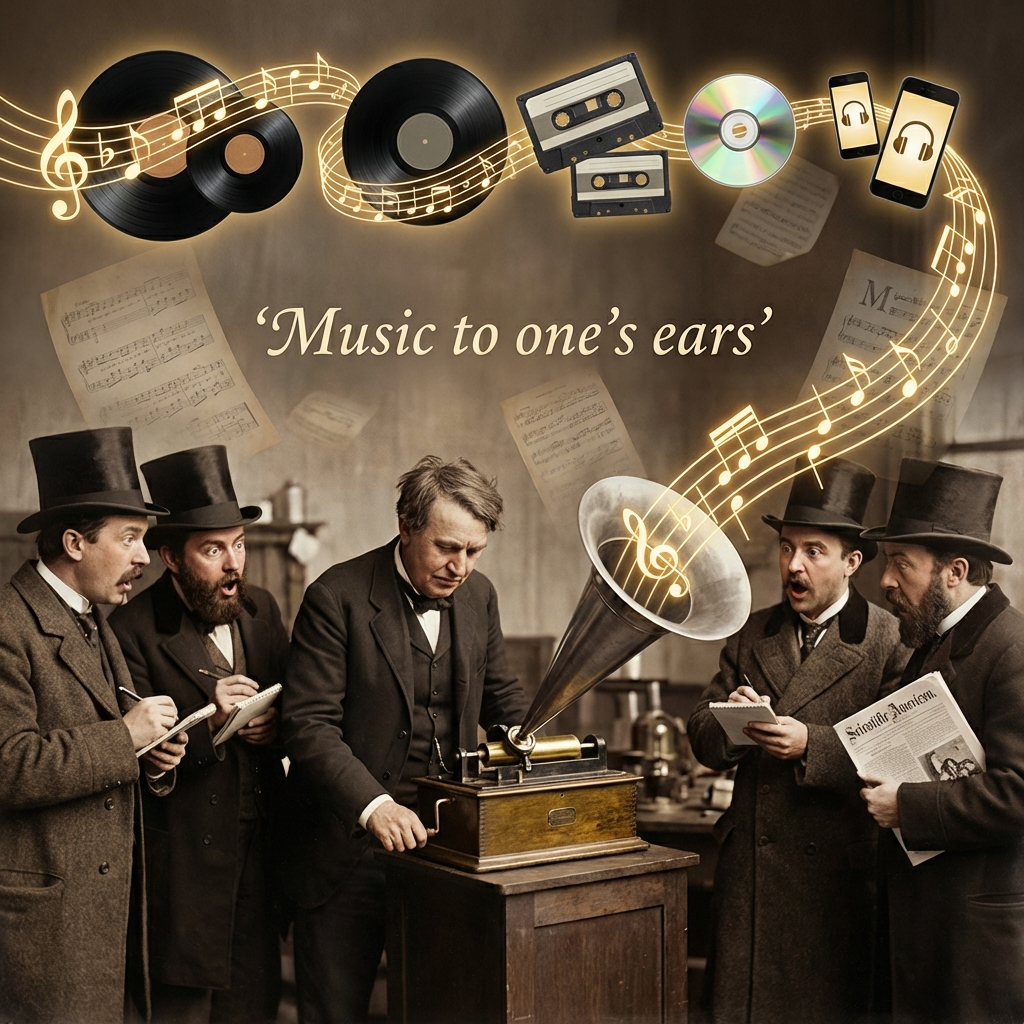
英語には「Music to one’s ears(ミュージック・トゥー・ワンズ・イヤーズ)」という心地よいイディオムがある。直訳すると「耳への音楽」だが、実際には「聞いてとても嬉しい知らせ」「まさに聞きたかった言葉」という意味で使われる▼この表現の起源は16世紀頃に遡る。音楽が耳に心地よく響くことから転じて、喜ばしい情報や嬉しい知らせを受けた時の感情を表すようになった。日本語の「耳寄りな話」に近いが、英語の方が喜びや安堵のニュアンスがより鮮明だ▼音楽と耳といえば、1878年2月19日はトーマス・エジソンが蓄音機(フォノグラフ)の特許を取得した記念すべき日だ。人類史上初めて音を記録し再生することを可能にしたこの発明は、世界を一変させた。エジソンはニュージャージー州の研究所で錫箔を巻いた円筒に音を刻む方式を開発し、最初に「メリーさんの羊」を録音・再生してみせた▼サイエンティフィック・アメリカン誌にエジソンが小さな機械を持ち込み、クランクを回すと機械が挨拶を始めたという逸話は有名だ。当時の人々にとって、機械から人の声が聞こえるのはまさに魔法のような体験だった。エジソンは「メンロパークの魔術師」と称されるようになる▼エジソン自身は蓄音機をビジネス用の口述筆記機と想定していたが、やがてこの発明は音楽産業という巨大な市場を生み出すことになる。レコード、カセット、CD、そしてストリーミングへと形を変えながら、音楽を「いつでもどこでも」楽しめる時代を切り開いた▼蓄音機がなければ、私たちが日常的に音楽を楽しむ文化は存在しなかったかもしれない。「Music to one’s ears」が文字通り全人類の耳に届く世界を作った発明に、これほどふさわしい表現はないだろう。
【英語訳】
The True Meaning of “Music to One’s Ears”: The Day Edison Patented the Phonograph
English has a pleasant idiom: “Music to one’s ears.” While its literal translation is “music for the ears,” it actually means “news that is very pleasing to hear” or “exactly the words one wanted to hear.”
The origin of this expression dates back to around the 16th century. Derived from the way music resonates pleasantly in one’s ears, it came to express the feeling of receiving joyful information or welcome news. In Japanese, there is a similar expression, “mimi-yori na hanashi” (a story worth lending an ear to), but the English version more vividly conveys feelings of joy and relief.
Speaking of music and ears, February 19, 1878, was the momentous day when Thomas Edison was granted the patent for the phonograph. This invention, which for the first time in human history made it possible to record and reproduce sound, transformed the world. At his laboratory in New Jersey, Edison developed a method of engraving sound onto a tin-foil-wrapped cylinder and demonstrated the device by recording and playing back “Mary Had a Little Lamb.”
A famous anecdote tells of Edison bringing a small machine into the offices of Scientific American magazine, turning the crank, and having the machine begin to offer greetings. For people of that era, hearing a human voice emanating from a machine was nothing short of a magical experience. Edison came to be known as “The Wizard of Menlo Park.”
Edison himself had envisioned the phonograph as a dictation machine for business use, but eventually this invention would give birth to the enormous market of the music industry. Evolving through records, cassettes, CDs, and then streaming, it pioneered an era in which music could be enjoyed “anytime, anywhere.”
Without the phonograph, the culture of casually enjoying music in our daily lives might never have existed. There could be no more fitting expression than “Music to one’s ears” for the invention that created a world where music literally reaches the ears of all humanity.