 ワークシート
 ぬりえ
 迷路
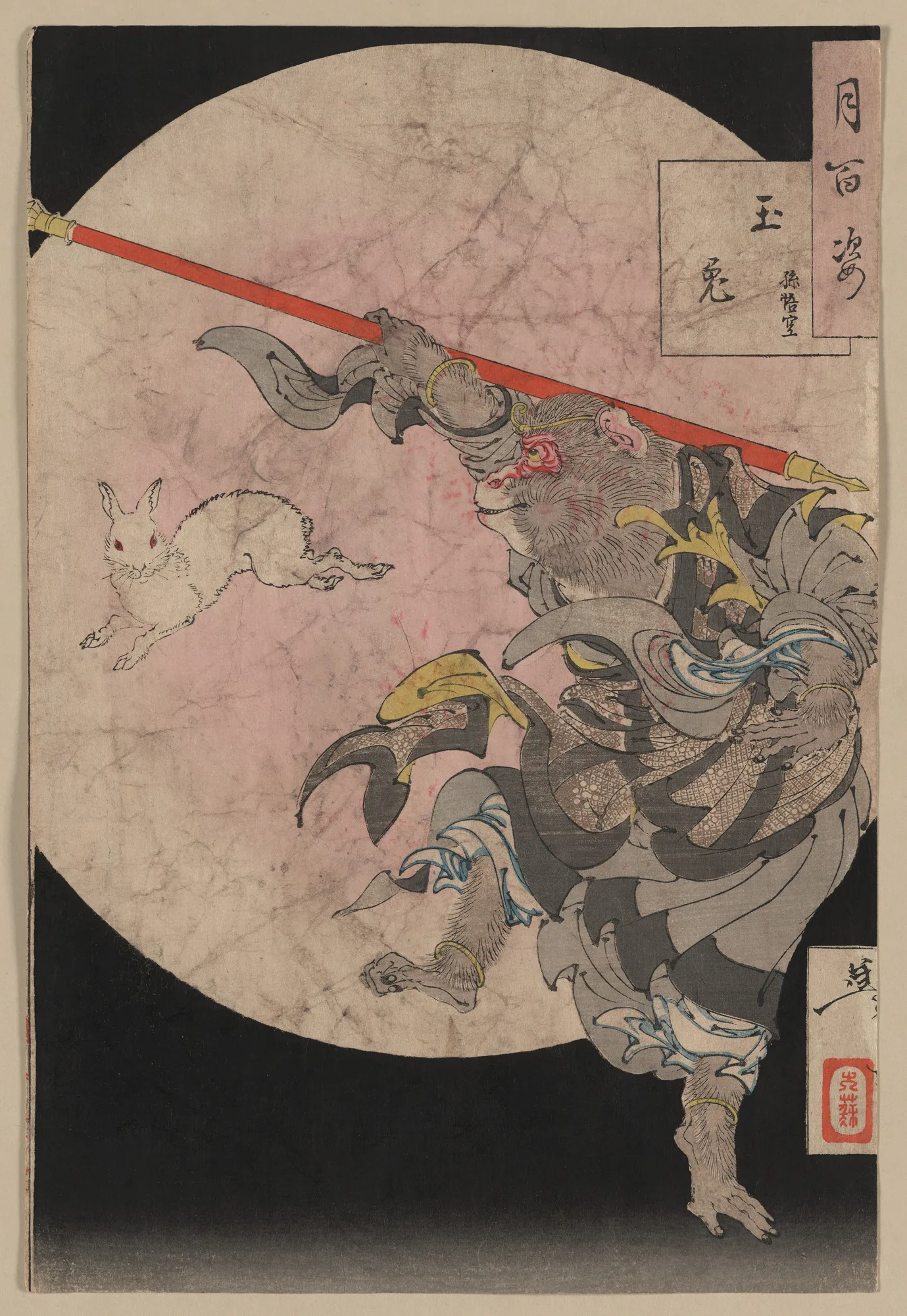
孫悟空VS月のウサギ!大きな満月を舞台に、空中でバトル。Monkey King vs. the Moon Rabbit! A battle in front of a giant moon.
この作品のお話
Story画面いっぱいの大きな満月の前で、赤い棒をかまえたサルが、ぴょんとにげる白いウサギにとびかかろうとしています。サルは『西遊記』の孫悟空、ウサギは伝説で月の宮殿にすむとされる「玉兎(ぎょくと)」です。明治時代の浮世絵師・月岡芳年が、月にまつわる100の物語を描いたシリーズ「月百姿(つきひゃくし)」の一枚で、1889年に出版されました。
In front of a huge full moon, a monkey with a red staff is about to leap at a white rabbit that is jumping away. The monkey is Sun Wukong from Journey to the West, and the rabbit is the Jade Rabbit, which in legend lives in the palace on the moon. This is from One Hundred Aspects of the Moon, a series of 100 moon stories by the Meiji-era artist Tsukioka Yoshitoshi. It was published in 1889.
『西遊記』では、月の宮殿から地上へにげ出した玉兎が、天竺(インド)の国のお姫さまに化けて、三蔵法師をだまそうとします。正体を見ぬいた悟空はウサギと戦い、最後は月の神さまがむかえに来て、ウサギを月へ連れもどします。芳年は、悟空のよろいのもようや毛並み、ウサギのふわふわの毛まで、細かく描き分けています。
In Journey to the West, the Jade Rabbit runs away from the moon palace and turns into a princess in India to trick the monk Tripitaka. Wukong sees through the trick and fights the rabbit. In the end, the moon goddess comes down and takes the rabbit back to the moon. Yoshitoshi carefully drew the patterns of Wukong's armor, his fur, and even the rabbit's soft white coat.
「月百姿」は1885年から出版が始まり、芳年が亡くなった1892年に全100図が完成しました。日本や中国の物語、歴史上の人物などを、どれも月と組み合わせて描いた、芳年最晩年の代表作です。浮世絵は同じ版木から何枚も摺られたので、この図柄も世界中にあります。画像の摺りは国立国会図書館の所蔵です。
One Hundred Aspects of the Moon began in 1885, and all 100 prints were finished in 1892, the year Yoshitoshi died. Each print pairs the moon with a story, legend or famous person from Japan or China. It is the great work of his last years. Many prints were made from the same blocks, so this design is in museums worldwide. The impression shown here is in the National Diet Library.
大きな月があります。白いウサギがはねて逃げています。赤い棒を持ったサルが、それを追いかけています。サルは中国の古いお話の孫悟空です。お話の中では、ウサギは月に住んでいるのです!
There is a big moon. A white rabbit jumps away. A monkey with a red staff jumps after it. The monkey is Sun Wukong from an old Chinese story. In the story, the rabbit lives on the moon!
英語のレベルは上の「やさしい/ふつう」で切りかえられます。
えっ!?な裏ネタ
Secrets日本では「月でウサギがもちをつく」と言いますが、中国では、ウサギは月で不老不死の薬をついていると考えられてきました。同じ月のウサギでも、国によって作っているものがちがうのです。
In Japan, people say the rabbit on the moon is pounding mochi rice cakes. But in China, the moon rabbit was believed to be pounding a medicine for eternal life. The same rabbit makes different things in different countries.
2013年、中国の月探査機「嫦娥(じょうが)3号」が月面に着陸し、探査車を走らせました。その探査車の名前が「玉兎(ぎょくと)」。物語のウサギの名前が、本当に月の上を走ったのです。
In 2013, China's Chang'e 3 spacecraft landed on the moon and sent out a rover. The rover's name was Yutu, which means 'Jade Rabbit.' The name of the rabbit in the story really traveled across the moon.
鳥山明のマンガ『ドラゴンボール』の主人公・孫悟空は、『西遊記』の孫悟空がもとになっています。のびる棒「如意棒」や、雲に乗る「筋斗雲」も、もとは西遊記に出てくる道具です。
Son Goku, the hero of Toriyama Akira's manga Dragon Ball, is based on Sun Wukong of Journey to the West. His stretching staff and his flying cloud also come from the original story.
「月百姿」は約7年かけて出された大シリーズで、最後の作品が出たのは1892年。その同じ年に、芳年は53歳で亡くなりました。月を見つめつづけた芳年の、まさに人生のしめくくりとなった作品集です。
One Hundred Aspects of the Moon was a big series that took about seven years. The last prints came out in 1892, and Yoshitoshi died that same year at the age of 53. The series became the finale of his life spent looking at the moon.
ここを見て!
Look Closer1玉兎The Jade Rabbit
赤い目の白いウサギ。後ろ足でけって、ぴょんと逃げ出しています。
A white rabbit with red eyes kicks with its back legs and jumps away.
2孫悟空の顔Wukong's face
頭に金の輪をはめた孫悟空。目をむいてウサギをにらんでいます。
Wukong wears a gold ring on his head and glares at the rabbit.
3如意棒The magic staff
両はしが金色の赤い棒。のびたりちぢんだりする、悟空の武器です。
A red staff with gold ends. It is Wukong's weapon, and it can grow and shrink.
4題名「玉兎 孫悟空」Title: 'Jade Rabbit, Sun Wukong'
右上の札には、シリーズ名「月百姿」と題名「玉兎 孫悟空」が書かれています。
The label at the top right shows the series name and the title, 'Jade Rabbit, Sun Wukong.'
英語で名画を語ろう
Talk about Art in EnglishSun Wukong is chasing after the Jade Rabbit.
孫悟空が玉兎を追いかけています。
💡 chase だけでも「追いかける」ですが、after をつけると「あとを追う」感じが強まります。
英語で説明すると… Describe it
この絵には大きな満月が描かれています。左では、白いウサギがはねて逃げています。右では、よろいを着たサルが長い赤い棒を持っています。サルはウサギに向かってとびかかっています。
This picture shows a big full moon. On the left, a white rabbit is jumping away. On the right, a monkey in armor is holding a long red staff. He is jumping toward the rabbit.
考えてみよう Think & Talk
- いろいろな国の人が、月にウサギを見るのはなぜだと思いますか?Why do you think people in many countries see a rabbit on the moon?
- この戦い、ウサギとサルのどちらに勝ってほしいですか?それはなぜ?Who do you want to win this fight, the rabbit or the monkey? Why?
この作品の英単語
WordsA white rabbit jumps away from the monkey.
白いウサギがサルからぴょんと逃げます。
The monkey king holds a long red staff.
孫悟空は長い赤い棒を持っています。
The rabbit escaped from the moon palace.
ウサギは月の宮殿から逃げ出しました。
A huge moon fills the background.
巨大な月が背景いっぱいに広がっています。
ミニクイズ
QuizQ. 2013年、中国の月探査車につけられた名前は?What name was given to China's moon rover in 2013?
月のウサギと同じ「玉兎」という名前でした。
It was named Yutu, the Jade Rabbit, like the rabbit on the moon.
ウソ?ホント? このサルは、『西遊記』の孫悟空だ。This monkey is Sun Wukong from Journey to the West.
中国の物語『西遊記』の主人公、孫悟空です。
Yes, he is the hero of the Chinese story Journey to the West.
ウソ?ホント? 「月百姿」は、全部で10枚のシリーズだ。One Hundred Aspects of the Moon has only 10 prints.
名前のとおり、全100図のシリーズです。
As the name says, there are 100 prints.
 画像の出典とライセンス / Image credit
- PDTsukioka Yoshitoshi (c. 1885–90) Tsuki hyaku shi - Tamausagi songokū-.jpg(Wikimedia Commons)
ライセンス:Public domain(パブリックドメイン)/作者・撮影者の表記:Tsukioka Yoshitoshi
この作品は、作者の死後長い年月がたち著作権の保護期間が終わった「パブリックドメイン」の作品です。画像は平面の作品を忠実に写したもので、新しい著作権は生じません(Wikimedia Commons の PD-Art の考え方)。 所蔵:国立国会図書館(画像の摺り)(National Diet Library (this impression))。画像は表示のために縮小・WebP 形式に変換しています。