

 ワークシート
 ぬりえ
 迷路
ただの塩鮭なのに、教科書でおなじみの国の重要文化財!Just a salted salmon, yet it is an Important Cultural Property familiar from Japanese school textbooks!
この作品のお話
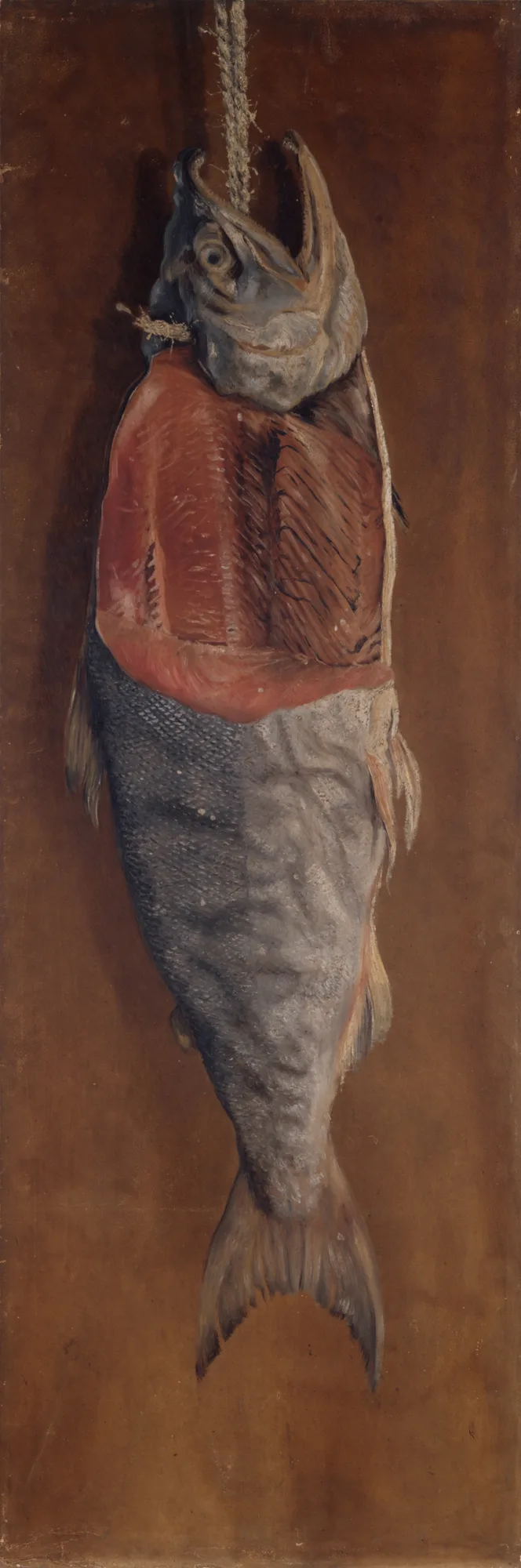
Story縄でつるされた一匹の鮭。おなかの身の一部が切り取られ、あざやかなオレンジ色の身と、銀色のうろこが見えています。描いたのは、日本の油絵の先がけ・高橋由一。1877年ごろの作品で、縦140センチの細長い画面いっぱいに描かれています。国の重要文化財で、東京藝術大学大学美術館が持っています。
A single salmon hangs from a rope. Part of its side has been cut away, showing bright orange flesh and silver scales. The painter is Takahashi Yuichi, a pioneer of oil painting in Japan. He made it around 1877 on a tall, narrow sheet about 140 centimeters high. It is an Important Cultural Property and belongs to the University Art Museum of Tokyo University of the Arts.
由一は江戸の武士の家に生まれ、はじめは日本画を学びました。ところが西洋の石版画を見て、本物そっくりに描く表現に衝撃を受け、油絵を志します。横浜でイギリス人画家ワーグマンに学び、身近な物をじっくり観察して描きました。冬のごちそうだった塩鮭を、日本の掛け軸のような縦長の画面に描いたところが、和と洋の出会いを感じさせます。
Yuichi was born into a samurai family in Edo and first studied Japanese-style painting. Then he saw Western lithographs and was amazed by their realism, so he decided to paint in oil. He studied with the British artist Charles Wirgman in Yokohama and carefully observed everyday things. He painted a salted salmon, a winter treat, in a tall format like a Japanese hanging scroll. It feels like a meeting of Japan and the West.
由一は鮭の絵を何点か残していますが、なかでもこの一枚がいちばん有名で、美術の教科書にもよく登場します。西洋の技術で日本の身近な物を描いたこの絵は、日本の近代絵画のはじまりを象徴する作品とされています。何気ない塩鮭が、日本の美術の歴史を変える一枚になったのです。
Yuichi painted several pictures of salmon, but this is the most famous one. It often appears in Japanese art textbooks. Using Western techniques to paint an everyday Japanese object, it is seen as a symbol of the start of modern painting in Japan. An ordinary salted fish became a turning point in Japanese art history.
これは大きな鮭です。縄からぶら下がっています。魚の一部が切られています。オレンジ色の身が見えます。本物そっくりに見えますね。日本の多くの生徒が、教科書でこの絵を見ています。
This is a big salmon. It hangs from a rope. Part of the fish is cut. We can see its orange flesh. It looks very real. Many Japanese students see this painting in their textbooks.
英語のレベルは上の「やさしい/ふつう」で切りかえられます。
えっ!?な裏ネタ
Secrets高さ140センチ、幅46.5センチのとても細長い画面は、床の間にかける掛け軸を思わせます。西洋の油絵の技術を、日本の家にかざりやすい形で見せようとしたのではないかと考えられています。
At 140 cm tall and 46.5 cm wide, the picture is very narrow, like a scroll hung in a tokonoma alcove. Some think Yuichi wanted to show Western oil painting in a shape that fit Japanese homes.
由一は1872年に花魁を写実的に描いた「花魁」という油絵も残しています。モデルになった花魁は、できあがった絵を見て「私はこんな顔ではない」と泣いて怒ったという話が伝わっています。それほどリアルだったのです。
In 1872, Yuichi also made a realistic oil painting of an oiran. There is a story that when the model saw it, she cried and said angrily, 'My face doesn't look like this!' It was that realistic.
由一は油絵を広めるため、らせん形の通路を歩きながら絵を見る「螺旋展画閣」という美術館の計画まで考えました。実現はしませんでしたが、日本に美術館を作ろうとした先がけの一人でした。
To spread oil painting, Yuichi even planned a museum where visitors walked up a spiral path to see the pictures. It was never built, but he was one of the first people who tried to create an art museum in Japan.
この鮭は、ふつうの油絵のようなキャンバス(布)ではなく、紙に油絵の具で描かれています。明治のはじめ、日本で油絵を描く環境がまだ手さぐりだったことを感じさせます。
This salmon is painted in oil on paper, not on canvas like most oil paintings. It shows that in the early Meiji era, oil painting in Japan was still a new and experimental art.
ここを見て!
Look Closer1縄と鮭の頭The rope and head
太い縄でつるされた鮭の頭。口を開けた顔や、えらの形まで観察して描いています。
The salmon's head hangs from a thick rope. Even the open mouth and gills are carefully observed.
2切り身のオレンジThe orange flesh
切り取られたところから見える、あざやかなオレンジ色の身。筋の一本一本まで描かれています。
Bright orange flesh shows where part of the side was cut away. Even the lines in the flesh are painted.
3銀色のうろこSilver scales
細かいうろこが光を受けて、銀色や青っぽく光っています。さわれそうなほどの質感です。
Tiny scales catch the light and shine silver and blue. They look real enough to touch.
4しっぽThe tail
画面の下まで垂れた尾びれ。茶色い背景が、鮭の色を引き立てています。
The tail fin hangs near the bottom. The brown background makes the fish's colors stand out.
英語で名画を語ろう
Talk about Art in EnglishA salted salmon is hanging from a rope.
塩鮭が縄からぶら下がっています。
💡 hang from 〜 で「〜からつり下がる」。電灯や果物の説明にも使えます。
英語で説明すると… Describe it
これは鮭の絵です。魚は縄からぶら下がっています。体の一部が切られていて、オレンジ色の身が見えます。残りの部分には銀色のうろこがあります。背景は茶色です。
This is a painting of a salmon. The fish is hanging from a rope. Part of its body has been cut away, and we can see its orange flesh. The rest of the fish has silver scales. The background is brown.
考えてみよう Think & Talk
- 由一はなぜ、有名な人や場所ではなく、鮭を描いたのだと思いますか?Why do you think Yuichi chose a salmon, not a famous person or place?
- あなたなら、身の回りのどんな物を本物そっくりに描いてみたいですか?What everyday thing would you choose to paint very realistically?
この作品の英単語
WordsA salted salmon hangs on the wall.
塩鮭が壁につるされています。
The fish hangs from a rope.
魚が縄からぶら下がっています。
Its silver scales shine in the light.
銀色のうろこが光にかがやいています。
The painting is very realistic.
その絵はとても写実的です。
ミニクイズ
QuizQ. この「鮭」は、何に描かれている?What is this salmon painted on?
紙に油絵の具で描かれています。
It is painted in oil on paper.
ウソ?ホント? この絵は、国の重要文化財に指定されている。This painting is an Important Cultural Property of Japan.
1967年に国の重要文化財に指定されました。
It was designated an Important Cultural Property of Japan in 1967.
ウソ?ホント? 高橋由一は、鮭の絵をこの一枚しか描かなかった。Takahashi Yuichi painted only one salmon picture.
鮭の絵は何点か残っていて、この一枚がいちばん有名です。
He painted several, and this one is the most famous.
 画像の出典とライセンス / Image credit
- PDSalmon by Takahashi Yuichi (Geidai Museum).jpg(Wikimedia Commons)
ライセンス:Public domain(パブリックドメイン)/作者・撮影者の表記:Takahashi Yuichi
この作品は、作者の死後長い年月がたち著作権の保護期間が終わった「パブリックドメイン」の作品です。画像は平面の作品を忠実に写したもので、新しい著作権は生じません(Wikimedia Commons の PD-Art の考え方)。 所蔵:東京藝術大学大学美術館(The University Art Museum, Tokyo University of the Arts)。画像は表示のために縮小・WebP 形式に変換しています。
