

 ワークシート
 ぬりえ
 迷路
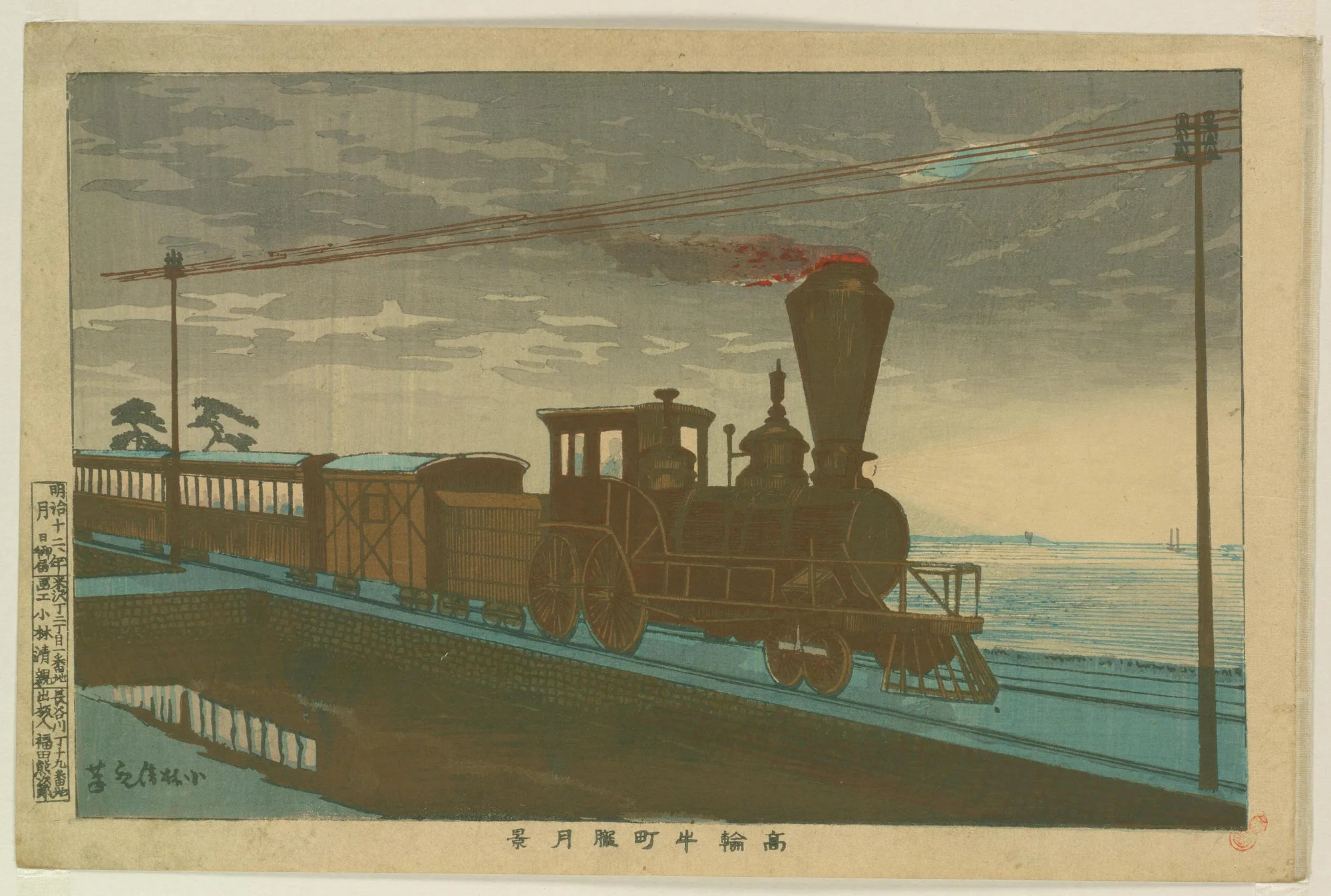
海の上を汽車が走る!?おぼろ月の夜、明治の東京の新しい風景。A train running over the sea!? A new view of Meiji-era Tokyo under a hazy moon.
 美術館アンテナ:小林清親の作品に会える展覧会
この作品のお話
Story雲にかすむおぼろ月の夜、海ぞいの線路を、大きな煙突の蒸気機関車が客車を引いて走っていきます。煙突からは赤い火の粉、線路ぞいには電信柱と電線。明治の浮世絵師・小林清親が1879年に出した「高輪牛町朧月景(たかなわうしまちおぼろづきのけい)」です。場所は今の東京・田町と品川のあいだ、高輪の海辺です。
On a night with a hazy moon behind clouds, a steam locomotive with a big smokestack pulls its cars along a railway by the sea. Red sparks fly from the smokestack, and telegraph poles and wires line the track. This is View of Takanawa Ushimachi under a Hazy Moon, published in 1879 by the Meiji-era print artist Kobayashi Kiyochika. The place is the seashore at Takanawa, between today's Tamachi and Shinagawa in Tokyo.
日本で最初の鉄道は、1872年に新橋と横浜のあいだで開業しました。高輪のあたりでは、線路は海の中に土手を築いてその上に通されていました。清親は、西洋の絵のように光と影を大切にした新しい版画「光線画」で人気を集めました。機関車は黒いシルエットに近く、月明かりや雲の色の変化で、夜の空気そのものを表しています。
Japan's first railway opened in 1872 between Shimbashi and Yokohama. Around Takanawa, the track was laid on an embankment built in the sea. Kiyochika became popular with a new kind of print called kōsenga, or 'light-ray pictures,' which focused on light and shadow like Western paintings. The locomotive is almost a dark silhouette, and the changing colors of moonlight and clouds show the night air itself.
江戸から明治へ、町が大きく変わる時代に、清親は汽車やガス灯、レンガの建物など、新しい東京の姿を版画に残しました。「明治の広重」と呼ばれることもあります。この線路の土手は、のちに埋め立てで見えなくなりましたが、2019年に工事中の地中から姿を現し、大きなニュースになりました。画像の摺りは国立国会図書館の所蔵です。
As Edo turned into Meiji Tokyo and the city changed quickly, Kiyochika recorded new sights like trains, gas lamps and brick buildings. He is sometimes called 'the Hiroshige of Meiji.' This railway embankment later disappeared under reclaimed land, but in 2019 it was found underground during construction, and it became big news. This impression is in the National Diet Library.
これは夜の東京です。蒸気機関車が海のそばを走っています。汽車から赤い火の粉が出ています。月は雲の向こうです。この線路の土手は、2019年に地面の下から見つかりました!
This is Tokyo at night. A steam train runs by the sea. Red sparks come out of the train. The moon is behind the clouds. The train track was found under the ground in 2019!
英語のレベルは上の「やさしい/ふつう」で切りかえられます。
えっ!?な裏ネタ
Secrets海の上に築かれた鉄道の土手「高輪築堤」は、埋め立てで地下にうもれていましたが、2019年、品川駅近くの再開発工事で見つかりました。2021年には一部が国の史跡に指定されています。清親の絵は、その姿を伝える貴重な記録です。
The Takanawa Embankment, built in the sea for the railway, was buried by land reclamation. In 2019, it was found during construction near Shinagawa Station. In 2021, part of it became a national historic site. Kiyochika's print is a valuable record of how it looked.
題名の「牛町」は、江戸時代の初め、増上寺などの大工事で材木や石を運ぶために、京都から牛車の職人たちがよばれ、ここに住みついたことから生まれた呼び名だとされます。牛車の町を、蒸気機関車が走りぬけていくのです。
The name 'Ushimachi' means 'Ox Town.' In the early Edo period, ox-cart workers were brought from Kyoto to carry wood and stone for big building projects like Zōjō-ji Temple, and they settled here. Now a steam train runs through the old town of ox carts.
日本の最初の鉄道ではイギリス製の機関車が使われましたが、この絵の機関車は、大きな煙突や前の排障器(はいしょうき)など、アメリカの機関車に似ています。清親が、アメリカの鉄道を描いた石版画を参考にしたという説があります。
Japan's first railway used British locomotives. But the engine in this print, with its big smokestack and the cowcatcher in front, looks like an American one. One theory is that Kiyochika used an American railway lithograph as a model.
清親が光と影を生かした「光線画」を出したのは、1876年ごろから1881年ごろまでのわずかな期間でした。その後は風刺画やさし絵など、別の分野で活やくします。短いけれど、日本の版画に新しい光をもたらした時代でした。
Kiyochika made his kōsenga, light-and-shadow prints, only from about 1876 to 1881. After that, he worked in other fields, such as cartoons and book illustrations. It was a short period, but it brought new light to Japanese prints.
ここを見て!
Look Closer1煙突と火の粉Smokestack and sparks
大きく広がった煙突から、赤い火の粉と煙が出ています。
Red sparks and smoke come out of the wide smokestack.
2おぼろ月Hazy moon
雲の向こうでぼんやり光る月。題名の「朧月」です。
The moon glows softly behind the clouds. This is the 'hazy moon' of the title.
3電信柱Telegraph pole
線路ぞいに立つ電信柱と電線。鉄道と同じく、明治の新しい技術です。
A telegraph pole and wires along the track. Like the railway, they were new Meiji technology.
4海の上の土手Embankment in the sea
線路は海の中に築かれた土手の上を通っています。右側は海です。
The track runs on an embankment built in the sea. The water is on the right.
英語で名画を語ろう
Talk about Art in EnglishA steam train passes by the sea at night.
夜、蒸気機関車が海のそばを通りすぎていきます。
💡 人や乗り物が「そばを通っていく」動きを表します。時間が過ぎるときにも Time passes by. と使えます。
英語で説明すると… Describe it
これは海辺の夜の景色です。まん中では、蒸気機関車が線路を走っています。煙突から赤い火の粉が出ています。右には海と、電線のついた高い柱があります。月は雲の向こうにあります。
This is a night scene by the sea. In the middle, a steam train is running on the track. Red sparks are coming out of its smokestack. On the right, there is the sea and a tall pole with wires. The moon is behind the clouds.
考えてみよう Think & Talk
- 人々が初めて蒸気機関車を見たとき、どんな気持ちだったと思いますか?How do you think people felt when they first saw a steam train?
- 未来の人のために、今のあなたの町の新しいものを描くとしたら何を描きますか?What new things in your town would you draw for people in the future?
この作品の英単語
WordsA steam locomotive pulls the train.
蒸気機関車が列車を引いています。
Japan's first railway opened in 1872.
日本で最初の鉄道は1872年に開業しました。
A hazy moon is behind the clouds.
雲の向こうに、ぼんやりかすんだ月があります。
Red sparks fly from the smokestack.
煙突から赤い火の粉が飛んでいます。
ミニクイズ
QuizQ. 日本で最初の鉄道が開業したのは何年?When did Japan's first railway open?
1872年、新橋と横浜のあいだで開業しました。
It opened in 1872 between Shimbashi and Yokohama.
ウソ?ホント? 絵に描かれた海の上の線路の土手は、2019年に地中から見つかった。The railway embankment in the print was found underground in 2019.
品川駅近くの工事で見つかり、2021年に一部が国の史跡になりました。
It was found near Shinagawa Station, and part became a national historic site in 2021.
ウソ?ホント? この絵は、江戸時代の初めに描かれた。This print was made in the early Edo period.
鉄道ができたあとの明治時代、1879年の作品です。
It was made in 1879, in the Meiji era, after the railway opened.
 画像の出典とライセンス / Image credit
- PDMoon Lit Night in Takanawa.jpg(Wikimedia Commons)
ライセンス:Public domain(パブリックドメイン)/作者・撮影者の表記:Kobayashi Kiyochika.
この作品は、作者の死後長い年月がたち著作権の保護期間が終わった「パブリックドメイン」の作品です。画像は平面の作品を忠実に写したもので、新しい著作権は生じません(Wikimedia Commons の PD-Art の考え方)。 所蔵:国立国会図書館(画像の摺り)(National Diet Library (this impression))。画像は表示のために縮小・WebP 形式に変換しています。
