

 ワークシート
 ぬりえ
 迷路
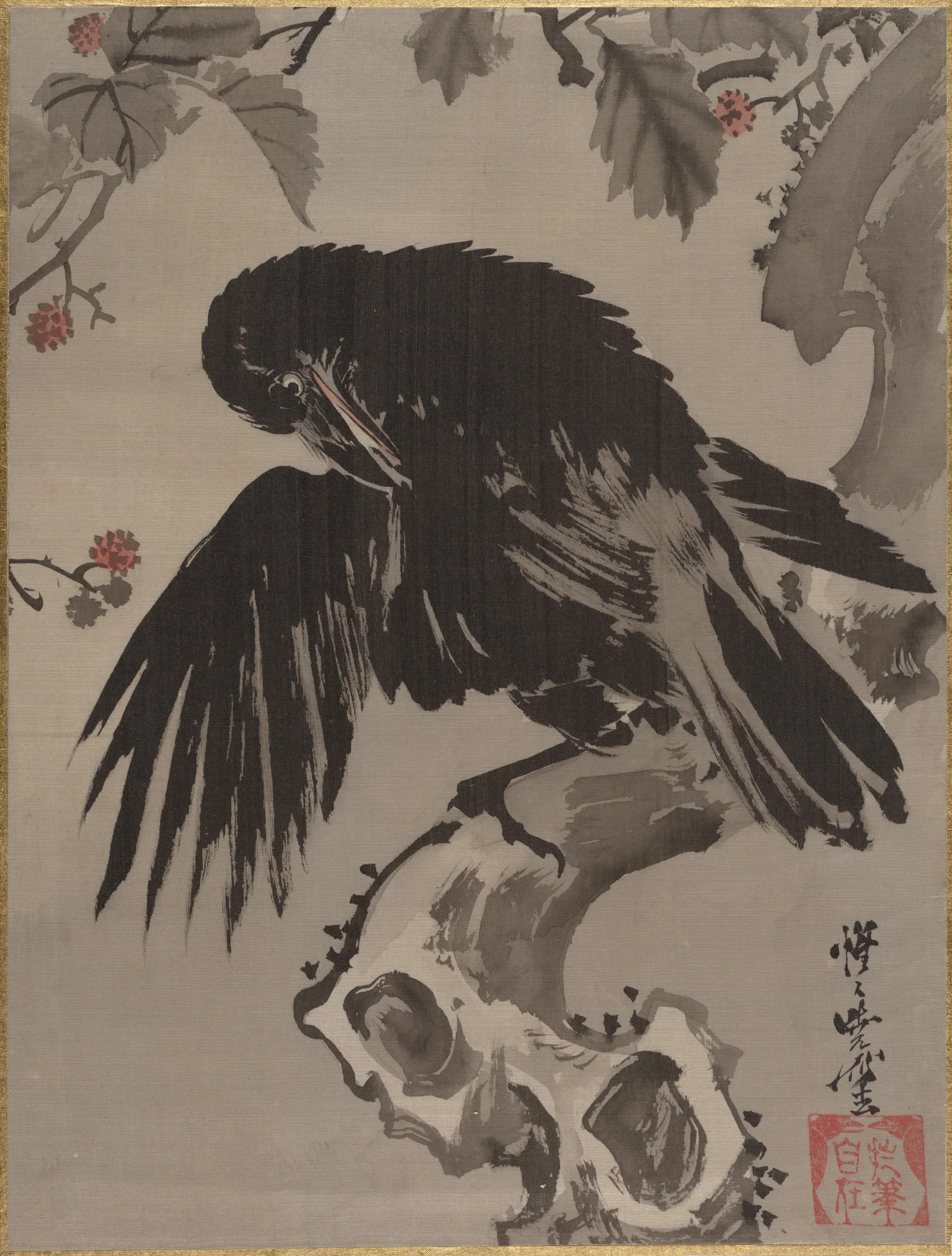
筆のひとはけで、羽がバサッ!「画鬼」暁斎が得意としたカラスの絵。One sweep of the brush, and the wings come alive! A crow by the 'demon of painting'.
この作品のお話
Storyごつごつした枝の上で、一羽のカラスが羽を広げ、首を下向きにかしげています。まわりには赤い実と葉。描いたのは、明治時代の絵師・河鍋暁斎(かわなべきょうさい)です。絹に墨と色で描いた画帖(アルバム)の一枚で、1887年ごろの作品。ニューヨークのメトロポリタン美術館が持っています。
On a rough, twisted branch, a crow spreads its wings and lowers its tilted head. Red berries and leaves surround it. The artist is Kawanabe Kyōsai, a painter of the Meiji era. This is one page from an album, painted in ink and color on silk around 1887. It belongs to the Metropolitan Museum of Art in New York.
暁斎は7歳ごろに浮世絵師・歌川国芳に入門し、その後、狩野派で本格的な日本画を学びました。幅広い画法と題材を身につけ、狩野派の師・前村洞和からは「画鬼(がき)」、つまり絵の鬼と呼ばれたと伝えられます。羽は筆をすばやく走らせた線で描かれ、墨のこい・うすいだけで黒い羽のつやや重さを表しています。白い目と、くちばしの赤い内側が、黒の中で光ります。
Kyōsai began studying with the ukiyo-e artist Utagawa Kuniyoshi at about age seven. Later he trained in classical painting at the Kanō school. He mastered many styles and subjects, and his Kanō teacher, Maemura Tōwa, is said to have called him 'Gaki', a demon of painting. The wings are made with quick brushstrokes. Only dark and light ink show the shine and weight of the black feathers. The white eye and the red inside of the beak stand out.
1881年の博覧会で、暁斎のカラスの絵が高い評価を受けると、カラスの絵を求める人が国内外から殺到しました。暁斎はその後、数えきれないほどカラスを描いたと言われます。この一枚も、日本の美術を愛したアメリカ人のコレクションとして、1914年にメトロポリタン美術館に寄贈されました。
In 1881, Kyōsai's crow painting won high praise at an exhibition. After that, people in Japan and abroad wanted crow paintings from him. He is said to have painted countless crows. This picture was part of an American collection of Japanese art, and it was given to the Metropolitan Museum in 1914.
黒いカラスが枝にとまっています。羽を広げて、首を下向きにかしげています。画家は、すばやい筆の線で羽を描きました。先生は彼を「絵の鬼(画鬼)」とよびました。人々は彼のカラスの絵が大好きでした。
A black crow sits on a branch. It opens its wings and tilts its head down. The painter made the wings with fast brush lines. His teacher called him the 'demon of painting'. People loved his crows very much.
英語のレベルは上の「やさしい/ふつう」で切りかえられます。
えっ!?な裏ネタ
Secrets1881年の第2回内国勧業博覧会で、暁斎の「枯木寒鴉図」は事実上の最高賞を受けました。暁斎はこの絵に100円という、当時としては驚くほどの高値をつけたと言われます。「カラスの代金ではなく、長年の修業の代金だ」と答えたという話が伝わっています。
In 1881, Kyōsai's crow painting won what was really the top prize at a national exhibition. He is said to have priced it at 100 yen, an amazing amount at that time. People tell a story that he said, 'This is not the price of a crow. It is the price of my years of training.'
その100円のカラスを買ったのは、東京・日本橋の和菓子店「榮太樓」の主人だったと伝えられています。会期の終わりまで買い手が明かされず、人々をおどろかせたそうです。絵は今も榮太樓總本鋪に受けつがれています。
The 100-yen crow is said to have been bought by the owner of Eitarō, a Japanese sweets shop in Nihonbashi, Tokyo. The buyer was kept secret until the end of the show, which surprised people. The painting is still kept by the company today.
1870年、暁斎は書画会という集まりで酒に酔い、役人をからかうような絵を描いたとして捕まってしまいました。そのあと、名前の字を「狂斎」から「暁斎」に変えています。読み方は同じ「きょうさい」です。
In 1870, Kyōsai got drunk at a painting party and drew pictures that seemed to make fun of officials. He was arrested. Afterwards he changed the kanji of his name from 狂斎 to 暁斎. Both are read 'Kyōsai'.
明治の東京で鹿鳴館などを設計したイギリス人建築家ジョサイア・コンドルは、暁斎に弟子入りして日本画を学び、「暁英」という画号までもらいました。のちに暁斎の作品を紹介する本を英語で出版しています。
Josiah Conder, the British architect who designed the Rokumeikan in Tokyo, studied Japanese painting with Kyōsai. He even received the art name 'Kyōei'. Later he published a book in English about Kyōsai's work.
ここを見て!
Look Closer1白い目と赤いくちばしWhite eye, red beak
まっ黒な体の中で、白い目と、くちばしの赤い内側が生き生きと見えます。下向きに首をかしげた姿が印象的です。
Against the black body, the white eye and the red inside of the beak stand out. The crow's downward-tilted head is striking.
2筆で描いた羽Brushstroke feathers
すばやい筆の動きがそのまま羽になっています。かすれたところから、筆の速さが伝わってきます。
Quick brush movements become feathers. The dry, scratchy strokes show how fast the brush moved.
3赤い実Red berries
灰色と黒の画面に、ぽつぽつと赤い実が入り、全体を引きしめています。
Small red berries add a bright accent to the gray and black picture.
4ごつごつした枝The twisted branch
カラスがつかまる太い枝は、うすい墨でふんわりと描かれ、黒いカラスを引き立てています。
The thick branch is painted in soft, light ink. It makes the black crow stand out.
英語で名画を語ろう
Talk about Art in EnglishKyōsai painted the wings with a few quick strokes.
暁斎は、さっさっと数筆で羽を描きました。
💡 stroke は筆の一はけ。brushstroke とも言い、水墨画や書道の説明に便利です。
英語で説明すると… Describe it
これは黒いカラスの絵です。カラスは太い枝にとまっています。羽を広げて、首を下向きにかしげています。上と左には、灰色の墨で描かれた葉と小さな赤い実があります。
This is a painting of a black crow. The crow is sitting on a thick branch. It is spreading its wings and tilting its head down. There are gray ink leaves and small red berries at the top and on the left.
考えてみよう Think & Talk
- 暁斎は「値段は長年の修業の代金だ」と言ったそうです。あなたはどう思いますか?Kyōsai said his price was for his years of training. Do you agree?
- 黒い墨だけで、黒い羽をどうやって描き分けられるのでしょう?How can a painter show black feathers using only black ink?
この作品の英単語
WordsA black crow sits on a branch.
黒いカラスが枝にとまっています。
The crow spreads its wings.
カラスが羽を広げています。
Each feather is a quick brushstroke.
羽の一枚一枚が、すばやい筆あとです。
Crows are very clever birds.
カラスはとてもかしこい鳥です。
ミニクイズ
QuizQ. 狩野派の師・前村洞和が暁斎につけた呼び名は?What nickname did Kyōsai's Kanō-school teacher give him?
師の前村洞和は、その画才を見こんで暁斎を「画鬼」と呼んだと伝えられます。「画狂老人」は葛飾北斎の名のりです。
His teacher Maemura Tōwa is said to have called him 'Gaki', or 'Demon of Painting'. 'Old Man Mad About Painting' was a name Hokusai used.
ウソ?ホント? 暁斎は子どものころ、歌川国芳のもとで絵を学んだ。As a child, Kyōsai studied painting with Utagawa Kuniyoshi.
7歳ごろに国芳に入門し、のちに狩野派でも学びました。
He joined Kuniyoshi at about seven and later studied at the Kanō school.
ウソ?ホント? この絵は、木版で何枚も摺られた浮世絵である。This picture is a woodblock print made in many copies.
絹に筆で直接描いた、一点ものの絵です。
It is a one-of-a-kind painting, made with a brush on silk.
 画像の出典とライセンス / Image credit
- PDKawanabe Kyōsai - Crow on a Branch - 14.76.61.26 - Metropolitan Museum of Art.jpg(Wikimedia Commons)
ライセンス:Public domain(パブリックドメイン)/作者・撮影者の表記:Kawanabe Kyōsai/提供元:Metropolitan Museum of Art
この作品は、作者の死後長い年月がたち著作権の保護期間が終わった「パブリックドメイン」の作品です。画像は平面の作品を忠実に写したもので、新しい著作権は生じません(Wikimedia Commons の PD-Art の考え方)。 所蔵:メトロポリタン美術館(The Metropolitan Museum of Art)。画像は表示のために縮小・WebP 形式に変換しています。
