 ワークシート
 ぬりえ
 迷路
月夜に笛を吹く貴族、すすきにひそむ盗賊。おそいかかれない理由とは?A noble plays the flute under the moon. A thief hides in the grass. Why can't he attack?
この作品のお話
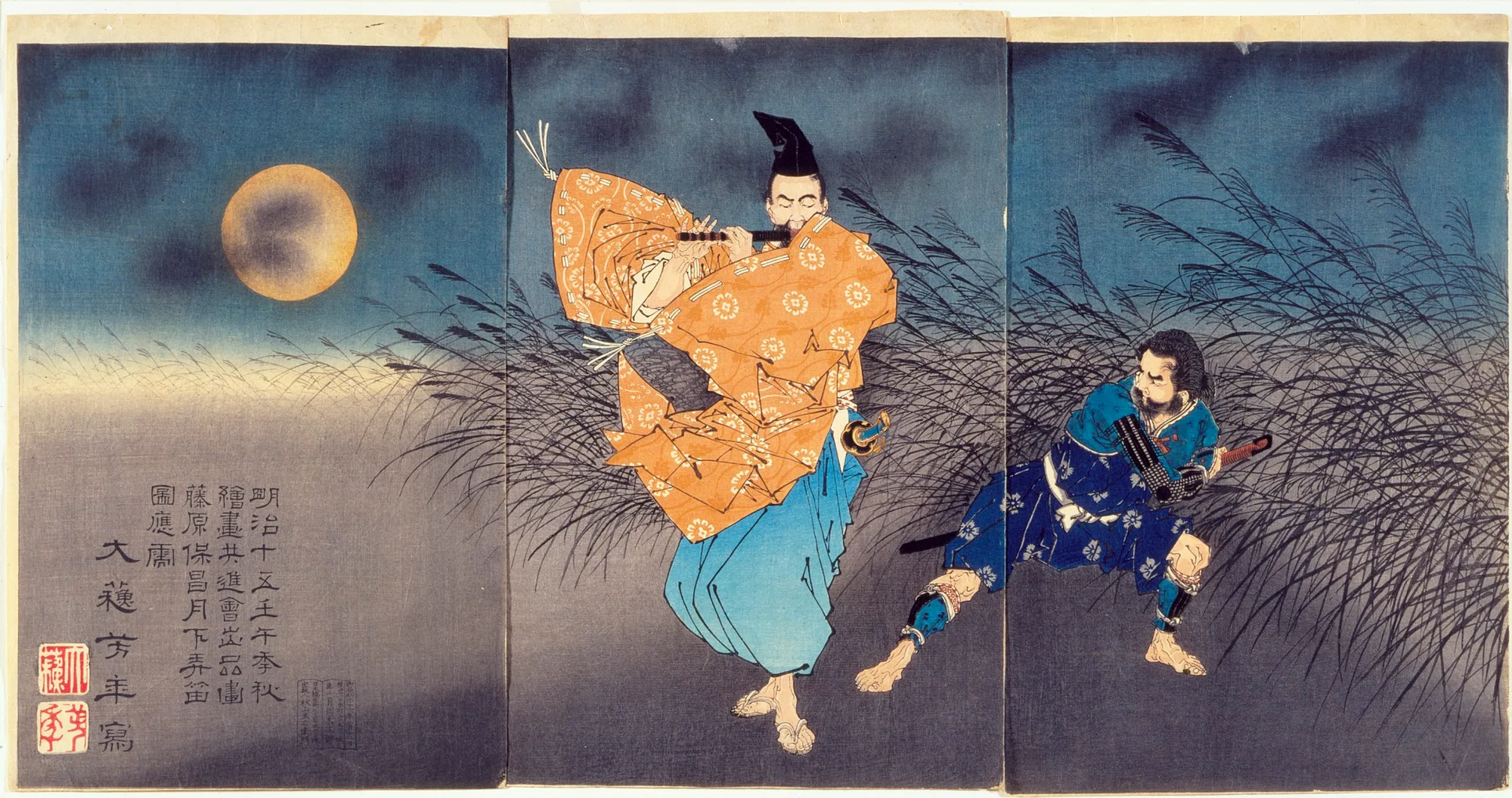
Story秋の満月の夜、すすきの野原を、平安時代の貴族・藤原保昌(ふじわらのやすまさ)が笛を吹きながら歩いています。そのうしろで、刀に手をかけて身をかがめているのは、盗賊の袴垂(はかまだれ)。明治時代の浮世絵師・月岡芳年が1883年に出した三枚続の作品です。
On an autumn night with a full moon, the Heian-period noble Fujiwara no Yasumasa walks through a field of pampas grass, playing his flute. Behind him, the thief Hakamadare crouches with his hand on his sword. Tsukioka Yoshitoshi, an ukiyo-e artist of the Meiji era, published this three-sheet print in 1883.
この話は『今昔物語集』などに出てきます。袴垂は保昌の着物をうばおうとあとをつけますが、笛を吹きながら悠々と歩く保昌に、どうしてもおそいかかることができません。ついに保昌は袴垂を家に招き、着物をあたえて帰したといいます。芳年は、静かな保昌と、気おされる袴垂の緊張感を見事に描き分けました。
This story appears in old collections of tales such as the Konjaku Monogatari. Hakamadare follows Yasumasa to steal his clothes. But Yasumasa walks so calmly, playing his flute, that the thief cannot attack. In the end, Yasumasa invites him home, gives him clothes and sends him away. Yoshitoshi shows the calm noble and the nervous thief with great tension.
左下の文字によると、もとは1882年に開かれた絵画の展覧会(内国絵画共進会)に芳年が出品した肉筆画で、それを版画にしたものです。浮世絵は同じ版木から何枚も摺られたので、この図柄も世界中にあります。ここで見ているのは、ロサンゼルス・カウンティ美術館の一枚です。
The text at the bottom left says that the design first came from a painting Yoshitoshi showed at a national painting exhibition in 1882, and this print was made from it. Many copies were printed from the same blocks, so this design is in collections around the world. The one you see belongs to the Los Angeles County Museum of Art.
満月の夜です。身分の高い男の人が草原を歩きながら、笛を吹いています。うしろには盗賊がいます。盗賊は男の人の着物をうばいたいのです。でも、男の人はとても落ちついています。盗賊は動けません!
It is a night with a full moon. A nobleman walks in the grass and plays the flute. A thief is behind him. He wants to take the man's clothes. But the man is so calm. The thief cannot move!
英語のレベルは上の「やさしい/ふつう」で切りかえられます。
えっ!?な裏ネタ
Secrets月岡芳年は、少年時代に歌川国芳に入門して絵を学びました。国芳ゆずりの迫力ある武者絵で人気になり、「最後の浮世絵師」と呼ばれることもあります。河鍋暁斎とは、同じ国芳門下の仲間です。
Tsukioka Yoshitoshi studied with Utagawa Kuniyoshi as a boy. He became popular for powerful warrior pictures, like his teacher. He is sometimes called 'the last great master of ukiyo-e'. Kawanabe Kyōsai also studied with Kuniyoshi.
藤原保昌は、平安時代を代表する女流歌人・和泉式部の夫です。京都の祇園祭には、保昌が和泉式部のために御所の梅の枝を取ってきたという話にちなむ「保昌山」という山鉾もあります。
Fujiwara no Yasumasa was the husband of Izumi Shikibu, a famous woman poet of the Heian period. In Kyoto's Gion Festival, there is a float called Hōshō-yama. It is based on a story that Yasumasa picked a plum branch from the palace for her.
芳年は晩年、「月百姿」という、月にまつわる100の場面を描いたシリーズを手がけました。この作品でも、大きな満月が場面のふんいきを決めています。月の光の中の物語は、芳年の得意分野でした。
In his last years, Yoshitoshi made 'One Hundred Aspects of the Moon', a series of 100 scenes linked to the moon. In this print too, the big full moon sets the mood. Stories in moonlight were his specialty.
三枚続の画面いっぱいに、すすきが風になびいています。人物は真ん中と右の二枚に、満月は左の一枚に。三枚それぞれに見どころを置きながら、全体で一つの夜の景色になるように組み立てられています。
Pampas grass waves across all three sheets. The two men are on the center and right sheets, and the moon is on the left. Each sheet has its own highlight, but together they make one night scene.
ここを見て!
Look Closer1満月The full moon
雲間にぼんやり光る満月。秋の夜のしんとした空気を感じさせます。
A full moon glows softly between clouds. It gives the quiet feeling of an autumn night.
2笛を吹く保昌Yasumasa with his flute
目を閉じて笛を吹く保昌。盗賊に気づいているのか、いないのか。落ちついた表情です。
Yasumasa closes his eyes and plays the flute. Does he know about the thief? His face is calm.
3盗賊・袴垂The thief Hakamadare
すすきにかくれ、刀に手をかけて身をかがめる袴垂。でも、どうしても動けません。
Hakamadare hides in the grass, crouching with his hand on his sword. But he cannot make a move.
4左下の文字The inscription
「明治十五年…絵画共進会出品」とあり、展覧会に出した絵をもとにしたことがわかります。
The text says the design was shown at a painting exhibition in 1882.
英語で名画を語ろう
Talk about Art in EnglishA thief is trying to sneak up on Yasumasa.
盗賊が保昌にこっそりしのび寄ろうとしています。
💡 sneak は「こっそり動く」。物語や忍者の話を英語で語るときに便利な熟語です。
英語で説明すると… Describe it
これは背の高い草の野原の夜の場面です。左に満月があります。真ん中では、オレンジ色の着物の男が笛を吹いています。右では、別の男が草の中にかくれています。彼は刀を持っています。
This is a night scene in a field of tall grass. On the left, there is a full moon. In the middle, a man in an orange robe is playing a flute. On the right, another man is hiding in the grass. He has a sword.
考えてみよう Think & Talk
- 盗賊はなぜ保昌におそいかかれなかったのだと思いますか?Why do you think the thief could not attack Yasumasa?
- 戦うことと落ちついていること、どちらがより勇気があると思いますか?Is it braver to fight or to stay calm? Why?
この作品の英単語
WordsHe plays the flute under the moon.
彼は月の下で笛を吹いています。
A thief hides in the tall grass.
盗賊が背の高い草の中にかくれています。
Yasumasa stays calm and keeps playing.
保昌は落ちついて、笛を吹き続けます。
The thief cannot attack him.
盗賊は彼におそいかかることができません。
ミニクイズ
QuizQ. 盗賊の袴垂は、最後どうなった?What happened to the thief Hakamadare in the end?
おそいかかれなかった袴垂を、保昌は家に招いて着物をあたえたといいます。
Yasumasa invited him home and gave him clothes.
ウソ?ホント? 月岡芳年は、歌川国芳の弟子だった。Tsukioka Yoshitoshi was a pupil of Utagawa Kuniyoshi.
少年時代に国芳に入門しました。
He joined Kuniyoshi's studio as a boy.
ウソ?ホント? この版画は江戸時代の初めに作られた。This print was made in the early Edo period.
明治時代の1883年に出版されました。
It was published in 1883, in the Meiji era.
 画像の出典とライセンス / Image credit
- PDFujiwara no Yasumasa Playing the Flute by Moonlight LACMA M.84.31.137a-c.jpg(Wikimedia Commons)
ライセンス:Public domain(パブリックドメイン)/作者・撮影者の表記:Tsukioka Yoshitoshi (Japan, 1839-1892)/提供元:Image: Gallery: archive copy at the Wayback Machine
この作品は、作者の死後長い年月がたち著作権の保護期間が終わった「パブリックドメイン」の作品です。画像は平面の作品を忠実に写したもので、新しい著作権は生じません(Wikimedia Commons の PD-Art の考え方)。 所蔵:ロサンゼルス・カウンティ美術館(画像の摺り)(Los Angeles County Museum of Art (this impression))。画像は表示のために縮小・WebP 形式に変換しています。