 ワークシート
 ぬりえ
 迷路
顔に緑の線!?フォーヴィスム誕生の中心にあった、マティスの妻の肖像。A green line on her face!? A portrait at the birth of Fauvism.
 美術館アンテナ:アンリ・マティスの作品に会える展覧会
全国の展覧会をさがす →この作品のお話
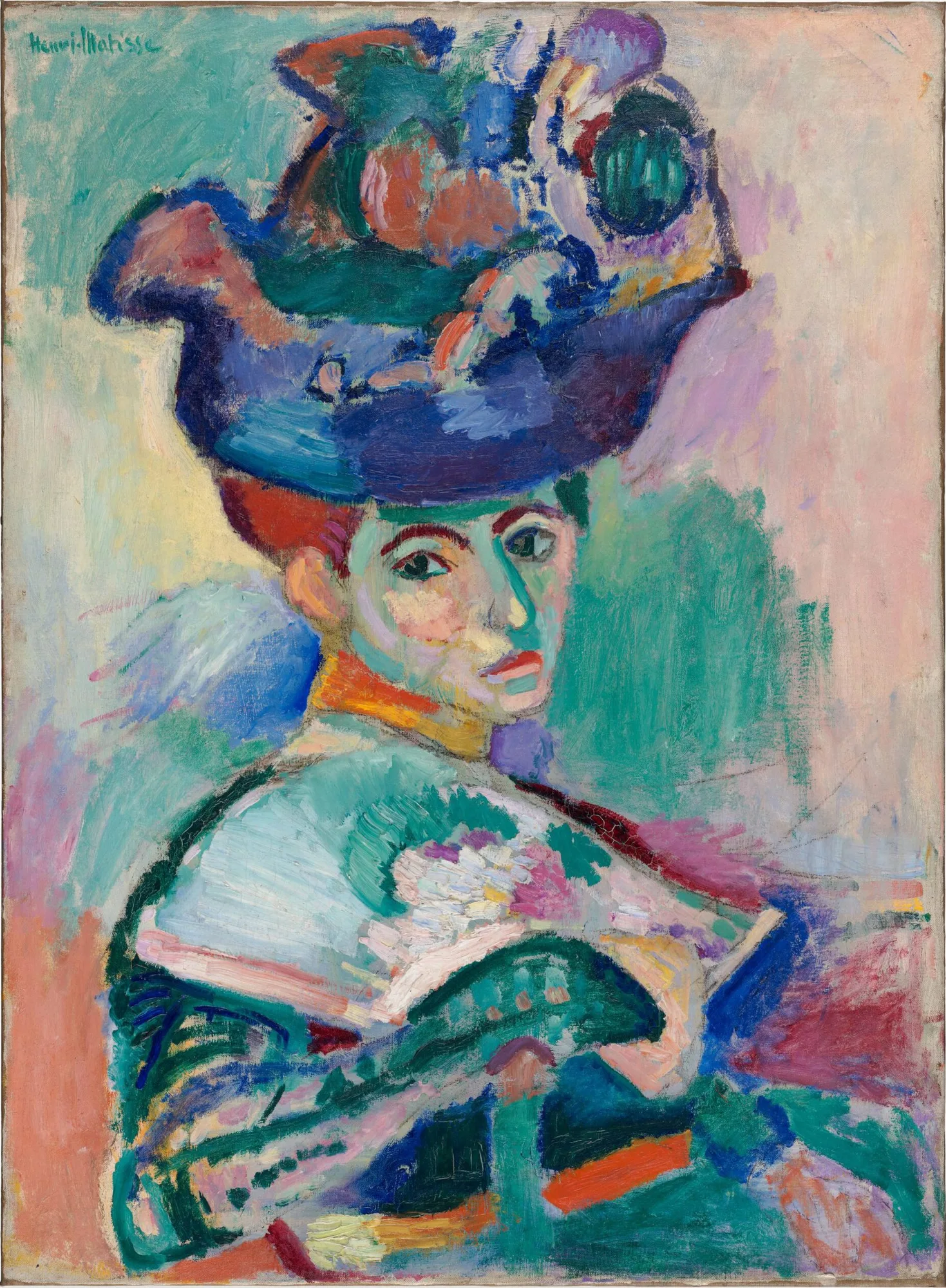
Story大きな帽子をかぶった女性が、肩ごしにこちらを見ています。顔には緑やピンク、オレンジの色がのり、背景もばらばらの色のかたまりです。描いたのはフランスの画家アンリ・マティス。モデルは妻のアメリーで、1905年の作品です。今はアメリカのサンフランシスコ近代美術館にあります。
A woman in a big hat looks at us over her shoulder. Her face has green, pink and orange on it. The background is made of loose patches of color. Henri Matisse painted his wife, Amélie, in 1905. It is now in the San Francisco Museum of Modern Art.
マティスは、見たままの色ではなく、心で感じた色を使おうとしました。1905年、パリの展覧会「サロン・ドートンヌ」にこの絵やなかまの絵がならぶと、あまりのはげしい色に人々はおどろき、笑いました。批評家が彼らを「フォーヴ(野獣)」とよんだことから、「フォーヴィスム(野獣派)」という名前が生まれます。
Matisse did not copy the colors he saw. He used colors he felt. In 1905, this painting and works by his friends were shown at the Salon d'Automne in Paris. People were shocked by the wild colors and laughed. A critic called the painters 'fauves', or 'wild beasts'. That gave the style its name: Fauvism.
笑われたこの絵を買ったのが、アメリカ人のレオとガートルードのスタイン兄妹でした。この買い物はマティスを大いに勇気づけます。絵はその後スタイン家の親せきを経て、サンフランシスコの収集家エリーズ・ハースの手にわたり、彼女の遺贈によって1991年にSFMOMAの所蔵となりました。
The American siblings Leo and Gertrude Stein bought the painting that others laughed at. This gave Matisse great courage. Later the painting went to other members of the Stein family and then to the San Francisco collector Elise Haas. Through her bequest, it entered SFMOMA's collection in 1991.
この女の人は画家の奥さんです。大きな帽子をかぶっています。顔に緑やピンクがぬられています!人々はこの絵を笑いました。でも今ではとても有名です。
This woman is the painter's wife. She has a big hat. Her face has green and pink on it! People laughed at this painting. But now it is very famous.
英語のレベルは上の「やさしい/ふつう」で切りかえられます。
えっ!?な裏ネタ
Secretsのちに「奥さんはその日、何色の服を着ていたのですか」とたずねられたマティスは、「もちろん黒だよ」と答えたと伝えられています。絵の色は見たままではなく、マティスが感じた色だったのです。
It is said that someone later asked Matisse what color his wife's dress was. He answered, 'Black, of course.' The colors in the painting were feelings, not facts.
SFMOMAによると、妻のアメリーはパリのおばの店で帽子づくりをしたのち、1899年から1902年まで自分の帽子店を開いていました。家計を支えた妻が、はなやかな帽子姿で描かれているのです。
According to SFMOMA, Amélie worked as a hat maker in her aunt's shop in Paris. From 1899 to 1902, she ran her own hat shop. She helped support the family.
同じ部屋には、古典的な彫刻も置かれていました。それを見た批評家ルイ・ヴォークセルは「野獣たちの中のドナテッロ(ルネサンスの彫刻家)だ」と書きました。この一言が、新しい芸術運動の名前になったのです。
A classical-style sculpture stood in the same room. The critic Louis Vauxcelles joked it was like 'Donatello among the wild beasts'. Donatello was a Renaissance sculptor. This joke named a new art movement.
マティスはもともと法律事務所で働いていました。20歳のとき盲腸の病気で寝こんでいた彼に、母親が絵の具箱をプレゼント。描く楽しさにめざめ、法律をやめて画家の道へ進みました。
Matisse first worked in a law office. At 20, he was in bed with appendicitis. His mother gave him a paint box. He found the joy of painting and became an artist.
ここを見て!
Look Closer1大きな帽子The huge hat
花や羽根のようにも見える帽子は、青・赤・緑などの色のかたまりで描かれています。何がついているのか断定できないほど、自由な筆づかいです。
The hat is a mix of blue, red and green patches. The brushwork is so free that we can't tell what is on it.
2顔の緑の線Green on her face
鼻すじやひたいに緑色がぬられています。ふつうなら肌に使わない色が、顔の光と影を感じさせます。
Green is painted on her nose and forehead. This unusual skin color suggests light and shadow on her face.
3扇The fan
手に持った扇は、白や桃色、紫、緑などの太い筆あとで表されています。
Her fan is painted with thick strokes of white, peach, violet and green.
4サインSignature
左上に緑色で「Henri Matisse」と書かれています。
At the top left, 'Henri Matisse' is written in green.
英語で名画を語ろう
Talk about Art in EnglishMatisse painted his wife with bold colors.
マティスは大胆な色で妻を描きました。
💡 bold は「はっきり目立つ」。bright(明るい)より「思い切った」感じです。
英語で説明すると… Describe it
これは女性の肖像画です。彼女は大きくてカラフルな帽子をかぶっています。肩ごしにこちらを見ています。顔には緑やピンクの色があり、背景はいろいろな色でいっぱいです。
This is a portrait of a woman. She is wearing a large, colorful hat. She is looking at us over her shoulder. There are green and pink colors on her face, and the background is full of different colors.
考えてみよう Think & Talk
- マティスはなぜ顔に緑色をぬったと思いますか?Why do you think Matisse put green on her face?
- 家族を「気持ちの色」で描くなら、何色を使いますか?If you painted your family with feeling colors, what colors would you use?
この作品の英単語
WordsMatisse used bold colors.
マティスは大胆な色を使いました。
A critic called them 'wild beasts'.
ある批評家は彼らを「野獣」とよびました。
She looks at us over her shoulder.
彼女は肩ごしにこちらを見ています。
Many visitors laughed at the painting.
多くの客がこの絵を笑いました。
ミニクイズ
QuizQ. この画家たちにつけられた「フォーヴ」という名の意味は?What does 'fauves', the name for these painters, mean?
はげしい色づかいにおどろいた批評家が「野獣」とよびました。
A shocked critic called them 'wild beasts' because of their wild colors.
ウソ?ホント? モデルはマティスの妻アメリーだ。The model is Matisse's wife, Amélie.
妻のアメリーを描いた肖像です。
It is a portrait of his wife, Amélie.
ウソ?ホント? 発表したとき、人々は「本物そっくりの色だ」とほめた。People praised the colors as very realistic.
見たままではない色に、多くの人がおどろき笑いました。
The colors were not realistic. Many people laughed.
 画像の出典とライセンス / Image credit
- PDMatisse-Woman-with-a-Hat.jpg(Wikimedia Commons)
ライセンス:Public domain(パブリックドメイン)/作者・撮影者の表記:Henri Matisse
この作品は、作者の死後長い年月がたち著作権の保護期間が終わった「パブリックドメイン」の作品です。画像は平面の作品を忠実に写したもので、新しい著作権は生じません(Wikimedia Commons の PD-Art の考え方)。 所蔵:サンフランシスコ近代美術館(SFMOMA)(San Francisco Museum of Modern Art (SFMOMA))。画像は表示のために縮小・WebP 形式に変換しています。