 ワークシート
 ぬりえ
 迷路
「野獣だ!」と呼ばれた画家たち。マティスが描いた海辺の窓。Artists called 'wild beasts'! Matisse opens a window onto the sea.
 美術館アンテナ:アンリ・マティスの作品に会える展覧会
全国の展覧会をさがす →この作品のお話
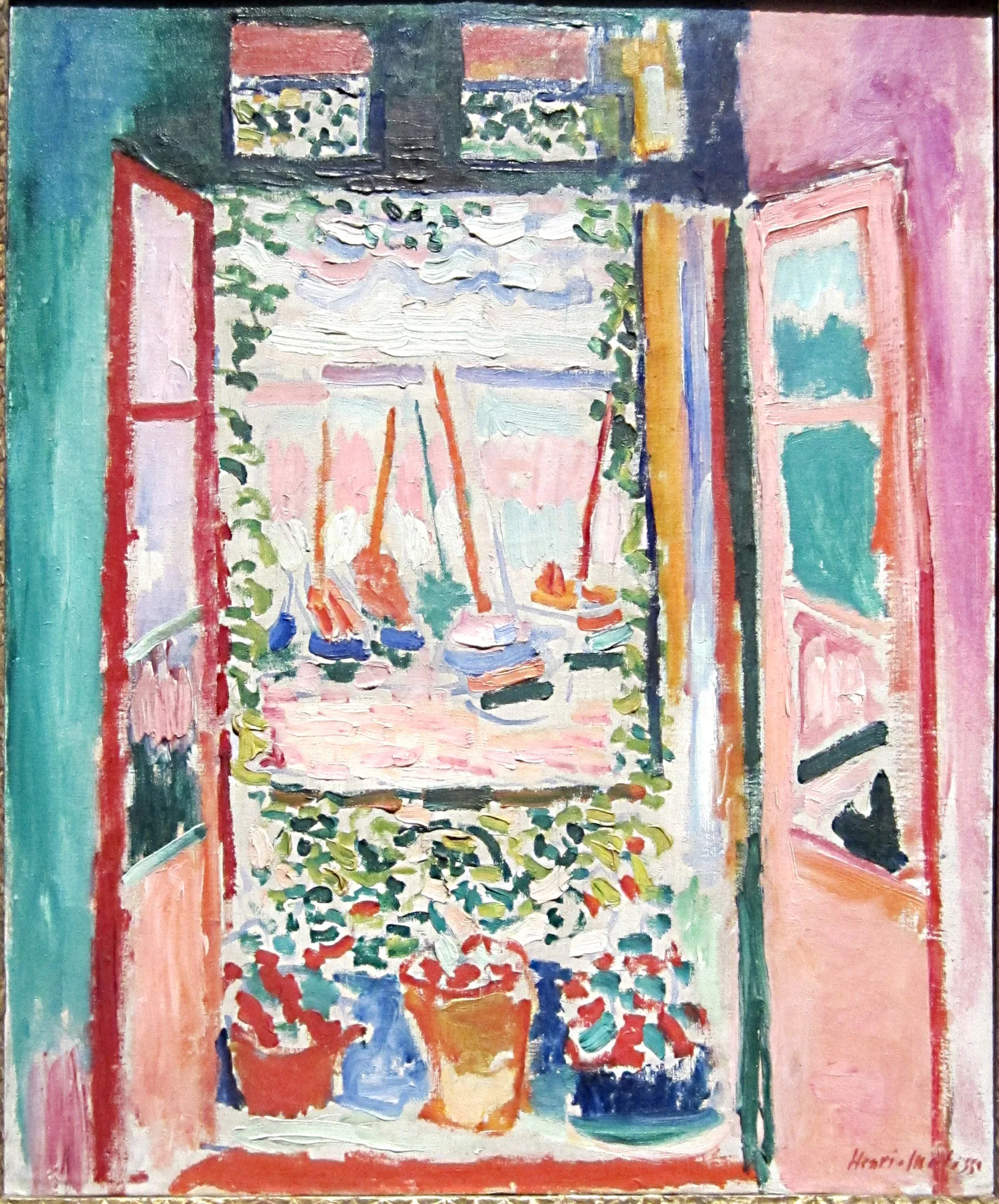
Story1905年の夏、マティスが南フランスの港町コリウールで描いた絵です。開いた窓の向こうに、ピンクや水色の海と、帆柱を立てた小舟が見えます。窓辺には植木鉢、まわりにはつる草。窓の左右の壁は、緑と紫がかったピンクの大胆な色でぬられています。今はアメリカ・ワシントンのナショナル・ギャラリーにあります。
Matisse painted this in the summer of 1905 in Collioure, a port town in the south of France. Through an open window, we see a pink and light blue sea and small boats with tall masts. There are flower pots on the windowsill and vines around the window. The walls on both sides are painted in bold green and purplish pink. It is now in the National Gallery of Art in Washington, D.C.
この夏、マティスは若い画家アンドレ・ドランとコリウールで制作し、見たままの色ではなく、気持ちの強さで色を選ぶ実験をしました。筆あとは短く、ところどころ地のキャンバスが見えています。海はふつうの青だけでなくピンクや水色で、壁は緑と紫がかったピンク。目に見える色を「写す」のではなく、色で「感じさせる」絵です。
That summer, Matisse worked in Collioure with the young painter André Derain. They tried choosing colors by feeling instead of copying what they saw. The brushstrokes are short, and in some places the bare canvas shows. The sea is painted in pink and pale blue rather than in natural colors, and the walls are green and purplish pink. The painting does not copy colors. It makes us feel them.
その秋、パリのサロン・ドートンヌで、マティスやドランたちの強い色の絵が同じ展示室にならびました。その大胆な色づかいは大きな話題になり、批評家の言葉から、彼らは「フォーヴ(野獣派)」と呼ばれるようになります。この「フォーヴィスム」は、色を自由に使う20世紀の絵画の、大切な出発点のひとつになりました。
That autumn, the strongly colored paintings of Matisse, Derain and others were shown together in one room at the Salon d'Automne in Paris. Their bold colors caused a stir, and because of a critic's words, the painters came to be called the 'Fauves', or 'wild beasts'. Fauvism became one of the important starting points for the free use of color in 20th-century painting.
窓が開いています。海と小さな舟が見えます。海はピンクです!マティスは、見た色ではなく感じた色を使いました。人々は彼らのグループを「野獣」と呼びました。
A window is open. You can see the sea and small boats. The sea is pink! Matisse used colors he felt, not colors he saw. People called his group 'wild beasts'.
英語のレベルは上の「やさしい/ふつう」で切りかえられます。
えっ!?な裏ネタ
Secrets展示室のまん中には、ルネサンス風の上品な彫刻が置かれていました。批評家ルイ・ヴォークセルはそれを見て「野獣(フォーヴ)にかこまれたドナテッロだ」と書きました。この皮肉の一言が、そのまま画家たちのグループ名になったのです。
In the middle of the room stood a graceful sculpture in a Renaissance style. The critic Louis Vauxcelles wrote that it was like 'Donatello among the wild beasts' (fauves). This joke became the name of the whole group of painters.
マティスは若いころ法律を学び、法律事務所で書記として働いていました。20歳ごろ、盲腸の病気で寝ていたとき、母親から絵の具箱をもらって絵を描きはじめ、その楽しさから画家の道に進んだといわれます。
When he was young, Matisse studied law and worked as a clerk in a law office. Around the age of 20, while he was in bed with appendicitis, his mother gave him a box of paints. It is said that he enjoyed painting so much that he decided to become an artist.
マティスは生涯、窓を何度も描きました。9年後の1914年に同じコリウールで描いた『コリウールのフランス窓』では、窓の外がほとんど真っ黒にぬりつぶされています。同じ町の窓でも、時代や気持ちによってまったくちがう絵になったのです。
Matisse painted windows again and again all his life. In 'French Window at Collioure', painted in the same town nine years later in 1914, the view outside is almost completely black. The same town's window became a totally different picture as times and feelings changed.
近くで見ると、色と色のあいだに白っぽいすき間がところどころあります。その一部は絵の具をぬっていない、キャンバスの地のままです。全部をぬりつぶさないことで、光が満ちて空気が通るような明るさが生まれています。
Up close, there are small whitish gaps between the colors. Some of them are bare canvas with no paint. By not covering everything, Matisse made the picture feel bright and full of air and light.
ここを見て!
Look Closer1海の小舟Boats on the sea
オレンジや赤の帆柱を立てた小舟。ピンクの海にゆれています。
Small boats with orange and red masts rock on the pink sea.
2植木鉢Flower pots
窓辺にならぶ赤や青の植木鉢。短い筆あとでいきいきと描かれています。
Red and blue flower pots on the windowsill, painted with lively short strokes.
3開いた窓のガラス戸The open glass door
ピンクの枠のガラス戸に、緑や水色がうつりこんでいます。
The pink-framed glass door reflects green and light blue.
4緑の壁The green wall
左の壁は大胆な青緑。実際の壁の色をそのまま写したとはかぎらず、マティスは表現のために色を選びました。
The left wall is a bold blue-green. It may not match the wall's real color; Matisse chose colors for their expressive effect.
英語で名画を語ろう
Talk about Art in EnglishThrough the window, we can see boats on the sea.
窓ごしに、海にうかぶ小舟が見えます。
💡 through は「〜を通りぬけて」。窓・ドア・木々のあいだから見える景色の説明に。
英語で説明すると… Describe it
これは海辺の開いた窓です。窓ごしに、ピンクの海にうかぶ小舟が見えます。手前の窓辺には植木鉢があります。左右の壁は緑とピンクです。
This is an open window by the sea. Through the window, we can see small boats on a pink sea. In the foreground, there are flower pots on the windowsill. The walls on the left and right are green and pink.
考えてみよう Think & Talk
- マティスはなぜ海をピンクで描いたと思いますか?Why do you think Matisse painted the sea pink?
- あなたの家の窓を開けたら何が見えますか?どんな色で描きますか?What would you see if you opened your own window? What colors would you use?
この作品の英単語
WordsCritics called the painters 'fauves'.
批評家は画家たちを「フォーヴ(野獣)」と呼びました。
The boats have tall masts.
小舟には高い帆柱があります。
Flower pots stand on the windowsill.
窓辺に植木鉢がならんでいます。
Matisse used vivid colors.
マティスはあざやかな色を使いました。
ミニクイズ
QuizQ. この絵が展示された1905年の展覧会から生まれた呼び名は?Which name came from the 1905 exhibition where this was shown?
批評家の「野獣にかこまれたドナテッロ」という言葉から「フォーヴ」と呼ばれました。
A critic's words, 'Donatello among the wild beasts', gave them the name 'Fauves'.
ウソ?ホント? マティスはコリウールで、画家ドランといっしょに制作した。Matisse worked with the painter Derain in Collioure.
1905年の夏、2人はコリウールで色の実験をしました。
In the summer of 1905, the two experimented with color there.
ウソ?ホント? 海は見たままのリアルな青で描かれている。The sea is painted in a realistic blue.
海はピンクや水色で描かれ、現実の色にはしばられていません。
The sea is pink and light blue. Matisse did not copy real colors.
 画像の出典とライセンス / Image credit
- PDMatisse-Open-Window.jpg(Wikimedia Commons)
ライセンス:Public domain(パブリックドメイン)/作者・撮影者の表記:Henri Matisse
この作品は、作者の死後長い年月がたち著作権の保護期間が終わった「パブリックドメイン」の作品です。画像は平面の作品を忠実に写したもので、新しい著作権は生じません(Wikimedia Commons の PD-Art の考え方)。 所蔵:ナショナル・ギャラリー(ワシントン)(National Gallery of Art)。画像は表示のために縮小・WebP 形式に変換しています。