

 ワークシート
 ぬりえ
 迷路
サメに襲われた少年は、のちにロンドン市長になった!本当の話。The boy attacked by a shark later became Lord Mayor of London. A true story!
この作品のお話
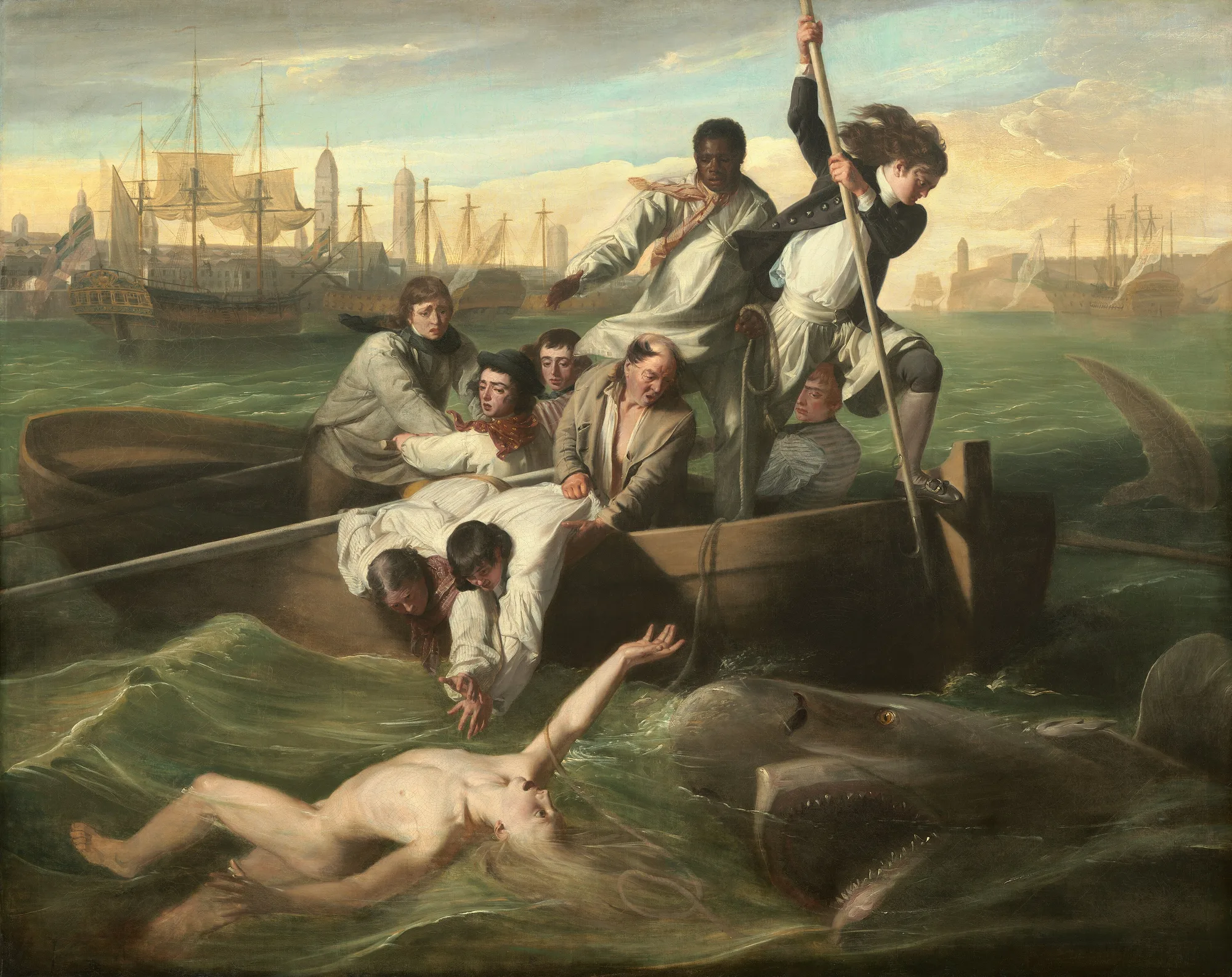
Story1749年、キューバのハバナ港で、14歳の船員ブルック・ワトソンが泳いでいたところ、サメに襲われました。仲間たちが小舟から必死に助けようとしています。この絵は、3度目の攻撃からワトソンが救い出される直前の瞬間を描いています。描いたのはアメリカ生まれの画家コプリーです。
In 1749, a 14-year-old sailor named Brook Watson was swimming in Havana harbour, Cuba, when a shark attacked him. His shipmates are trying hard to save him from a small boat. The painting shows the moment just before he was rescued from the third attack. It was painted by the American-born artist John Singleton Copley.
コプリーはボストンで肖像画家として成功したあと、ロンドンに移りました。この絵は、ロンドンで描いた最初の大きな物語画で、1778年のロイヤル・アカデミー展に出されて大評判になりました。王や英雄ではなく、ふつうの若者のピンチを、歴史画のような大きな画面で描いたことが新しかったのです。
After a successful career as a portrait painter in Boston, Copley moved to London. This was his first large story painting there. It was shown at the Royal Academy in 1778 and became a hit. It was new to paint an ordinary young man in danger, not a king or a hero, on such a large, grand canvas.
ワトソン本人はこの事故で右足のひざから下を失いましたが、その後商人として成功し、1796年にはロンドン市長になりました。彼は1807年に亡くなるとき、この絵を学校「クライスツ・ホスピタル」に贈りました。学校は1963年にこの絵をワシントンのナショナル・ギャラリーに売りましたが、写しを今も持っています。
Watson lost his right leg below the knee, but he later became a successful merchant. In 1796, he became Lord Mayor of London. When he died in 1807, he left the painting to a school called Christ's Hospital. The school sold it to the National Gallery of Art in 1963, but it still keeps a copy.
少年が海の中にいます。大きなサメが近づいてきます。小舟の男たちが彼を助けようとしています。これは1749年に本当に起きたことです。少年は助かり、のちにロンドンのロード・メイヤー(市長)になりました!
A boy is in the sea. A big shark is coming. Men in a boat try to help him. This really happened in 1749. The boy lived, and later he became the Lord Mayor of London!
英語のレベルは上の「やさしい/ふつう」で切りかえられます。
えっ!?な裏ネタ
Secretsコプリーはハバナを訪れたことがなく、サメが人を襲う場面も見たことはなかったと考えられます。版画や本のさし絵を参考にして、背景にハバナの実在の城(モロ城)を描きこみました。
Copley never visited Havana and probably never saw a shark attack. He used prints and book pictures, and he added a real landmark in the background: Morro Castle.
このサメには唇があり、鼻の穴も大きくて奇妙な形をしています。本物のサメにはない特徴です。むしろトラのような顔だと言われることもあります。画家が本物のサメをよく知らなかったことがうかがえます。
This shark has lips and large, strange nostrils. Real sharks don't have these features. Some people say its face looks more like a tiger's. It suggests that Copley did not know real sharks well.
上でロープを投げる黒人の船員は、下絵の段階では長い髪の白人の男として描かれていました。完成作で黒人に変えたことは、当時としては目を引く選択で、今も研究者の議論の的です。
In the early sketches, the man throwing the rope was a white man with long hair. In the final painting, Copley made him a Black sailor. This was an unusual choice at the time, and scholars still discuss it.
ワトソンは遺言で、この絵が若者たちへの「とても役に立つ教訓」になるようにと、学校に贈りました。学校は1819年に受けとり、大食堂などに飾っていました。生徒たちは長いあいだ、この絵を見ながら学校生活を送りました。
In his will, Watson left the painting to a school, hoping it would be 'a most useful lesson to youth'. The school received it in 1819 and hung it in its great hall. For many years, students lived and studied with this picture.
ここを見て!
Look Closer1海に浮かぶワトソンWatson in the water
金色の髪を広げて、手をのばす少年。傷を負った右足は波の下にかくれ、傷口は直接描かれていません。
The boy's golden hair spreads in the water as he reaches up. His injured right leg is under the waves, so the wound is not shown.
2サメThe shark
大きく口をあけて近づくサメ。でも顔をよく見ると、唇や鼻の穴など、本物とはちがうところがあります。
The shark comes closer with its mouth open. But look closely: its lips and nose are not like a real shark's.
3もりを構える男The man with the harpoon
船首に立ち、サメにもりを突き立てようとする男。古代の彫刻「ボルゲーゼの剣闘士」のポーズを借りています。
Standing at the front of the boat, a man is about to strike the shark with a harpoon. His pose comes from an ancient statue, the Borghese Gladiator.
4ハバナの港Havana harbour
奥にはたくさんの帆船と、ハバナの町並み。画家は版画などを見て描きました。
In the background are sailing ships and the buildings of Havana. Copley painted them from prints.
英語で名画を語ろう
Talk about Art in EnglishThe man at the front is about to strike the shark.
船首の男は、今にもサメを突こうとしています。
💡 be about to +動詞の原形で「まさに〜するところ」。ドラマチックな一瞬を説明するのにぴったり。
英語で説明すると… Describe it
これは海の場面です。手前では、少年が水に浮かんでいます。右では、大きなサメが口をあけています。中央では、小舟に乗った男たちが彼を助けようとしています。奥には、たくさんの船と町があります。
This is a scene at sea. In the foreground, a boy is floating in the water. On the right, a big shark is opening its mouth. In the middle, men in a small boat are trying to help him. In the background, there are many ships and a city.
考えてみよう Think & Talk
- コプリーはなぜ少年の傷を水の中にかくして描いたと思いますか?Why do you think Copley hid the boy's injury under the water?
- ワトソンはこの絵を若者への教訓にしたいと考えました。どんな教訓が読みとれるでしょう?Watson wanted this picture to be a lesson for young people. What lesson could it teach?
この作品の英単語
WordsA huge shark is swimming toward the boy.
巨大なサメが少年のほうへ泳いできます。
The sailors are trying to rescue Watson.
船員たちはワトソンを救助しようとしています。
A man holds a long harpoon over the shark.
男がサメの上で長いもりを構えています。
The men make a desperate effort to save him.
男たちは彼を救おうと必死になっています。
ミニクイズ
QuizQ. サメに襲われたワトソンは、のちに何になった?What did Watson become later in life?
片足を失いながらも商人として成功し、1796年にロンドン市長になりました。
Even after losing a leg, he became a successful merchant and was made Lord Mayor of London in 1796.
ウソ?ホント? コプリーは、ハバナで実際にサメの事件を見て描いた。Copley saw the shark attack in Havana himself.
コプリーはハバナに行ったことがなく、事件は彼が11歳ごろの出来事です。版画などを参考にしました。
Copley never went to Havana. He was only about 11 when it happened. He used prints to help him.
ウソ?ホント? コプリーは同じ場面の絵を3つ描いた。Copley painted three versions of this scene.
ワシントン(1778年)、ボストン美術館(1778年の同じ大きさの版)、デトロイト美術館(1782年の小さい縦長の版)にあります。
They are in Washington (1778), Boston (a full-size copy from 1778) and Detroit (a smaller, taller version from 1782).
 画像の出典とライセンス / Image credit
- PDWatsonandtheshark-original.jpg(Wikimedia Commons)
ライセンス:Public domain(パブリックドメイン)/作者・撮影者の表記:John Singleton Copley
この作品は、作者の死後長い年月がたち著作権の保護期間が終わった「パブリックドメイン」の作品です。画像は平面の作品を忠実に写したもので、新しい著作権は生じません(Wikimedia Commons の PD-Art の考え方)。 所蔵:ナショナル・ギャラリー・オブ・アート(National Gallery of Art)。画像は表示のために縮小・WebP 形式に変換しています。
