 ワークシート
 ぬりえ
 迷路
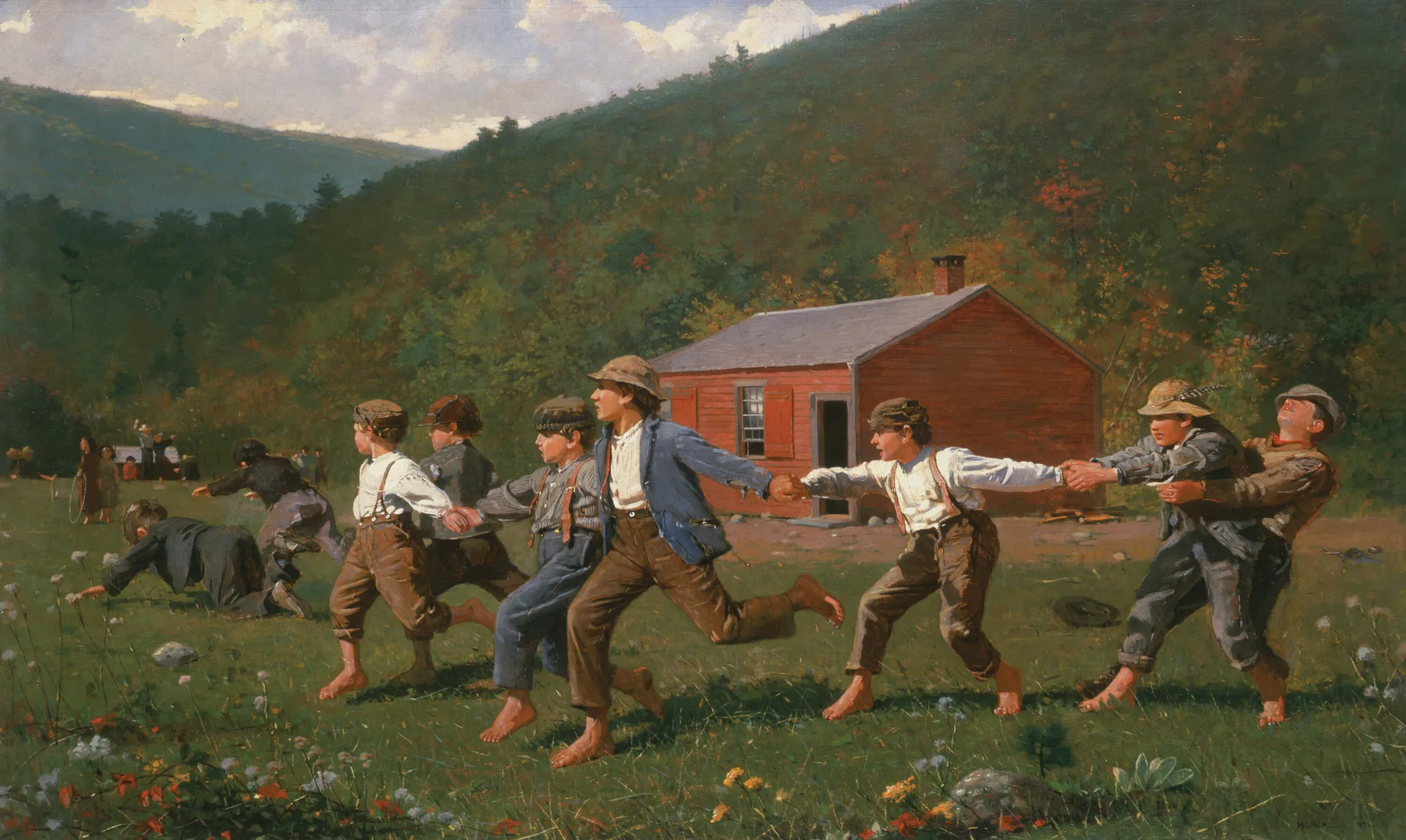
手をつないで全力ダッシュ!はしっこの子はふり飛ばされる昔の遊び。Hold hands and run! In this old game, the kids at the end get flung away.
この作品のお話
Story赤い校舎の前の草原で、はだしの男の子たちが手をつないで走っています。「スナップ・ザ・ウィップ(むちを鳴らせ)」という遊びです。描いたのはアメリカの画家ウィンスロー・ホーマー。1872年の作品で、オハイオ州ヤングスタウンのバトラー・アメリカ美術館にあります。
In a field in front of a red schoolhouse, barefoot boys run while holding hands. They are playing a game called 'Snap the Whip.' The American painter Winslow Homer made this picture in 1872. It is in the Butler Institute of American Art in Youngstown, Ohio.
遊び方はこうです。手をつないで一列になり、先頭が急に向きを変えると、列はむちのようにしなり、いちばん外側の子ほど速くふり回されて、手がはなれて転んでしまいます。ホーマーは南北戦争のころ、雑誌の記者画家として戦場を描いていました。戦争のあと、彼は田舎の子どもたちののびのびした姿を、何度も描くようになります。
Here is how the game works. The children hold hands in a line. When the leader suddenly turns, the line swings like a whip. The kids at the far end move fastest, lose their grip and fall down. During the Civil War, Homer drew battle scenes for a magazine. After the war, he often painted country children playing freely.
ニューヨーク州ハーリーの村の学校で遊ぶ子どもたちがヒントになったといわれます。翌1873年には、雑誌『ハーパーズ・ウィークリー』に見開きの版画としてのり、多くの人に知られました。都会へ人が移っていく時代、この絵はアメリカ人にとって「なつかしい田舎の子ども時代」の象徴になりました。
It is said that boys playing at a schoolhouse in the village of Hurley, New York, gave him the idea. In 1873, the picture appeared as a double-page print in the magazine Harper's Weekly, and many people came to know it. As Americans moved to cities, this picture became a symbol of a happy country childhood.
男の子たちが緑の野原で遊んでいます。手をつないで速く走ります。はしっこの子たちは転んでしまいます。後ろには赤い学校があります。みんなはだしです!
Boys play a game in a green field. They hold hands and run fast. The boys at the end fall down. There is a red school behind them. They have no shoes!
英語のレベルは上の「やさしい/ふつう」で切りかえられます。
えっ!?な裏ネタ
Secretsホーマーは同じ年に、ほぼ同じ構図の小さな版も描きました。今ニューヨークのメトロポリタン美術館にあるその版では、後ろの山が消されています。場所を特定しない、どこにでもある田舎の風景にしたかったのかもしれません。
In the same year, Homer painted a smaller version with almost the same scene. It is now in the Metropolitan Museum of Art in New York, and the hills in the background are gone. Perhaps he wanted it to look like any country place.
1873年9月20日、雑誌『ハーパーズ・ウィークリー』に、この絵をもとにした木版画が見開きでのりました。絵画を見に行けない人たちも、雑誌を通してこの遊びの場面を楽しんだのです。
On September 20, 1873, a wood engraving of this scene appeared across two pages of Harper's Weekly. People who could not visit galleries enjoyed the picture through the magazine.
ホーマーは南北戦争のとき、『ハーパーズ・ウィークリー』の画家として戦場に行き、兵士たちの姿を描きました。戦争のあとに描いた、平和な子どもたちの遊びには、平和へのほっとした気持ちも重なっているといわれます。
During the Civil War, Homer went to the front for Harper's Weekly and drew soldiers. People say his later pictures of children at play also show the relief of peace after the war.
よく見ると、男の子たちはみんなはだしです。夏のあいだ、田舎の子どもがはだしで遊ぶのはふつうのことでした。右手前の草の上には、だれかの帽子が落ちています。走りまわって飛んでいったのでしょうか。
Look closely: all the boys are barefoot. In summer, country children often played without shoes. On the grass to the right, someone has dropped a hat. Maybe it flew off during the game.
ここを見て!
Look Closer1ふり飛ばされた子The kids who fell
列のいちばん外側にいた2人。手がはなれて、草の上に転んでいます。
These two were at the outer end of the line. They let go and tumbled onto the grass.
2ふんばる先頭The anchors
列の反対のはしでは、2人が体をそらしてふんばっています。ここが列の回る中心です。
At the other end of the line, two boys lean back and hold their ground. The whole line swings around them.
3赤い校舎The red schoolhouse
教室がひとつだけの小さな校舎。当時のアメリカの田舎では、こうした学校がふつうでした。
This is a small school with only one classroom. Schools like this were common in the American countryside at the time.
4遠くの女の子たちGirls in the distance
左奥では、女の子たちが輪回しなどをして遊んでいます。
In the distance on the left, some girls are playing, one with a hoop.
英語で名画を語ろう
Talk about Art in EnglishThe boys hold hands and run across the field.
男の子たちは手をつないで野原をかけていきます。
💡 hands と複数形にするのがポイント。hand in hand(手に手をとって)も同じ意味で使えます。
英語で説明すると… Describe it
これは田舎の晴れた日です。手前では、はだしの男の子たちが手をつないで一列に走っています。左では、二人の男の子が転んでいます。奥には赤い校舎と緑の丘があります。
This is a sunny day in the countryside. In the foreground, barefoot boys are holding hands and running in a line. On the left, two boys have fallen down. In the background, there is a red schoolhouse and green hills.
考えてみよう Think & Talk
- あなたなら、列のどの子になりたいですか?それはなぜ?Which boy in the line would you like to be? Why?
- 今の子どもたちは、みんなでどんな遊びをしますか?昔とどうちがうでしょう?What games do children play together today? How are they different?
この作品の英単語
WordsThe line of boys swings like a whip.
男の子たちの列が、むちのようにしなります。
The boys are running barefoot.
男の子たちははだしで走っています。
Two boys fall down on the grass.
二人の男の子が草の上に転びます。
There is a red schoolhouse behind them.
彼らの後ろには赤い校舎があります。
ミニクイズ
QuizQ. この遊びで、いちばん転びやすいのはどこにいる子?In this game, who falls down most easily?
列がむちのようにしなると、外側の子ほど速くふり回されて手がはなれます。
When the line swings like a whip, the kids at the outer end move fastest and lose their grip.
ウソ?ホント? 絵の中の男の子たちは、みんなはだしだ。All the boys in the picture are barefoot.
夏の田舎では、はだしで遊ぶのはふつうのことでした。
In the countryside in summer, playing barefoot was normal.
ウソ?ホント? ホーマーはこの場面を1枚しか描かなかった。Homer painted this scene only once.
同じ年に、山のない小さな版も描いていて、メトロポリタン美術館にあります。
He also painted a smaller version without the hills. It is in the Metropolitan Museum of Art.
 画像の出典とライセンス / Image credit
- PDWinslow Homer - Snap the Whip (Butler Institute of American Art).jpg(Wikimedia Commons)
ライセンス:Public domain(パブリックドメイン)/作者・撮影者の表記:Winslow Homer
この作品は、作者の死後長い年月がたち著作権の保護期間が終わった「パブリックドメイン」の作品です。画像は平面の作品を忠実に写したもので、新しい著作権は生じません(Wikimedia Commons の PD-Art の考え方)。 所蔵:バトラー・アメリカ美術館(Butler Institute of American Art)。画像は表示のために縮小・WebP 形式に変換しています。