

 ワークシート
 ぬりえ
 迷路
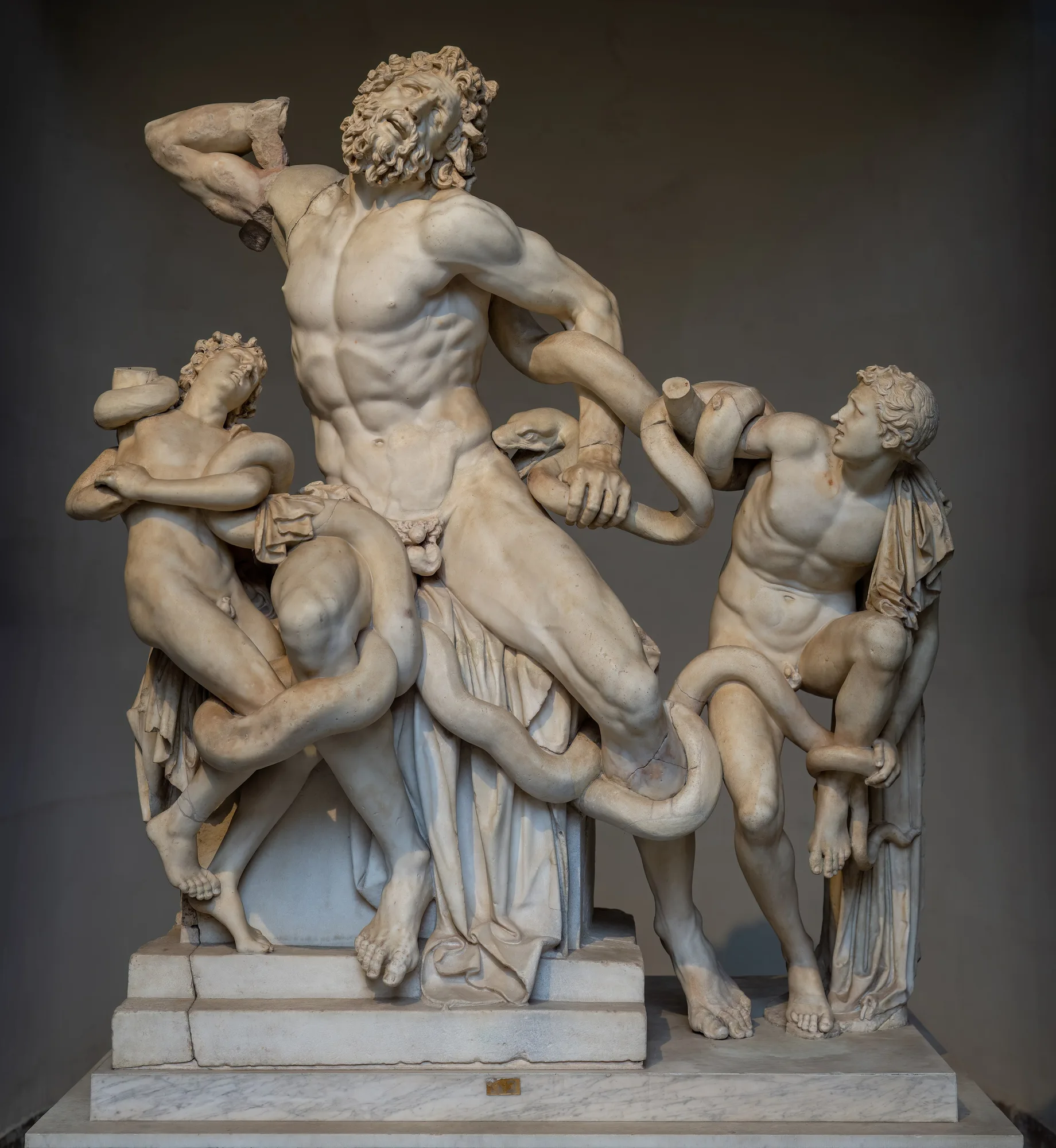
大蛇と戦う父と息子たち!ミケランジェロが発掘現場にかけつけた古代の名作。A father and sons fight giant snakes! Michelangelo rushed to see it dug up.
この作品のお話
Storyラオコーンは、トロイアの神官ラオコーンと二人の息子が、海から来た大蛇におそわれる場面をあらわした大理石の群像です。古代ローマの学者プリニウスは、ロドス島の3人の彫刻家の作品だと書いています。作られた時代は紀元前1世紀〜紀元1世紀ごろと考えられ、今はヴァチカン美術館にあります。
This marble group shows Laocoön, a priest of Troy, and his two sons. Giant snakes from the sea are attacking them. The Roman writer Pliny said three sculptors from Rhodes made it. It was probably made between the 1st century BC and the 1st century AD. Today it is in the Vatican Museums.
物語はトロイア戦争の「木馬」のお話です。ラオコーンはギリシャ軍が残した木馬を怪しみ、「贈り物を持ってくるギリシャ人でも恐ろしい」と警告しました。すると神々が送った大蛇が現れ、親子をおそったのです。ふくれ上がる筋肉、天をあおぐ顔に、苦しみと戦いがこめられています。
The story comes from the Trojan Horse. Laocoön did not trust the wooden horse the Greeks left behind. He warned, 'I fear the Greeks, even when they bring gifts.' Then snakes sent by the gods came and attacked him and his sons. His muscles and face show great pain and struggle.
1506年に発見されると大評判になり、ルネサンスの芸術家たちのお手本になりました。18世紀にはドイツの作家レッシングが、この像をテーマに『ラオコーン』という美術論を書いています。ラファエロも、ヴァチカンの壁画に描いた詩人ホメロスの顔に、ラオコーンの顔を使いました。「動き」と「感情」を石で表した、古代彫刻の代表作です。
When it was found in 1506, it became famous right away and was a model for Renaissance artists. In the 18th century, the German writer Lessing wrote an important essay about art called 'Laocoön'. Raphael even used Laocoön's face for the poet Homer in one of his Vatican paintings. It is a major work of ancient sculpture, full of movement and emotion.
父と二人の息子が大きな蛇と戦っています。父はトロイアの神官です。人々は1506年にローマでこの像を見つけました。父の腕はありませんでした。1905年、ある人がお店でその腕を見つけたのです!
A father and his two sons fight big snakes. The father is a priest from Troy. People found this statue in Rome in 1506. His arm was missing. In 1905, a man found the arm in a shop!
英語のレベルは上の「やさしい/ふつう」で切りかえられます。
えっ!?な裏ネタ
Secrets発見時、ラオコーンの右腕はありませんでした。のちに腕を上へまっすぐのばした形で補われましたが、1905年、考古学者ルートヴィヒ・ポラックがローマの石材屋で、ひじの曲がった大理石の腕を発見。1957年にこれが本物として取りつけられ、今の姿になりました。
Laocoön's right arm was missing when the statue was found. Later, a new arm was added, stretched straight up. In 1905, Ludwig Pollak found a bent marble arm in a builder's yard in Rome. In 1957, it was attached as the real arm.
1506年にローマのブドウ畑から掘り出されると、教皇ユリウス2世はすぐに建築家サンガッロとミケランジェロを現場へ送りました。ねじれた筋肉の表現は、ミケランジェロのその後の作品に大きな影響をあたえたと言われます。
When it was dug up in a Roman vineyard in 1506, Pope Julius II quickly sent the architect Sangallo and Michelangelo to see it. Its twisting muscles are said to have strongly influenced Michelangelo's later work.
古代ローマの学者プリニウスは、この像を「一つの石から彫られた」とほめています。ところが実際には、少なくとも7つの大理石のかたまりを組み合わせて作られていることがわかっています。
The Roman writer Pliny praised it as carved from a single block. In fact, it is made of at least seven pieces of marble fitted together.
ナポレオンはイタリア遠征のあと、この像をパリへ運び、ルーヴルに飾りました。ナポレオンが敗れたあとの1816年に、やっとヴァチカンへ返されました。それほど、ヨーロッパの宝として欲しがられた像だったのです。
After his Italian campaign, Napoleon took the statue to Paris and showed it at the Louvre. It was returned to the Vatican in 1816, after his defeat.
ここを見て!
Look Closer1曲がった右腕Bent right arm
1905年に見つかり、1957年に取りつけられた本物の腕。頭のうしろへ曲がっています。
This is the real arm, found in 1905 and attached in 1957. It bends back behind his head.
2天をあおぐ顔Face looking up
まゆを寄せ、口を開いて上を見上げています。苦しみがいちばん伝わる場所です。
His brows are pulled together and his mouth is open. This is where you feel his pain most.
3大蛇の頭Snake's head
ラオコーンの腰のあたりに、大蛇の頭があります。体には太い蛇が何重にも巻きついています。
A snake's head is near Laocoön's hip. Thick snakes wrap around their bodies again and again.
4父を見る息子Son looking at father
右側の息子は、まだ逃げられそうな姿勢で父の方をふり返っています。
The son on the right looks back at his father. He might still be able to escape.
英語で名画を語ろう
Talk about Art in EnglishA huge snake is wrapped around the father's legs.
大きな蛇が父親の脚に巻きついています。
💡 ヘビ・布・リボンなどが何かに巻きつく様子に。wrap A around B の受け身形。
英語で説明すると… Describe it
これは男の人と二人の少年の大理石の彫刻です。まん中の男の人は苦しそうに上を見ています。大きな蛇が腕や脚に巻きついています。右の少年は父親を見ています。
This is a marble sculpture of a man and two boys. The man in the middle is looking up in pain. Big snakes are wrapped around their arms and legs. The boy on the right is looking at his father.
考えてみよう Think & Talk
- いちばん危ないのはだれだと思いますか?それはなぜ?Which person do you think is in the most danger? Why?
- 古い像に新しい部品を足して直すのはよいことでしょうか?どう思いますか?Is it right to fix old statues with new parts? What do you think?
この作品の英単語
WordsLaocoön was a priest of Troy.
ラオコーンはトロイアの神官でした。
He warned the people about the wooden horse.
彼は人々に木馬のことを警告しました。
The father and his sons struggle with the snakes.
父と息子たちは大蛇と必死に戦っています。
You can see every muscle in his body.
彼の体の筋肉が一つ一つ見えます。
ミニクイズ
QuizQ. ラオコーンが怪しんで警告したものは?What did Laocoön warn people about?
トロイア戦争の木馬です。中にはギリシャの兵士がかくれていました。
It was the Trojan Horse. Greek soldiers were hiding inside it.
ウソ?ホント? ラオコーンの曲がった右腕は、20世紀に見つかって取りつけられた。Laocoön's bent right arm was found and attached in the 20th century.
1905年に見つかり、1957年に取りつけられました。
It was found in 1905 and attached in 1957.
ウソ?ホント? ラオコーンはミケランジェロが彫った作品である。Michelangelo carved the Laocoön.
古代の作品です。ミケランジェロは発掘のときに見に来た人です。
It is an ancient work. Michelangelo came to see it when it was dug up.
 画像の出典とライセンス / Image credit
- CC0Laocoön and his sons group.jpg(Wikimedia Commons)
ライセンス:CC0(パブリックドメイン提供)/作者・撮影者の表記:Wilfredor/提供元:Own work
この作品は、作者の死後長い年月がたち著作権の保護期間が終わっています。写真は撮影者がパブリックドメインとして公開したもの、または著作権の保護期間が終わった古い写真です。 所蔵:ヴァチカン美術館(ピオ・クレメンティーノ美術館)(Vatican Museums (Museo Pio-Clementino))。画像は表示のために縮小・WebP 形式に変換しています。
