yosegi-zaiku
Hakone wooden marquetry made from woods of different natural colors
寄木細工(よせぎざいく)
In one line
The shortest answer that works
Yosegi-zaiku is Hakone woodwork that makes patterns from the natural colors of different woods.
寄木細工は、いろいろな木の自然な色で模様を作る箱根の木工です。
In 30 seconds
The standard explanation
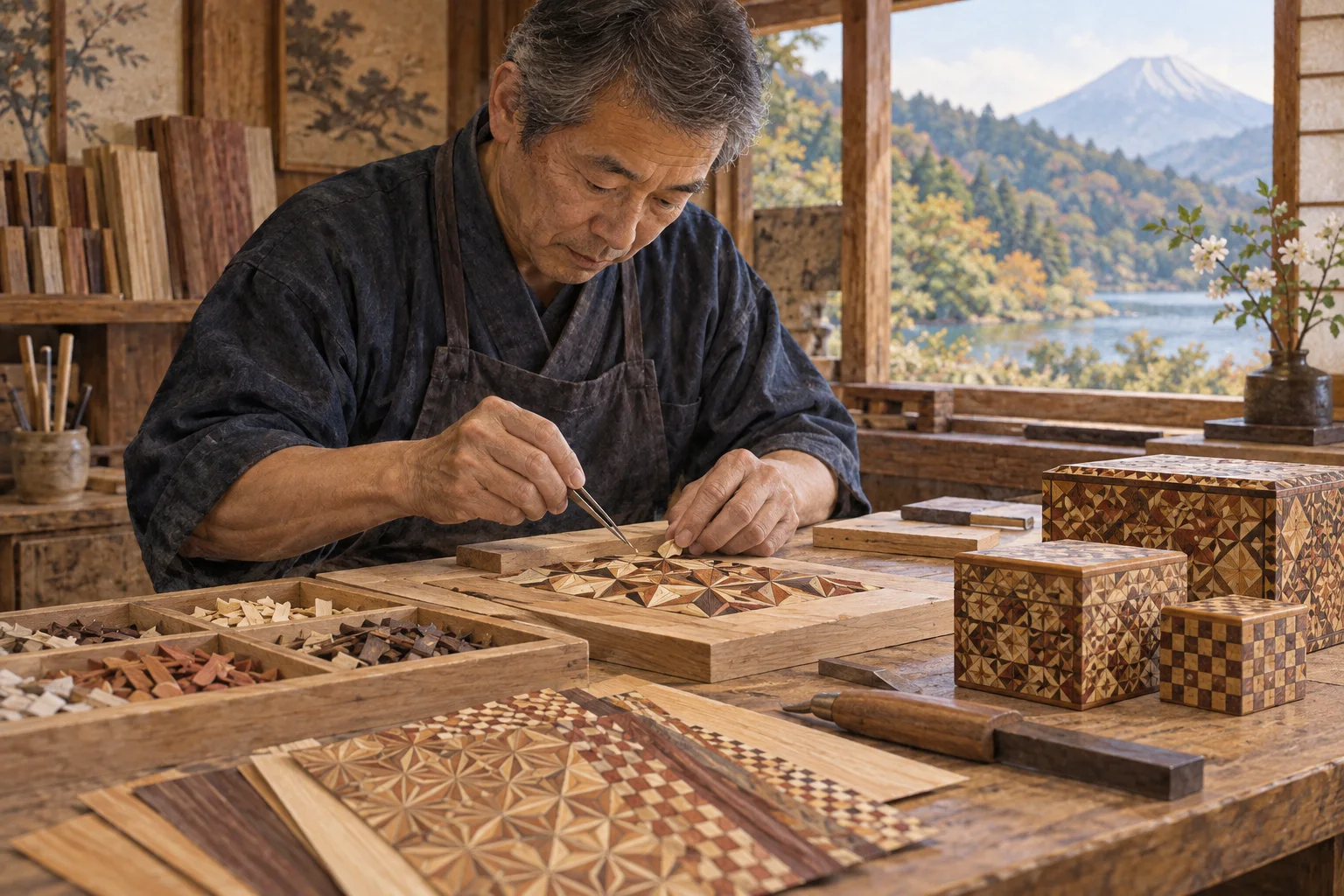
Yosegi-zaiku is a traditional woodcraft from Hakone, a hot spring area in the mountains southwest of Tokyo. Craftspeople glue together thin sticks of different kinds of wood to make a block with a repeating pattern. The block is often shaved into paper-thin sheets that cover boxes and trays. The colors come from the wood itself, not from paint, and the best-known product is the himitsu-bako, a secret box that only opens in a certain order.
寄木細工は、東京の南西の山あいにある温泉地、箱根に伝わる木工芸です。職人は、種類の違う木の細い棒を貼り合わせて、模様がくり返すかたまりを作ります。多くの場合、これを紙のように薄く削り、箱やお盆に貼ります。色は塗料ではなく木そのものの色で、いちばん知られている品は、決まった順番でしか開かない「秘密箱」です。
As a short speech
A full paragraph you can read aloud
In the souvenir shops of Hakone, you will see boxes covered in fine geometric patterns. This is yosegi-zaiku, or wooden marquetry. What surprises many visitors is that, in traditional pieces, none of the colors are painted. White, yellow, brown and black all come from different kinds of trees.
The craft is said to have started in the late Edo period in Hatajuku, a village on the old Tokaido road through Hakone. Craftspeople glue thin sticks of wood into a patterned block, then shave it into very thin sheets with a large plane, much like slicing a roll cake.
Hakone is also famous for himitsu-bako, secret boxes that open only after you slide the panels in the right order. I think it is a perfect gift, because it is beautiful and a little puzzle at the same time.
箱根のお土産屋さんでは、細かい幾何学模様に覆われた箱を目にします。これが寄木細工です。多くの観光客が驚くのは、伝統的な品では、色がどれも塗られたものではないことです。白、黄、茶、黒は、どれも違う種類の木の色です。
この工芸は、箱根を通る旧東海道沿いの集落、畑宿で江戸時代後期に始まったとされます。職人は細い木の棒を貼り合わせて模様のあるかたまりを作り、それを大きなかんなでとても薄く削ります。
ロールケーキを切るのに少し似ています。箱根は、板を正しい順番でずらさないと開かない「秘密箱」でも有名です。きれいで、しかもちょっとしたパズルにもなるので、贈り物にぴったりだと思います。
Questions people actually ask
And how to answer them.
How do you open a secret box?
You slide the side panels a little at a time in a fixed order. Simple ones need a few moves, while difficult ones can need dozens or more.
側面の板を、決まった順番で少しずつずらしていきます。簡単なものは数回で開きますが、難しいものは何十回、あるいはそれ以上の手順が必要です。
Why is it from Hakone?
The mountains around Hakone have many kinds of trees, so woodworkers had a wide range of natural colors close at hand. Travelers on the old Tokaido road are also said to have bought wooden goods as souvenirs, which helped the craft grow.
箱根の山には多くの種類の木があり、木工職人は身近でさまざまな自然の色を手に入れられました。旧東海道を行き来する旅人が木工品をお土産に買ったことも、この工芸が育つ助けになったと言われます。
A common misunderstanding
MYTHThe patterns are painted or printed on the wood.
FACTTraditional yosegi-zaiku uses the natural colors of different woods. The pattern is made by fitting real pieces of wood together.
Phrases you can use
- None of these colors are painted. They are all natural wood.この色はどれも塗っていません。全部、木の色です。
- This is a secret box. Try sliding the side panels.これは秘密箱です。横の板をずらしてみてください。
- The pattern is made from dozens of thin pieces of wood.この模様は、何十本もの細い木片でできています。
- It's a traditional craft from Hakone.箱根の伝統工芸です。
- It makes a nice souvenir because it's light and doesn't break easily.軽くて壊れにくいので、お土産にいいですよ。
Words you need
- marquetry寄木(木片をはめ込んだ装飾)
- geometric pattern幾何学模様
- planeかんな
- secret box秘密箱
- puzzle boxからくり箱
Watch
From YouTubeBackground (Japanese)
箱根寄木細工は、江戸時代後期に東海道の畑宿で、石川仁兵衛が色や木目の違う木を寄せ合わせて盆や箱を作ったのが始まりとされる。初めは単純な模様が中心だったが、明治に入って静岡方面の技法が取り入れられ、今のような細かい幾何学模様が広がった。模様を組んだかたまりを薄く削った「ズク」を箱などに貼る技法と、かたまりをそのまま削り出す「無垢」の技法がある。1984年には国の伝統的工芸品に指定された。仕掛けで開ける秘密箱は、明治時代に考案されたとされる。