uchimizu
sprinkling water on the ground to cool the air
打ち水(うちみず)
In one line
The shortest answer that works
Uchimizu is sprinkling water on the ground in summer to cool the air as it evaporates.
打ち水とは、夏に地面へ水をまき、蒸発する力で空気を冷やすことです。
In 30 seconds
The standard explanation
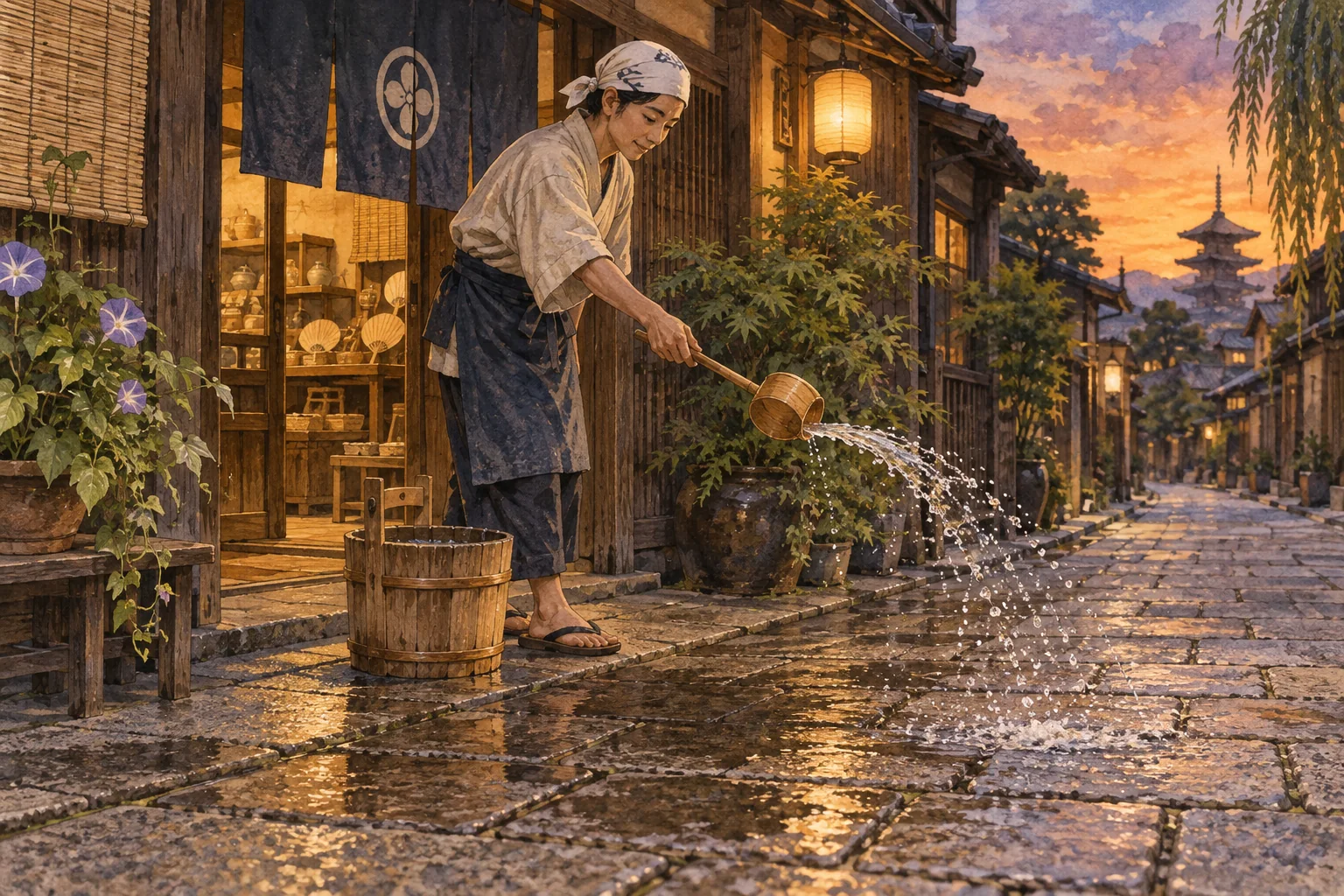
In the late afternoon you will see shopkeepers throwing water across the sidewalk from a bucket or a ladle. It cools the surface and the air just above it as the water evaporates, settles the dust, and in front of a shop or a tea room it also signals that the place is ready for guests. Households often use the leftover water from the bath.
夕方近くになると、店の人が桶や柄杓で舗道に水をまいているのを見かけます。蒸発するときに地面とその上の空気が冷え、埃も落ち着きます。店や茶室の前では、客を迎える支度が整ったという合図にもなります。家庭では風呂の残り湯を使うことが多くあります。
As a short speech
A full paragraph you can read aloud
Uchimizu is one of those small customs that is both practical and a signal. The practical part is physics: water taken off a hot surface as vapor carries heat with it, so sprinkling a sidewalk drops the surface temperature and cools the air just above it by a couple of degrees for a while.
The effect is local and it does not last, and because it raises the humidity it is best done in the evening rather than at midday, which is when you see it. The other part is manners. Watering the ground in front of a shop or along the path to a tea room means the place has been prepared and you are expected, and in the tea garden it is a fixed part of receiving guests.
Households traditionally use the water left in the bath rather than fresh tap water. Since the 2000s, cities and companies have organized mass sprinkling events in summer, partly as a heat-island measure and partly as a reminder that the custom exists.
打ち水は、実用と合図を兼ねた小さな習慣の一つです。実用の部分は物理です。熱い面から水が蒸気になって離れるとき、熱を持っていきます。ですから舗道に水をまけば、路面の温度が下がり、その上の空気も少しのあいだ二、三度冷えます。効き目はその場かぎりで長くは続きません。
湿度が上がるので、日中よりも夕方に向いています。実際に見かけるのも夕方です。もう一つは作法です。店の前や茶室への路に水をまくのは、支度が整い、あなたを待っています、という意味になります。茶の露地では、客を迎える手順の一部として決まっています。
家庭では、水道の水ではなく風呂の残り湯を使うのが昔からのやり方です。2000年代からは、自治体や企業が夏に一斉打ち水の催しを行うようになりました。都市の暑さを和らげる取り組みであり、この習慣を思い出させる機会でもあります。
Questions people actually ask
And how to answer them.
Does it really make a difference?
A measurable one, but small and brief: a drop of a couple of degrees at ground level for a short time. It works best on a hot dry surface in the evening, and it does nothing useful in the middle of a humid afternoon.
測れば下がります。ただし小さく、短いものです。地表付近で二、三度、しばらくのあいだです。乾いて熱くなった面に夕方まくのが効きます。湿った真昼にまいても意味はありません。
Is it wasteful of water?
It is meant not to be. The custom assumes reused water: the bath, the rinse water from washing, or rainwater from a barrel. Campaigns are explicit about this, and using fresh drinking water rather defeats the point.
無駄にしない前提の習慣です。使うのは風呂の残り湯、洗い物のすすぎ水、雨水を溜めたものです。催しでもそれが強調されます。水道水を出してまくのでは、趣旨から外れます。
Can I do it myself?
At a house or a shop you are connected with, yes, and it is a friendly thing to do. Do not throw water where people are walking or onto a road; aim at the ground close to the building and sprinkle rather than splash.
自分の家や関わりのある店なら差し支えありませんし、感じのよい行いです。人の通るところや車道にはかけないでください。建物の近くの地面に、まき散らさないように落とします。
Phrases you can use
- They are sprinkling water to cool things down.涼しくするために水をまいています。
- It is done in the evening, not at noon.昼ではなく夕方にやります。
- We use the leftover bath water.風呂の残り湯を使います。
- The path has been watered for guests.客のために路に打ち水がしてあります。
- The cooling only lasts a little while.涼しさは長くは続きません。
Words you need
- sprinkling water打ち水
- leftover bath water残り湯
- ladle柄杓
- evaporation蒸発
- urban heat都市の暑さ
Watch
From YouTubeBackground (Japanese)
打ち水は、水が蒸発するときに熱を奪う働きを使って地面と周りの空気を冷やす習慣です。効果は地表付近で数度、時間も短く、湿度が上がるため日中より夕方に向きます。茶の湯では、露地に水をまくことが客を迎える所作の一部とされ、支度が整ったことを示します。家庭では風呂の残り湯を使うのが一般的です。2000年代からは、自治体や企業が参加者を募って一斉に行う催しが各地で開かれるようになりました。