shusseki bango
the roster number every student is assigned for the school year
出席番号(しゅっせきばんごう)
In one line
The shortest answer that works
Shusseki bango is the roster number given to every student, usually based on the order of their name.
出席番号とは、生徒一人ひとりに割り当てられる番号で、たいてい名前の五十音順で決まります。
In 30 seconds
The standard explanation
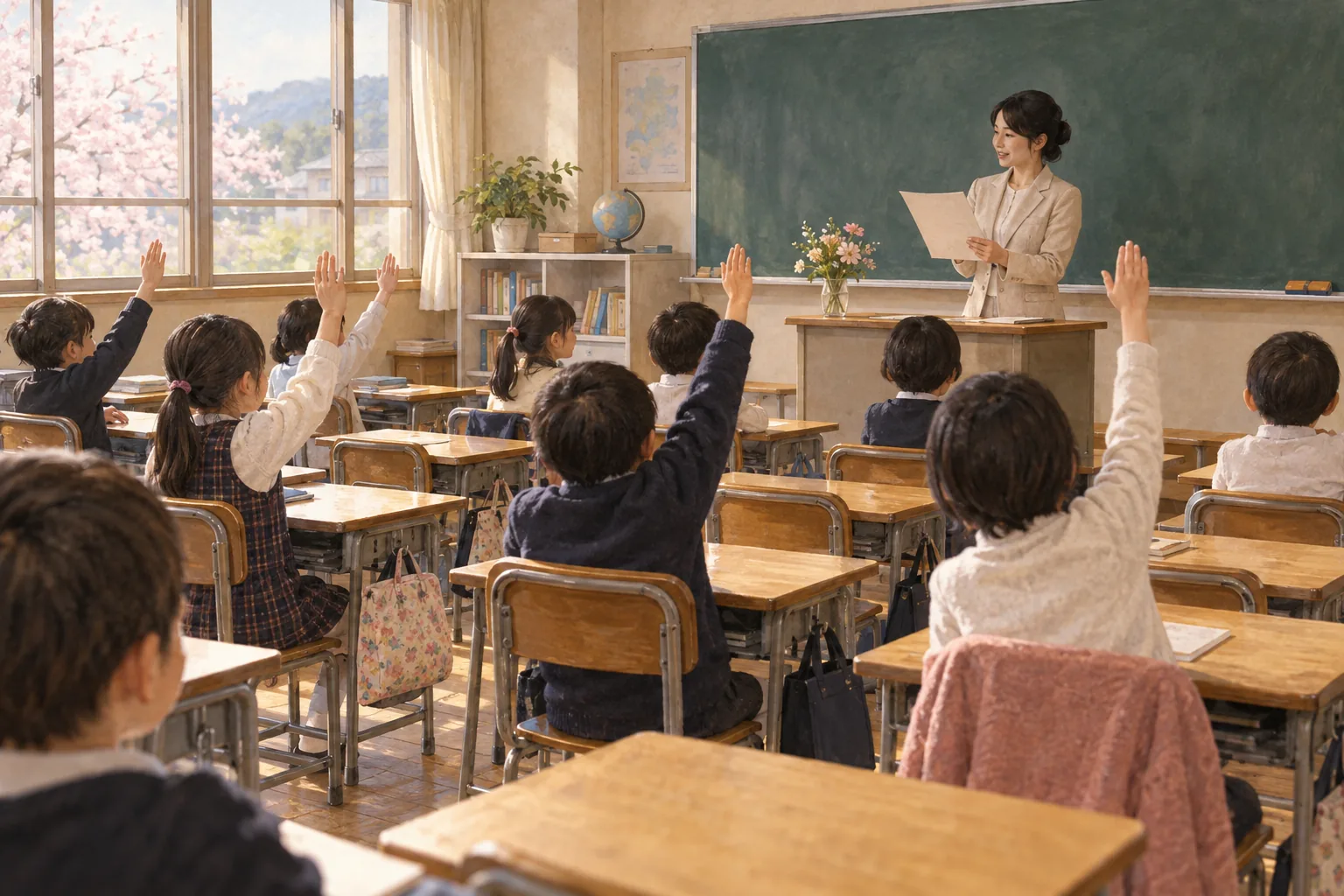
At the start of each school year, every student in a class is given a roster number, most often in the order their surnames fall in the Japanese syllabary. Teachers use it to call the register, seat students, and decide the order for reading aloud or giving an answer. Throughout the year the number appears on gym clothes, lockers and exam papers, so classmates end up remembering each other's numbers as well as their names.
学年が始まると、クラスの生徒一人ひとりに出席番号が割り当てられます。たいていは名字の五十音順で決まります。教師はこれを使って出欠を取り、席順を決め、音読や発言の順番を決めます。一年を通して体操服やロッカー、答案用紙にも書かれるため、クラスメートは名前と同じくらい互いの番号を覚えています。
As a short speech
A full paragraph you can read aloud
Shusseki bango is the roster number given to every student in a Japanese classroom, usually assigned once a year based on where their surname falls in the Japanese syllabary. Teachers use it constantly: to take attendance, to decide seating, to call on students one after another for reading aloud, and to organize gym clothes, lockers and even exam papers, which are often labeled by number as well as name.
Because the number is used every day for a whole year, it becomes a small extra identity inside the class, and adults can sometimes still recall their own number from decades earlier. It also creates a quiet kind of order: a student near the end of the list learns to expect being called on last, while a student near the start gets used to going first, day after day.
出席番号とは、日本の教室で生徒一人ひとりに割り当てられる番号で、たいてい年に一度、名字が五十音のどこに来るかで決まります。教師はこれを絶えず使います。
出欠を取り、席順を決め、音読の順に生徒を当てていき、体操服やロッカー、さらには答案用紙まで名前と一緒に番号で管理します。一年間毎日使われるので、クラスの中で名前とは別の小さな符丁になります。
何十年もたってから自分の番号を思い出せる大人もいます。それは静かな秩序も生み出します。名簿の後ろのほうの生徒は毎回最後に当てられることに慣れ、前のほうの生徒は毎日いちばん先に答えることに慣れていきます。
Questions people actually ask
And how to answer them.
Does the number change every year?
Usually yes, because classes are reshuffled and new students join. A few schools keep the same order for a student's whole time there, but resetting it each year by the current class list is more common.
たいていは毎年変わります。クラス替えがあり、新しい生徒も加わるからです。在籍中ずっと同じ順を保つ学校もありますが、毎年そのクラスの名簿で振り直すほうが一般的です。
Is it based only on the alphabet order of surnames?
Mostly, using the Japanese syllabary rather than the alphabet, though some schools split it by gender or mix boys and girls into one combined list. Either way, it is a fixed, neutral rule, not a ranking of any kind.
多くは五十音順で決まりますが、男女別に分ける学校もあれば、男女混合の一つの名簿にする学校もあります。いずれにせよ決まった中立の基準であり、何かの序列ではありません。
Do students mind being reduced to a number?
Not really, since everyone gets one and it is purely practical. Students often refer to each other by number as a kind of shorthand, especially in large classes, without it feeling impersonal.
あまり気にしません。全員に付くただの実務上の仕組みだからです。特に人数の多いクラスでは、番号で呼び合うことが一種の略称のように使われますが、冷たい扱いには感じられません。
Phrases you can use
- What's your roster number?出席番号は何番ですか。
- Numbers are assigned by the order of your surname.番号は名字の順で決まります。
- Please write your name and number on the answer sheet.答案用紙に名前と番号を書いてください。
- I'm number twelve in my class.クラスで12番です。
- We're called up to read in order of our numbers.番号順に読む係が回ってきます。
Words you need
- roster number出席番号
- Japanese syllabary order五十音順
- class register名簿
- take attendance出欠を取る
- seating chart座席表
Watch
From YouTubeBackground (Japanese)
出席番号は法令で定められた制度ではなく、学級運営の中で広く定着した慣行である。多くの学校では名字の五十音順で振られるが、男女別に振る学校と、男女混合で一つの名簿にする学校が両方あり、近年は性別で分けない方式に切り替える動きも見られる。体操服の名札や靴箱、下駄箱の位置に番号が使われることも多く、卒業後もクラス会で「◯番の◯◯くん」と番号込みで呼び合う人がいる。