gakunen to kurasugae
the annual reshuffling of students into new classes
学年とクラス替え(がくねんとくらすがえ)
In one line
The shortest answer that works
Many Japanese schools reshuffle classes into new groups in spring every year or two, often separating close friends.
日本の多くの学校では、1〜2年ごとの春にクラスが組み替えられ、仲の良い友達とも離れることがあります。
In 30 seconds
The standard explanation
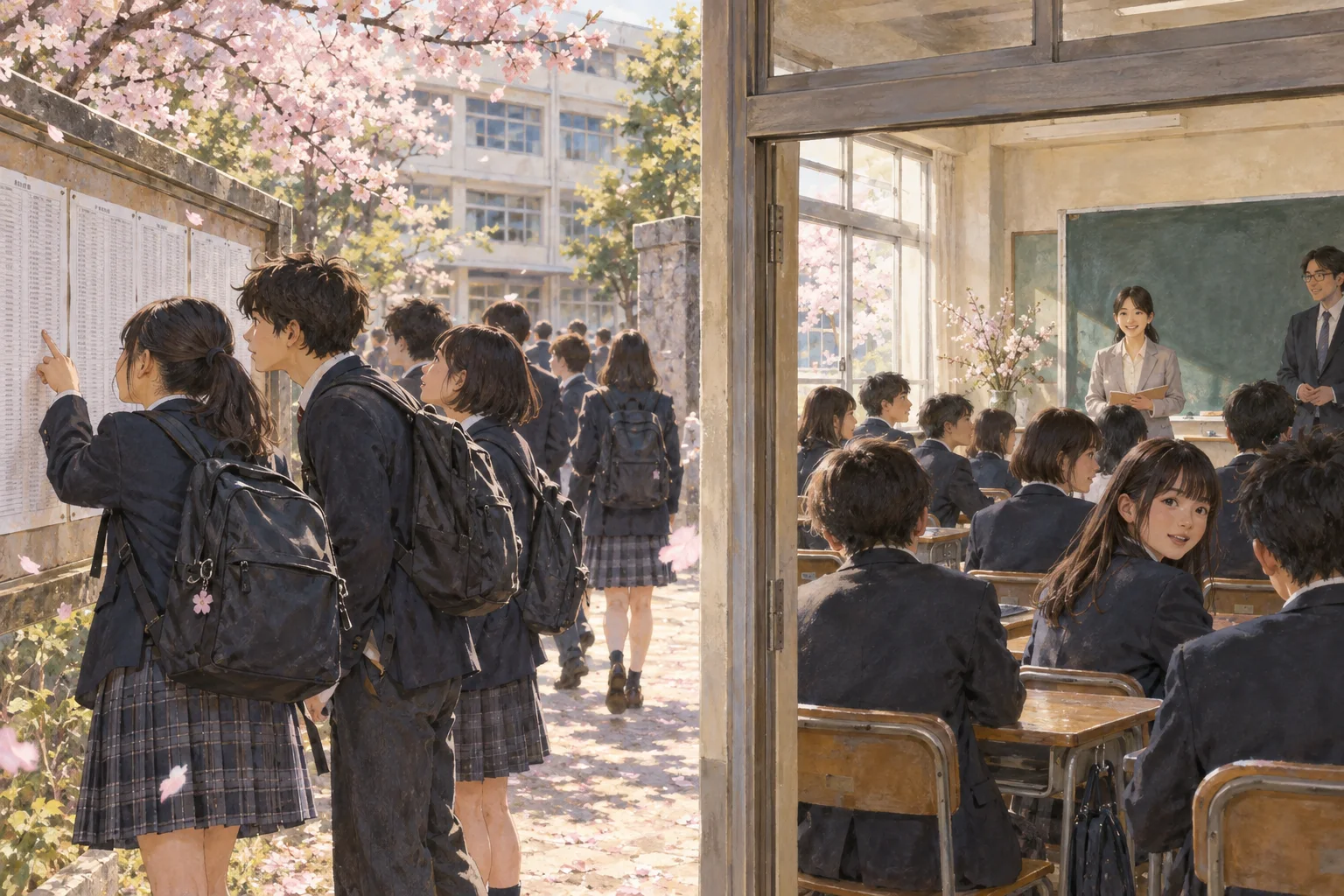
In many Japanese elementary and junior high schools, students are reorganized into new classes at the start of the school year in April, every year or every other year, and often get a new homeroom teacher too. Teachers deliberately mix ability levels, friend groups and personalities to spread out both strong and struggling students evenly. The new class lists are posted on a board on the first day, so students often first learn who their new classmates are by scanning it together.
日本の小学校や中学校の多くでは、毎年あるいは2年ごとに、4月の新学年の始まりに合わせてクラスが組み替えられ、担任も変わることが多くあります。教師はあえて学力や友人関係、性格を混ぜ合わせ、得意な生徒も苦手な生徒も各クラスに均等に散らばるようにします。新しいクラス名簿は初日に掲示され、生徒たちは一緒にそれをのぞき込んで新しいクラスメートを知ることが多いです。
As a short speech
A full paragraph you can read aloud
Class reshuffling, kurasu-gae, happens at many Japanese elementary and junior high schools in spring, every year or every other year: instead of moving up together as one fixed group, students are split apart and reorganized into brand new classes, usually with a new homeroom teacher as well. It is not random. Teachers meet beforehand to balance each new class by academic level, athletic ability, leadership and friend groups, deliberately separating some close pairs so no single class becomes too strong or too difficult to manage.
On the first day of the new year, the class lists go up on a board, and there is a real moment of anxiety and excitement as students crowd around to find their own name and see who they will spend the next year with. Losing a best friend to another class is common, and for younger children it can be genuinely upsetting, though schools generally see the mixing as good for building wider social skills.
クラス替えは、日本の小学校や中学校の多くで、毎年あるいは2年ごとの春に行われます。同じ集団のまま進級するのではなく、生徒は分けられて新しいクラスに組み替えられ、たいてい担任も新しくなります。これは無作為ではありません。
教師たちは事前に集まり、学力や運動能力、リーダーシップ、友人関係のバランスを考えて各クラスを組み立て、仲の良い数人をあえて別々のクラスに分けて、特定のクラスだけ強くなりすぎたり、まとめにくくなったりしないようにします。
新学年の初日、掲示板にクラス名簿が貼り出され、生徒たちはそこに群がって自分の名前を探し、これから一年を過ごす相手を知る、本当に不安と期待の入り混じる瞬間があります。親友と別のクラスになることはよくあり、小さな子どもには本当につらいこともありますが、学校側はこの組み替えを、より広い人間関係を築く力になると考えています。
Questions people actually ask
And how to answer them.
How is it decided who goes into which class?
Homeroom teachers and the grade's teaching staff decide together, balancing grades, sports ability, and social dynamics across the new classes. Parents can sometimes note a serious concern in advance, such as a student being bullied, but they do not get to request specific classmates.
担任とその学年の教員たちが話し合って決めます。成績や運動能力、人間関係のバランスを見ながら各クラスに振り分けます。いじめなど深刻な事情があれば事前に伝えられることもありますが、保護者が特定の友達と同じクラスにと希望することはできません。
Does this happen every single year?
It varies by school and grade. Many schools reshuffle every year and some only every two years. Some junior high schools keep the second-year classes together into the third year, the year of high school entrance exams.
学校や学年によります。毎年行う学校もあれば、2年に一度の学校もあります。中学では、受験を控える3年生へは2年生のクラスをそのまま持ち上がる学校もあります。
Do students get to stay with any friends?
Usually at least one or two, since a full reshuffle with zero overlap would feel too harsh. Some schools even ask students beforehand to name one friend they would like to stay with, if there is a real reason.
たいていは一人か二人は一緒になります。まったく重ならない組み替えは厳しすぎると感じられるからです。事前に、一緒にいたい理由のある友達を一人挙げさせる学校もあります。
Phrases you can use
- We're in different classes this year.今年は違うクラスになりました。
- The new class lists go up tomorrow.明日クラス名簿が貼り出されます。
- I hope we're in the same class again.また同じクラスになれるといいな。
- We got a new homeroom teacher too.担任の先生も新しくなりました。
- Classes here get reshuffled every year.この学校は毎年クラス替えがあります。
Words you need
- class reshufflingクラス替え
- homeroom teacher担任
- grade level学年
- class listクラス名簿
- staff room職員室
Watch
From YouTubeBackground (Japanese)
クラス替えを行うかどうか、何年ごとに行うかは法令ではなく学校ごとの裁量であり、地域や校種によって差がある。毎年組み替える学校もあれば2年ごとの学校もあり、中学では2年生から3年生へは持ち上がりにする学校もある。教員側の負担も大きく、成績・出欠・人間関係を示す資料をもとに何度も組み替え案を検討することが多い。近年はいじめの再発防止の観点から、配慮が必要な生徒の情報を学年全体で引き継ぐ仕組みを整える学校も増えている。