sekigae
changing where everyone sits in the classroom
席替え(せきがえ)
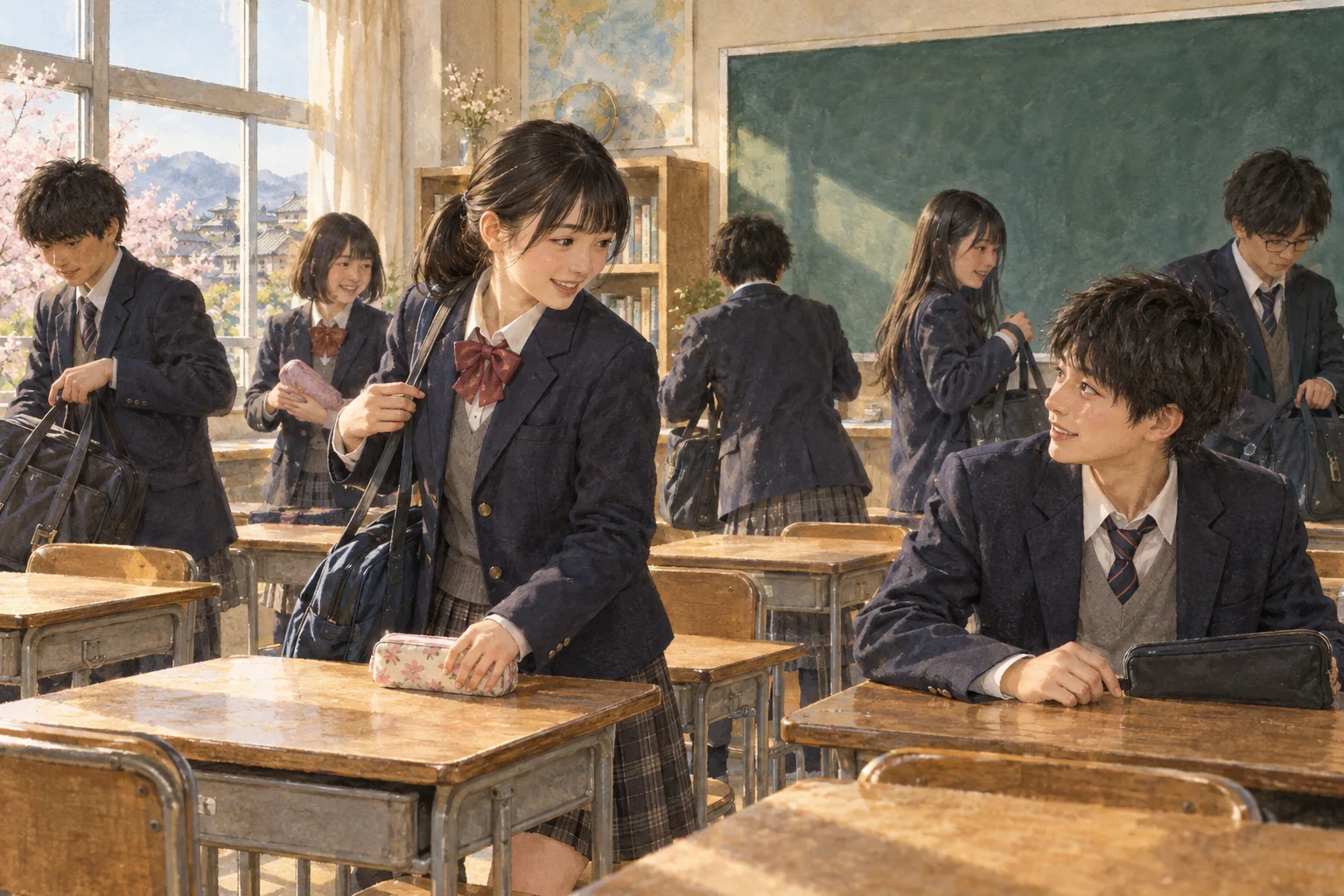
In one line
The shortest answer that works
Sekigae is the periodic reshuffle of classroom seats, usually decided by lot.
席替えとは、教室の座席を定期的に入れ替えることで、たいていはくじで決めます。
In 30 seconds
The standard explanation
Japanese classes keep fixed seats, and every month or term the whole class is reseated. The draw is often done by lot in front of everyone, which makes it fair and turns it into an event. Because pupils stay with the same class all day, who sits next to you shapes a large part of school life.
日本の学級では席が決まっており、月ごとや学期ごとに全員の席を入れ替えます。多くはみんなの前でくじを引いて決めるので、公平であると同時に、ちょっとした行事になります。生徒は一日じゅう同じ学級で過ごすので、誰の隣になるかが学校生活のかなりの部分を左右します。
As a short speech
A full paragraph you can read aloud
Sekigae is the classroom seat change, and it matters far more than it sounds because of how Japanese schools are organized. Pupils belong to one class and stay in the same room for most subjects while teachers come to them, so your desk is where you spend the day and your neighbor is the person you talk to, borrow from and work with in pairs.
Seats are fixed, and every month or at the start of a term the whole class is redrawn. The method is usually a lottery done in front of everyone, numbers pulled from a box or names shuffled, which keeps it fair and makes it a small piece of theater with cheering and groaning.
Teachers keep some control, adjusting for eyesight, height or pairs who should not sit together, and a good teacher does this quietly afterwards rather than announcing it. For children it is one of the events of the school calendar, and for anyone joining a Japanese school from abroad it is a reliable way to end up talking to someone new.
席替えは教室の座席を入れ替えることで、聞こえる以上に大きな意味があります。日本の学校の組み立て方が、そうしているからです。生徒は一つの学級に属し、多くの教科をその教室で受け、先生のほうが来ます。だから自分の机はその日を過ごす場所であり、隣の人は、話し、物を借り、二人で組んで作業する相手です。
席は決まっていて、月ごとや学期の始めに、学級全員の席を引き直します。やり方はたいてい、みんなの前で行うくじです。箱から番号を引くか、名前を混ぜるかで、公平さが保たれると同時に、歓声とため息の出る小さな見せ場になります。先生もある程度は手を入れます。
視力、背の高さ、隣にしないほうがよい組み合わせを考えて調整し、上手な先生はそれを発表せず、あとから静かに直します。子どもにとっては学校の暦にある行事の一つで、外国から日本の学校に入った人にとっては、新しい相手と話すことになる確かな仕組みです。
Questions people actually ask
And how to answer them.
Why not just sit where you like?
Free seating tends to fix friendship groups in place, and the reshuffle deliberately breaks them up so everyone works with everyone over a year. It also prevents the same pupils always taking the back row.
自由にすると、仲のよい組み合わせが固定します。席替えはそれをわざと崩し、一年のうちに誰もが誰かと組むようにします。同じ生徒がいつも後ろの列を取ることも防げます。
Is it really random?
The draw is, and then the teacher adjusts. Pupils who cannot see the board are moved forward, very tall pupils are moved back, and a teacher may quietly separate a pair. Doing this openly would defeat the fairness.
くじは無作為で、そのあと先生が調整します。黒板が見えにくい生徒は前へ、背の高い生徒は後ろへ移し、離したい組み合わせをそっと分けることもあります。それを公然とやると、公平さが崩れます。
Does the class itself change?
Not usually within a year. Class membership is normally reshuffled once a year, or every two years, at the start of the school year in April, and that reshuffle is a much bigger event than a seat change.
一年のうちは、ふつう変わりません。学級の組み替えは年に一度か二年に一度、四月の学年の始まりに行われるのがふつうで、こちらは席替えよりずっと大きな出来事です。
Phrases you can use
- We are changing seats tomorrow.明日、席替えです。
- Who did you end up sitting next to?誰の隣になりましたか。
- I got a seat by the window.窓際の席になりました。
- Could I move forward? I cannot see the board.黒板が見えないので、前に移れますか。
- We draw lots to decide.くじで決めます。
Words you need
- to draw lotsくじを引く
- a seating plan座席表
- a classmate同じ学級の人
- the back row後ろの列
- to swap入れ替える
Watch
From YouTubeBackground (Japanese)
日本の小中学校では、生徒が教室に留まり、教科ごとに先生が移動する形が基本です。そのため座席の意味が大きくなります。席替えの方法はくじのほかに、あみだくじ、先生が作った座席表、班ごとの入れ替えなどがあります。二人一組の席の並びが多く、隣の人とは班の活動や実験で一緒になります。給食も席のまとまりごとに食べる学級が多く、机を向かい合わせにして囲みます。学級そのものの組み替えは年度の始めに行われ、こちらは名簿が貼り出される日が一つの行事になっています。