shoshin wasuru bekarazu
never forget how you began
初心忘るべからず(しょしんわするべからず)
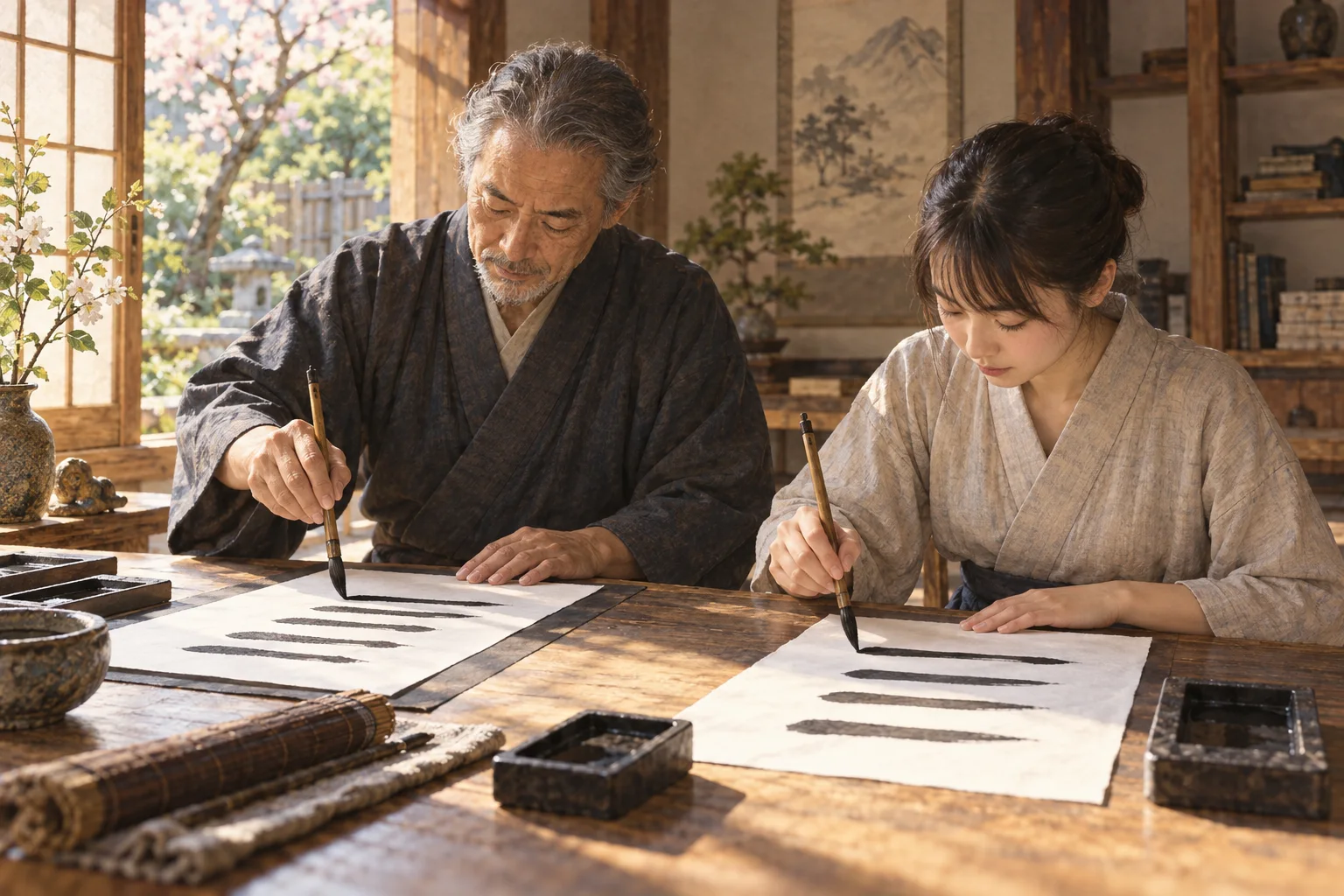
In one line
The shortest answer that works
Shoshin wasuru bekarazu means never forget what you were like when you started.
初心忘るべからずとは、始めたころの自分を忘れるなという意味です。
In 30 seconds
The standard explanation
This saying comes from the noh master Zeami, writing about training in the fifteenth century. It is usually taken today to mean keeping your original enthusiasm. Zeami meant something sharper: remember how clumsy you were, because that memory of your own inadequacy is what keeps you improving.
この言葉は、15世紀に修行について書いた能の大成者、世阿弥に由来します。今日ではふつう、始めたころの熱意を保つという意味に取られます。世阿弥が言ったのはもっと厳しいことでした。自分がどれほど拙かったかを覚えておけ、その未熟の記憶こそが人を上達させ続けるのだ、という意味です。
As a short speech
A full paragraph you can read aloud
Shoshin wasuru bekarazu, never forget the beginner's mind, is one of the best known sayings in Japan and one of the most commonly softened. It comes from Zeami, the man who shaped noh theater in the fifteenth century, writing about how a performer should train.
The modern reading is that you should hold on to the fresh enthusiasm you had at the start. Zeami's own meaning was harder. Shoshin for him meant the state of being unskilled, and the instruction was to remember precisely how bad you were, because the moment you forget your own early clumsiness you stop being able to see your current limits.
He also wrote that there is a beginner's mind for each stage of life, including old age: at every new stage you are a beginner again, and forgetting that is how a career stops developing. Read that way it is less a motivational slogan than a warning about complacency.
初心忘るべからずは、日本で最もよく知られた言葉のひとつであり、最もよく和らげて受け取られている言葉のひとつでもあります。出典は、15世紀に能を大成した世阿弥が、演者の修行について書いたものです。今日の読み方は、始めたころの新鮮な熱意を持ち続けよ、というものです。
世阿弥自身の意味はもっと厳しいものでした。彼にとって初心とは未熟な状態のことで、その教えは、自分がどれほど下手だったかを正確に覚えておけ、というものです。自分の若いころの拙さを忘れた瞬間から、今の自分の限界が見えなくなるからです。
彼はまた、人生の段階ごとに初心があり、老いたときにも初心があると書きました。新しい段階に入るたびに人はまた初心者であり、それを忘れることが芸の成長を止めるのだ、と。そう読むと、これは励ましの標語ではなく、慢心への警告です。
Questions people actually ask
And how to answer them.
So the common meaning is wrong?
Not wrong, but softened. Keeping your original enthusiasm is a reasonable modern reading and is how the phrase is used at graduations and in company speeches. Zeami's own sense, remembering your inadequacy, is sharper and worth knowing.
間違いではありませんが、和らげられています。始めのころの熱意を保つというのは妥当な現代の読み方で、卒業式や社内の挨拶ではそう使われます。未熟だった自分を覚えておけという世阿弥の意味は、それより鋭く、知っておく価値があります。
Is this related to the Zen term beginner's mind?
They are often connected in English, and the ideas overlap in valuing the state of not yet knowing. The Zen usage spread abroad through a twentieth-century teacher, while this phrase comes from a treatise on theater training.
英語ではよく結びつけられ、まだ知らない状態を尊ぶという点で考え方は重なります。禅の用法は20世紀の師を通じて海外に広まったもので、この言葉のほうは芸の修行についての伝書から来ています。
A common misunderstanding
MYTHShoshin means a pure, idealistic first resolve.
FACTIn the original it means the condition of being unskilled. The instruction is to remember your own early incompetence, not your early idealism.
Phrases you can use
- Never forget how you began.初心を忘れないように。
- It originally meant remembering how bad you were.もとは下手だったころを忘れるなという意味です。
- There's a beginner's mind at every stage.どの時期にも初心があります。
- It's a warning against complacency.慢心への戒めです。
Words you need
- beginner初心者
- complacency慢心
- training / discipline修行
- to master極める
Watch
From YouTubeBackground (Japanese)
この言葉は世阿弥の伝書『花鏡』に見えます。世阿弥は、若いころの初心、その時々の初心、老後の初心という三つを挙げ、どの段階にも新たな未熟があると説きました。世阿弥の伝書は長く一子相伝の秘伝とされ、広く読まれるようになったのは明治以降です。現代では入社式や卒業式の挨拶に使われ、始めたころの気持ちを保つ意味で語られることがほとんどです。禅の文脈で語られる「初心」とは出典が異なります。