Shorinji Kempo
a Japanese martial art founded in 1947, different from Chinese Shaolin kung fu
少林寺拳法(しょうりんじけんぽう)
In one line
The shortest answer that works
Shorinji Kempo is a Japanese martial art created in 1947, not Chinese kung fu.
少林寺拳法は1947年に生まれた日本の武道で、中国のカンフーではありません。
In 30 seconds
The standard explanation
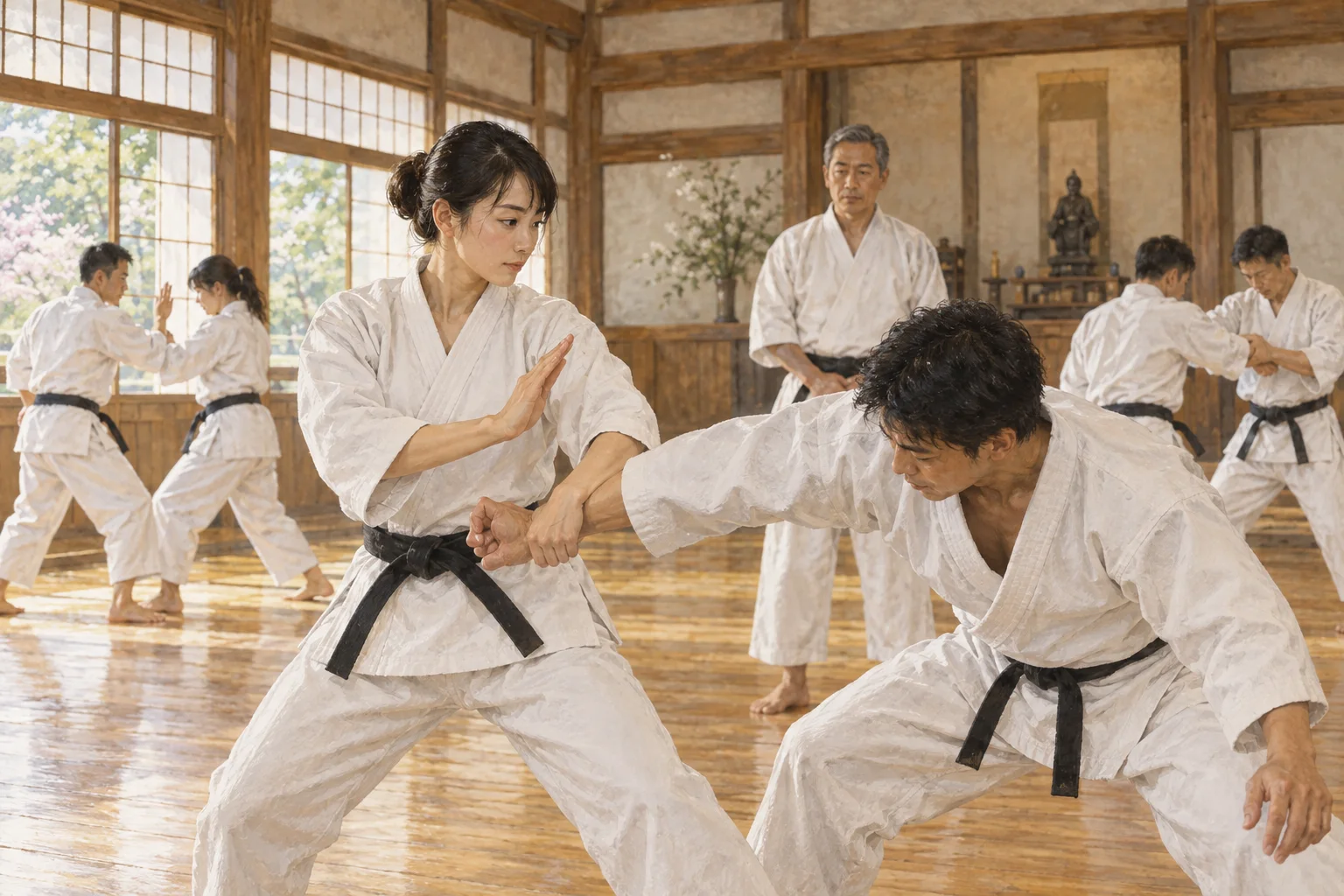
Shorinji Kempo is a martial art founded in 1947 in Tadotsu, a town in Kagawa Prefecture. Its founder, So Doshin, had lived in China and learned Chinese martial arts there, but he designed Shorinji Kempo as a new system for training people after the war. Practice is done in pairs, mixing strikes, joint locks and throws. It focuses on self-defense and on building character, not only on winning.
少林寺拳法は、1947年に香川県の多度津町で生まれた武道です。創始者の宗道臣は中国で暮らし、そこで中国の武術を学びましたが、少林寺拳法は戦後に人を育てるための新しい仕組みとして作られました。稽古は二人一組で行い、突き・蹴りに関節技や投げ技を組み合わせます。勝つことだけでなく、身を守ることと人間を磨くことを重んじます。
As a short speech
A full paragraph you can read aloud
Many people think Shorinji Kempo is Chinese kung fu, because "Shorinji" is the Japanese reading of Shaolin Temple. In fact, it is a Japanese martial art founded in 1947 in Kagawa Prefecture by So Doshin. He lived in China for many years as a young man and studied martial arts there.
After Japan's defeat, he wanted to raise people with strength, kindness and a sense of justice, and he created Shorinji Kempo as a way to do that. Students practice in pairs, taking turns as attacker and defender, and they learn strikes, kicks, joint locks and throws.
Instead of fighting matches, tournaments are mainly about embu, a pair demonstration judged on skill. Practitioners also greet each other by putting their palms together. I find it interesting that a Chinese name hides such a Japanese story.
「少林寺」は中国の少林寺を日本語で読んだものなので、少林寺拳法を中国のカンフーだと思っている人は多くいます。実際には、1947年に香川県で宗道臣が始めた日本の武道です。宗道臣は若いころから長く中国で暮らし、そこで武術を学びました。
日本の敗戦後、強さと優しさと正義感を持った人を育てたいと考え、その方法として少林寺拳法を作りました。稽古は二人一組で、攻める側と守る側を交代しながら、突き、蹴り、関節技、投げ技を学びます。
大会は試合形式ではなく、技の出来を審査する二人一組の演武が中心です。拳士どうしは、両手を合わせる合掌礼であいさつします。中国の名前の裏に、これほど日本的な歴史があるのは面白いと思います。
Questions people actually ask
And how to answer them.
So is it connected to the Shaolin Temple in China?
Only indirectly. The founder is said to have studied martial arts in China under a teacher from the Shaolin tradition, and he took the name from there. But the system itself was organized in Japan after the war.
間接的なつながりだけです。創始者は中国で、少林寺の流れをくむ師のもとで武術を学んだとされ、名前もそこから取りました。ただ、体系そのものは戦後の日本で組み立てられたものです。
Is it a religion?
Its founder also started a religious group linked to it, and practice includes meditation. But most people who do it, such as students in school clubs, treat it as a martial art and a way to train body and mind.
創始者は、これと結びついた宗教団体も作っていて、稽古には座禅も含まれます。ただ、学校の部活の生徒など、実際に習っている人の多くは、武道であり心身を鍛える方法として取り組んでいます。
A common misunderstanding
MYTHShorinji Kempo is the Japanese name for Shaolin kung fu.
FACTIt is a separate martial art founded in Japan in 1947. The founder learned martial arts in China, but Shorinji Kempo was created as a new system.
Phrases you can use
- It sounds Chinese, but it actually started in Japan.中国っぽく聞こえますが、実は日本で始まりました。
- We always practice in pairs.いつも二人一組で稽古します。
- The main goal is self-defense, not beating people.いちばんの目的は身を守ることで、相手を倒すことではありません。
- We greet each other with our palms together.両手を合わせてあいさつします。
- Tournaments are about pair demonstrations rather than fights.大会は、試合ではなく二人一組の演武が中心です。
Words you need
- martial art武道・武術
- self-defense護身
- joint lock関節技
- pair demonstration演武
- founder創始者
Watch
From YouTubeBackground (Japanese)
少林寺拳法は、宗道臣が1947年に香川県多度津町で始めた。宗は1911年生まれで、若いころ中国に渡り、少林寺の流れをくむ師から武術を学んだとされる。敗戦を旧満州で迎えた経験から、力だけでなく人を思いやる心を持つ人を育てる必要を感じたという。「拳禅一如」「力愛不二」といった言葉を掲げ、技の稽古と心の修養を一体と考える。稽古は二人一組が基本で、大会は勝ち負けを競う試合ではなく、技の完成度を見る演武が中心になっている。