sansai to kinoko
wild vegetables and mushrooms from the mountains
山菜ときのこ(さんさいときのこ)
In one line
The shortest answer that works
Sansai to kinoko are wild mountain vegetables eaten in spring and wild mushrooms, their autumn counterpart.
山菜ときのことは、春に食べる山の野草と、その秋の相手役であるきのこです。
In 30 seconds
The standard explanation
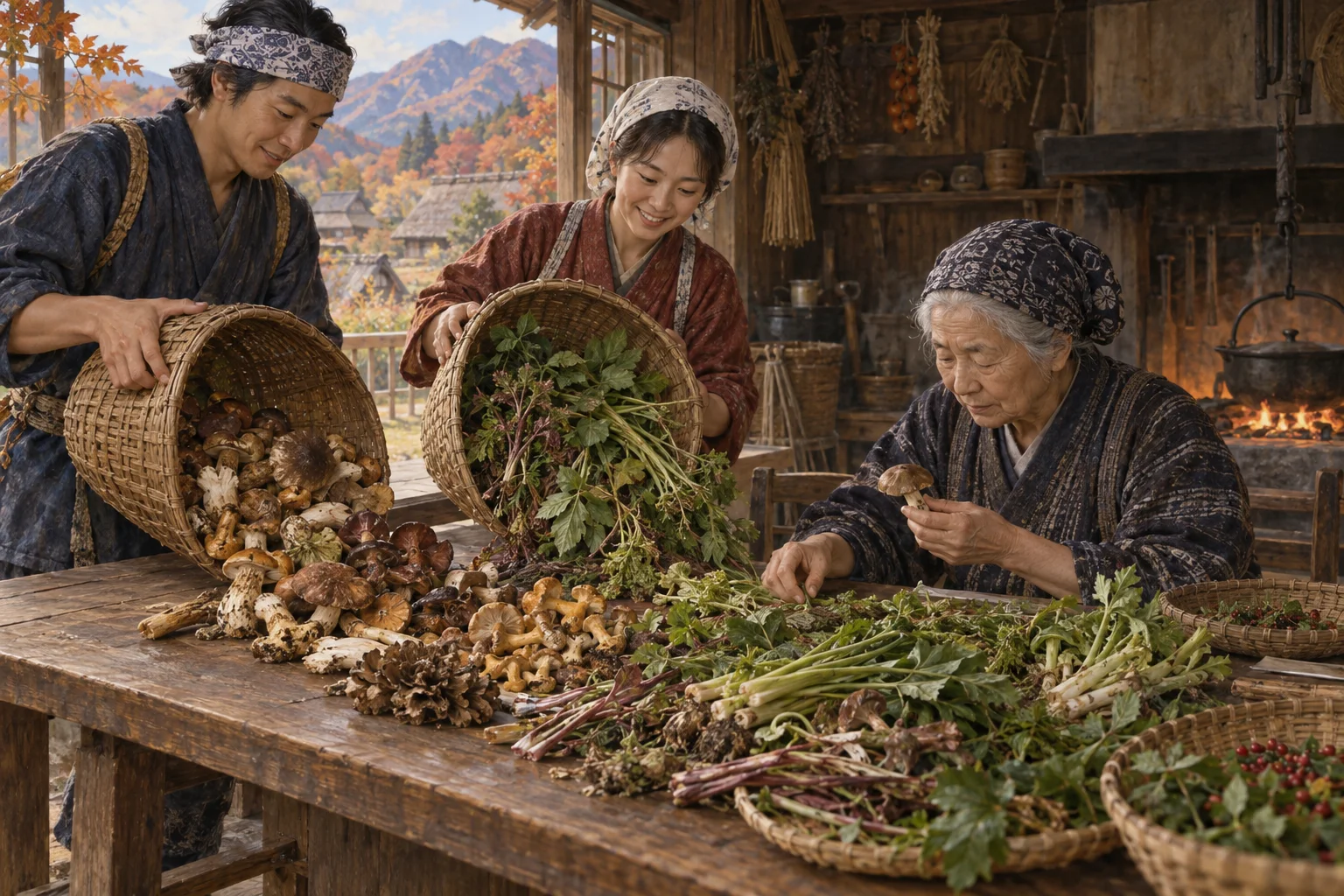
In spring, shoots and fronds are gathered from hillsides: butterbur buds, bracken, ostrich fern, angelica tree shoots. Most are bitter and need soaking or blanching in wood ash or baking soda to remove the harshness. In autumn the mountains give mushrooms instead, of which matsutake is the famous and expensive one. These foods have short seasons, are strongly regional, and are a large part of why Japanese cooking talks about the taste of the season.
春には山の斜面から芽や若葉を採ります。ふきのとう、わらび、こごみ、たらの芽などです。多くは苦く、灰汁や重曹で「あく抜き」をしてえぐみを取ります。秋には山がきのこを与えてくれ、その中で有名で高価なのが松茸です。これらの食材は旬が短く、地域色が強く、日本料理が季節の味を語る大きな理由になっています。
As a short speech
A full paragraph you can read aloud
Japanese cooking talks constantly about the season, and wild mountain food is where that is most literal. In spring, hillsides produce shoots that are edible for a week or two and then not: the flower bud of the butterbur, tight coils of bracken and ostrich fern, the shoots of the angelica tree.
Nearly all of them are bitter, and most need a preparation step called aku-nuki, soaking or boiling with wood ash or baking soda to draw out the harshness, because some are genuinely unpleasant or unhealthy raw. The bitterness is the point, not a flaw; it is described as the taste that wakes the body after winter.
In autumn the same hills give mushrooms, dozens of local kinds, and at the top of the market sits matsutake, whose smell is prized and whose price can be extraordinary because it cannot be farmed. A warning worth repeating: people are poisoned in Japan every autumn by misidentified mushrooms, so buy from a shop or go with someone who knows, and do not trust an app.
日本料理は絶えず季節を語りますが、山の食材ではそれが最も文字どおりになります。春、山の斜面は一、二週間だけ食べられる芽を出し、その後は終わります。ふきのとうの花芽、かたく巻いたわらびやこごみ、たらの芽などです。ほとんどすべてが苦く、多くは「あく抜き」という下ごしらえを要します。
灰汁や重曹で浸すか茹でてえぐみを引き出すのは、生では本当に不快だったり体によくなかったりするものがあるからです。苦みは欠点ではなく眼目で、冬のあとに体を目覚めさせる味だと説明されます。秋には同じ山がきのこを与えます。地域ごとの種類が何十もあり、市場の頂点には松茸があります。
その香りが尊ばれ、栽培できないために値段は驚くほどになります。繰り返す価値のある注意があります。日本では毎年秋に、見分けを誤ったきのこで中毒が起きます。店で買うか、分かる人と一緒に行ってください。アプリを信用してはいけません。
Questions people actually ask
And how to answer them.
Why does everything need to be de-bittered?
Because many wild plants defend themselves chemically. Bracken in particular contains compounds that are removed by treating it with wood ash or baking soda and soaking, which is why the traditional method is not optional. Shops sell pre-treated sansai, and that is the easy route.
野生の植物の多くが化学的に身を守っているからです。特にわらびには、灰汁や重曹で処理して浸すことで除かれる成分が含まれており、だから昔ながらの下ごしらえは省けません。店では処理済みの山菜が売られていて、それが手軽な道です。
Why is matsutake so expensive?
It grows in symbiosis with living pine roots and has resisted commercial cultivation, so supply depends on wild harvest. Domestic production has fallen sharply as the pine woodlands that suit it were neglected, so much of what is sold is imported, and top domestic specimens command very high prices.
生きた松の根と共生して育ち、商業的な栽培が確立していないため、供給は天然の採取に頼ります。適した松林の手入れが行き届かなくなって国内の生産は大きく減り、売られているものの多くは輸入で、国産の上物は非常に高値になります。
Can I pick them myself?
Not freely. Mountains and forests have owners, including local people, companies and the state, and picking without permission can be theft. Some areas run paid picking sessions with a guide. The identification risk is real, so a guide is a good idea even where access is allowed.
自由には採れません。山や森には地元の人、会社、国といった所有者があり、無断で採れば窃盗になりえます。有料で案内つきの採取ができる地域もあります。見分けの危険は本当にあるので、立ち入りが許される場所でも案内人がいるほうがよいです。
Phrases you can use
- These are wild vegetables from the mountains.これは山で採れる山菜です。
- They're bitter, and that's the point.苦いのですが、それが持ち味です。
- You have to take the bitterness out first.先にあく抜きをする必要があります。
- The season only lasts a couple of weeks.旬は二週間ほどしかありません。
- Never eat a wild mushroom you can't identify.見分けのつかないきのこは絶対に食べないでください。
Words you need
- wild vegetables山菜
- shoot / bud芽・若芽
- bitterness苦み・えぐみ
- blanch / soak茹でる・浸す
- in season旬の
- forage / pick採る・採取する
Watch
From YouTubeBackground (Japanese)
山菜はふきのとう、わらび、ぜんまい、こごみ、たらの芽、こしあぶらなどを指し、春先のごく短い時期に山で採れます。わらびなどは重曹や木灰を使ったあく抜きが必要で、これは味の面だけでなく、含まれる成分を除く意味もあります。てんぷら、おひたし、和え物、煮物にするのが一般的で、東北や信州では保存食として塩蔵や乾燥にする文化があります。秋のきのこでは、松茸が香りを重んじられて高値で取引されますが、アカマツの根と共生するため人工栽培が確立しておらず、松林の手入れの減少とともに国内の生産量は大きく減りました。毎年、毒きのこによる食中毒が報告されており、外見の似た種の誤認が原因になります。山林には所有者があり、無断の採取は法的な問題になりえます。