hakajimai
closing a family grave
墓じまい(はかじまい)
In one line
The shortest answer that works
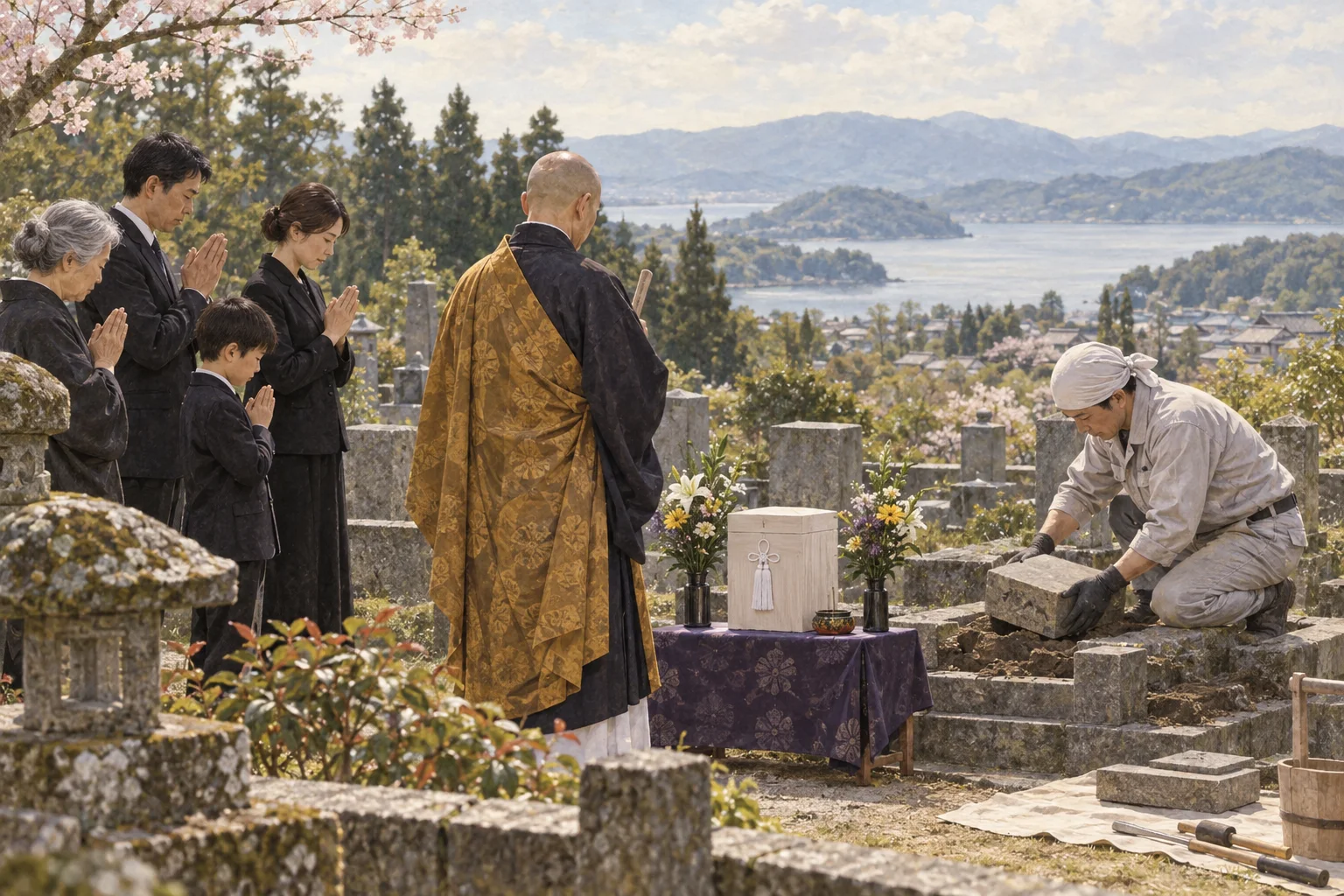
Hakajimai is dismantling a family grave and moving the remains elsewhere when nobody can maintain it.
墓じまいとは、守る人がいなくなった家の墓を撤去し、遺骨を別の場所へ移すことです。
In 30 seconds
The standard explanation
As families move to cities and have fewer children, rural graves go untended. Hakajimai means removing the remains, dismantling the stone, returning the plot to the temple or cemetery, and reinterring the remains somewhere easier to visit or in a collective grave. It requires a permit from the local authority.
家族が都市へ移り、子の数が減るにつれ、地方の墓は手入れされなくなります。墓じまいとは、遺骨を取り出し、石を撤去し、区画を寺や霊園に返し、参りやすい場所や合葬の墓に納め直すことです。自治体の許可が要ります。
As a short speech
A full paragraph you can read aloud
A Japanese family grave holds the remains of generations and is expected to be maintained by a descendant, traditionally the eldest son, who cleans it, brings flowers and pays the annual fee to the temple or cemetery. That arrangement assumed people stayed near where they were born and had children who would do the same. For many families, neither assumption holds now.
Graves in depopulated areas go unvisited, fees go unpaid, and eventually the site is treated as abandoned. Hakajimai is the orderly alternative: you obtain a permit from the municipality where the grave is, have the remains removed with a rite, have the stone dismantled and the plot returned, and reinter the remains near where the family actually lives or in a collective grave maintained by a temple.
The difficult parts are rarely legal. They are telling relatives, and negotiating with a temple that loses a supporting household, which sometimes involves a substantial payment and has produced enough disputes to generate professional advice services.
日本の家の墓は何代もの遺骨を納めていて、子孫が守ることが前提とされてきました。伝統的には長男で、掃除をし、花を供え、寺や霊園に年間の費用を納めます。この仕組みは、人が生まれた土地の近くに住み続け、同じようにする子を持つことを前提にしていました。今は多くの家で、どちらの前提も成り立ちません。
人の減った地域の墓は参る人がなく、費用も納められず、やがて無縁として扱われます。墓じまいは、その秩序ある代わりの道です。墓のある市区町村で改葬の許可を受け、法要を営んで遺骨を取り出し、石を撤去して区画を返し、家族が実際に住んでいる場所の近くか、寺が管理する合葬の墓に納め直します。
難しいのは法律の部分ではめったにありません。親族に話を通すことと、支える家を一つ失う寺との折り合いです。それには相当の額を求められることもあり、争いが起きて、専門の相談業が成り立つほどになりました。
Questions people actually ask
And how to answer them.
What paperwork is needed?
A permit for reinterment from the municipality where the grave is, which requires a certificate from the current cemetery and acceptance from the new one. Without it, remains cannot legally be moved, and cemeteries will not release them.
墓のある市区町村が出す改葬許可証です。今の墓地が出す埋蔵証明と、新しい納骨先の受入証明が必要になります。これがなければ遺骨は法律上動かせず、墓地も引き渡しません。
Where do the remains go?
Commonly a collective grave with perpetual memorial services, a locker-style columbarium near where the family lives, a tree burial, or scattering where permitted. Each has very different costs and very different expectations of future visits.
永代供養のついた合葬の墓、家族の住まいの近くの納骨堂、樹木葬、許されている場所での散骨などが一般的です。費用も、今後どれだけ参ることを前提とするかも、それぞれ大きく違います。
Phrases you can use
- Nobody is left to maintain the grave.墓を守る人がいなくなりました。
- You need a permit to move remains.遺骨を移すには許可が要ります。
- Talk to the relatives first.先に親族に相談してください。
- Many choose a collective grave now.合葬の墓を選ぶ人が増えています。
Words you need
- family grave家の墓
- reinterment permit改葬許可証
- perpetual memorial永代供養
- columbarium納骨堂
Watch
From YouTubeBackground (Japanese)
改葬には、墓地埋葬法に基づき市区町村長の許可が必要です。厚生労働省の統計によれば改葬の件数は増加傾向にあります。継ぐ人がいない墓は「無縁墳墓」として、一定の手続きを経て墓地の管理者が整理できます。近年は、最初から継承を前提としない永代供養墓や樹木葬を選ぶ人が増え、散骨についても自治体ごとに扱いが異なります。寺の側から見れば檀家の減少を意味するため、離檀料をめぐる相談が増えています。