daruma
the round wish doll with no eyes
だるま(だるま)
In one line
The shortest answer that works
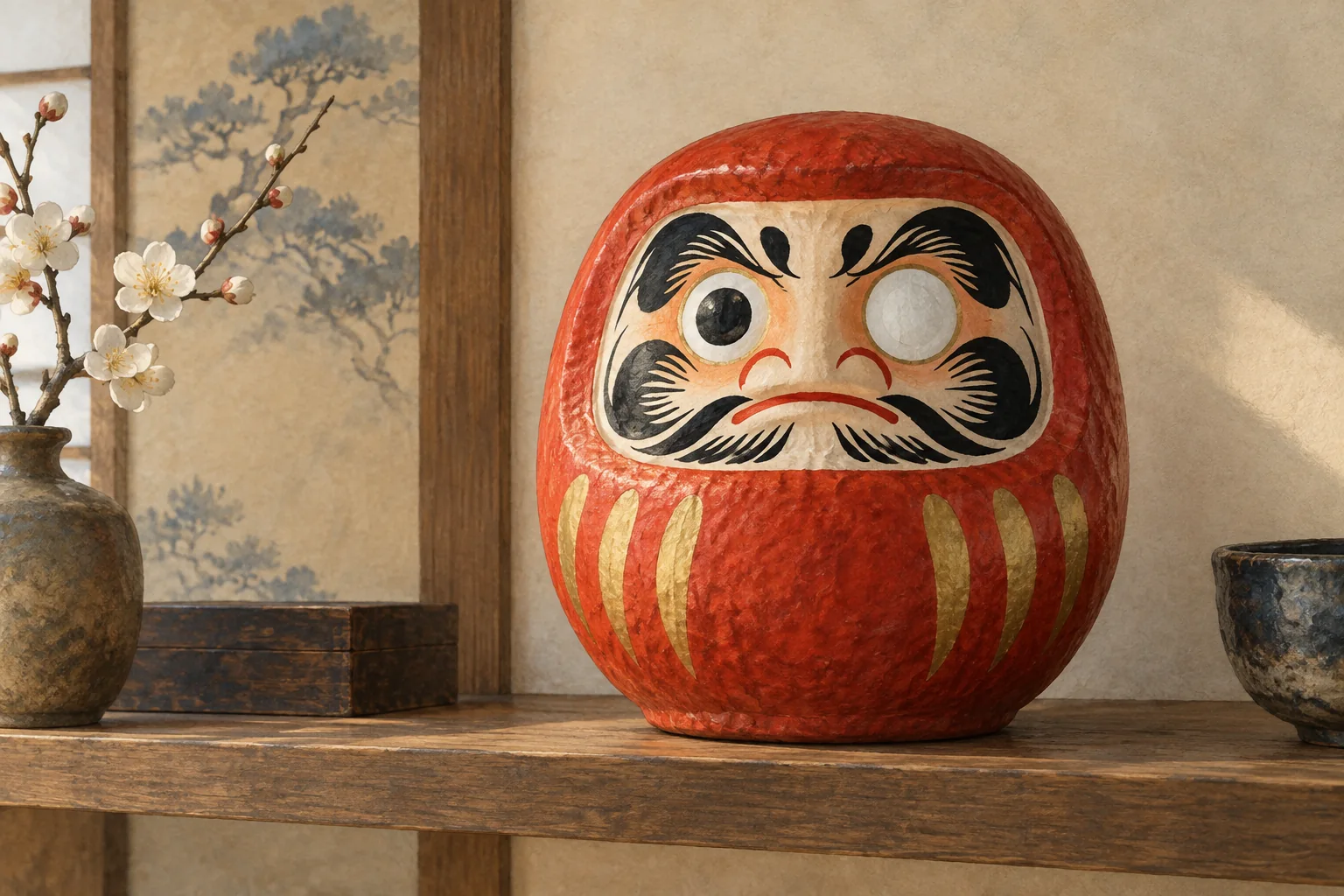
A daruma is a round red doll with blank eyes: paint one in when you make a wish, the other when it comes true.
だるまは目の描かれていない赤い丸い人形で、願をかけるとき片目を、叶ったときにもう片目を入れます。
In 30 seconds
The standard explanation
A daruma is a hollow, round, red figure modeled on a Buddhist monk, weighted so it always rights itself when knocked over. It is sold with both eyes blank. You set a goal and paint in one eye, and when you achieve it you paint in the other. Politicians do this on election night, and so do students, athletes and companies.
だるまは、僧をかたどった中空の赤くて丸い人形で、底が重く、倒しても必ず起き上がります。両目が白いまま売られます。目標を立てて片方の目を入れ、達成できたらもう片方を入れます。選挙の夜に政治家がやりますし、受験生も、選手も、会社もやります。
As a short speech
A full paragraph you can read aloud
A daruma is a round red doll with a stern face and no eyes. It is hollow, weighted at the bottom, so if you push it over it rocks back upright, and that is the whole point: there is a saying that goes "fall down seven times, get up eight."
The doll is modeled on Bodhidharma, the monk said to have brought Zen to China, who is also said to have sat facing a wall for nine years until his arms and legs withered away, which is why the figure has neither. You buy one with both eyes blank. When you set a goal, you paint in one eye.
When you achieve it, you paint in the other. You will see this on television every election night, when the winning candidate paints in the second eye in front of the cameras. At the end of the year, many people take their old daruma back to a temple or shrine to be burned, and some buy a bigger one.
だるまは、厳しい顔をした目のない赤い丸い人形です。中空で底が重く、倒しても揺れて起き上がります。それがすべてで、「七転び八起き」という言葉があります。人形のもとは、禅を中国に伝えたとされる僧、達磨大師です。
壁に向かって九年座り続け、手足が萎えたと伝えられ、だから人形にも手足がありません。買うときは両目が白いままです。目標を決めたら片目を入れ、達成したらもう片目を入れます。
選挙の夜のテレビで、当選した候補者がカメラの前で二つめの目を入れるのを毎回見かけます。年の終わりには、古いだるまを寺や神社に納めて焚き上げてもらい、ひとまわり大きいものを買う人もいます。
Questions people actually ask
And how to answer them.
Which eye goes in first?
Most commonly the left eye as you look at it, which is the doll's right. Practice varies by region and by shop, and nobody will correct you.
見て左側の目、つまりだるまから見て右目を先に入れるのが一般的です。地域や店によって違いがあり、直されることはありません。
Why is it red?
Red was believed to ward off illness, particularly smallpox, and the color of a monk's robe reinforced it. Today you can buy them in many colors, each assigned a different purpose.
赤は病、とくに疱瘡を退けると信じられており、僧衣の色とも重なりました。今では色ごとに目的を割り当てた多色のだるまが売られています。
What do you do with it afterwards?
You take it back to a temple or shrine, usually around New Year, where old daruma are burned together in a ceremony. Keeping one for years without completing it is considered a bit awkward.
正月ごろに寺や神社へ納め、古いだるまをまとめて焚き上げてもらいます。願が果たされないまま何年も置いておくのは、少し気まずいとされます。
Phrases you can use
- You paint one eye when you set the goal.目標を立てたときに片目を入れます。
- The other eye goes in when you achieve it.達成したら、もう片方の目を入れます。
- It always rights itself when you knock it over.倒しても必ず起き上がります。
- Fall down seven times, get up eight.七転び八起き。
- Politicians do this on election night.選挙の夜に政治家がやりますね。
Words you need
- goal目標
- perseverance粘り強さ
- weighted base重心の低い底
- achieve達成する
- ward off illness病を退ける
Watch
From YouTubeBackground (Japanese)
だるまの産地として知られるのが群馬県高崎市で、全国の生産の大半を占めるとされる。高崎だるまは眉を鶴、鼻から口ひげを亀に見立てて描き、「鶴は千年、亀は万年」の縁起を顔に込めている。目を入れる習慣の起源は、江戸時代の養蚕農家が蚕の当たり年を願ってだるまに目を入れたことに由来するという説がある。赤色は疱瘡(天然痘)除けの色とされ、疱瘡神は赤を嫌うという俗信があった。なお達磨大師が九年面壁したという伝承(面壁九年)は禅宗の逸話であり、史実として確認されているものではない。