kare raisu
Japanese curry
カレーライス(かれーらいす)
In one line
The shortest answer that works
Japanese curry is a thick, mild, sweet-savory stew poured over rice, and it came via Britain.
日本のカレーはとろみのある甘く穏やかな煮込みをご飯にかけたもので、イギリス経由で伝わりました。
In 30 seconds
The standard explanation
Japanese curry is thicker, sweeter and milder than Indian curry. It arrived in the nineteenth century through Britain, which is why it is thickened with a flour-based roux, and it became a staple of the navy and then of school lunches and home cooking. Most households make it from a block of solid curry roux.
日本のカレーはインドのカレーより濃く、甘く、辛さは穏やかです。19世紀にイギリス経由で入ってきたため、小麦粉のルウでとろみをつけます。海軍の食事として広まり、やがて給食と家庭料理の定番になりました。多くの家庭は固形のカレールウから作ります。
As a short speech
A full paragraph you can read aloud
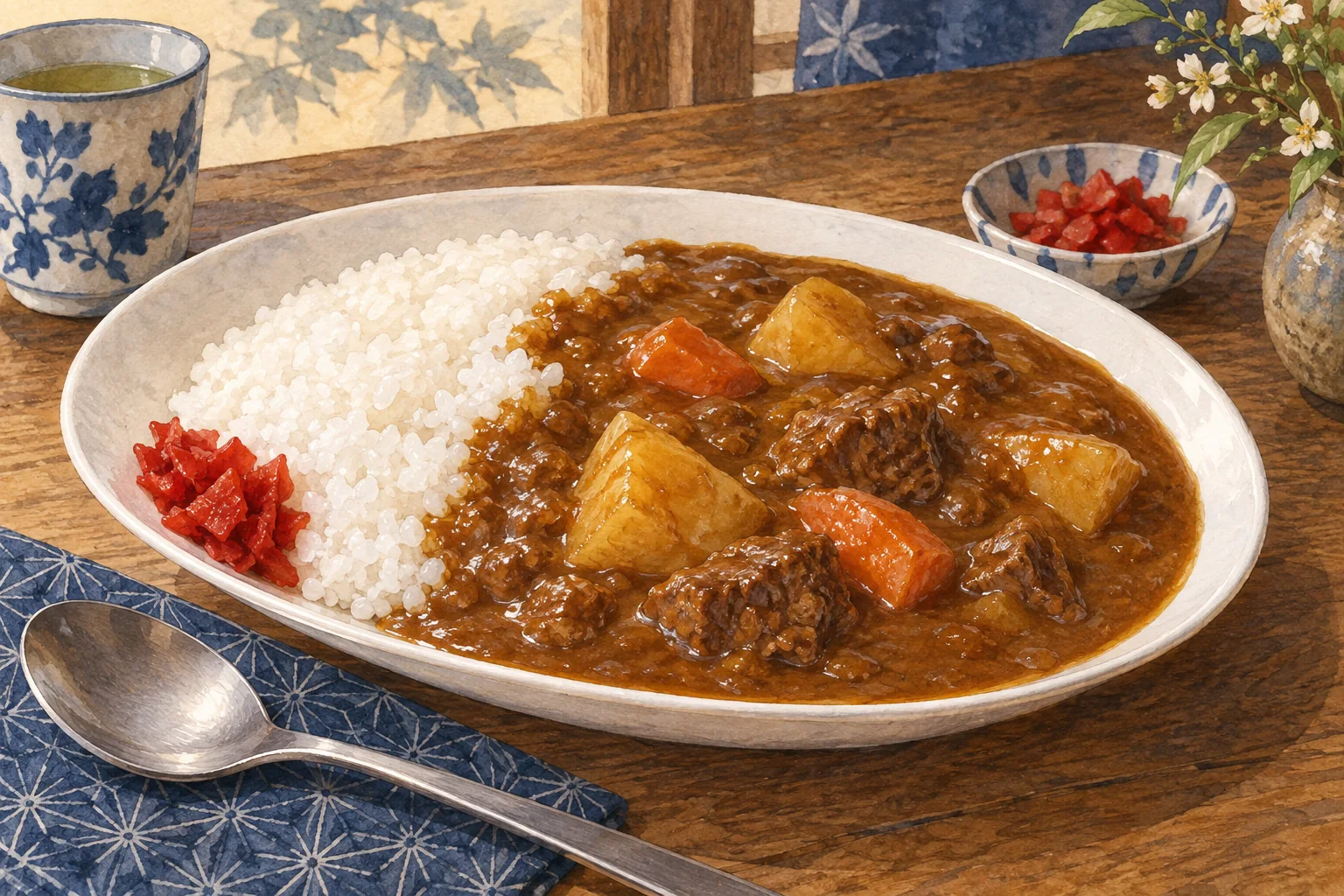
Japanese curry surprises people who expect something like Indian food. It is thick, glossy, mild and slightly sweet, poured over rice with potato, carrot and onion, and it is one of the most eaten dishes in the country. The reason for the difference is the route it took.
Curry reached Japan in the nineteenth century not from India but from Britain, in the form of a stew thickened with a flour and fat roux, and Japan kept that thickening. The navy adopted it because it was cheap, filling and easy to cook in quantity, and to this day the maritime force keeps a tradition of serving curry on Fridays.
From there it went into school lunches and then into the home, helped enormously by blocks of solid curry roux sold in supermarkets, which turn it into a twenty-minute dish. Every family has a slightly different version, and children in Japan will tell you theirs is the correct one.
日本のカレーは、インド料理のようなものを想像していた人を驚かせます。濃くてつやがあり、辛さは穏やかで少し甘く、じゃがいも、にんじん、玉ねぎと一緒にご飯にかけます。この国で最もよく食べられている料理のひとつです。違いの理由はたどってきた道にあります。
カレーが日本に届いたのは19世紀で、インドからではなくイギリスから、小麦粉と油脂のルウでとろみをつけた煮込みとして入ってきました。日本はそのとろみを残したのです。海軍は、安く、腹にたまり、大量に作りやすいという理由でこれを採り入れ、今も海上自衛隊には金曜日にカレーを出す習わしがあります。
そこから給食へ、さらに家庭へ広がりました。市販の固形ルウの存在がこれを大きく後押しし、二十分でできる料理になりました。家ごとに少しずつ違い、日本の子どもは自分の家のものが正しいと言い張ります。
Questions people actually ask
And how to answer them.
Why is it so mild?
Because it came as a British stew rather than as Indian cooking, and because it became a family and school dish that had to suit children. Shops that specialize in curry let you choose a heat level, often up to genuinely hot.
インド料理としてではなくイギリスの煮込みとして入ってきたからであり、子どもに合わせる必要のある家庭と学校の料理になったからです。カレー専門店では辛さの段階を選べ、本当に辛い段階まである店も多くあります。
What are the red things on the side?
Usually fukujinzuke, a sweet-salty pickle of chopped vegetables, or rakkyo, pickled shallots. Both are there to cut the richness. You are meant to eat them with the curry, a little at a time.
たいていは福神漬で、刻んだ野菜を甘辛く漬けたものです。らっきょうの酢漬けのこともあります。どちらも脂の重さを切るためのもので、カレーと一緒に少しずつ食べます。
Is it eaten with a spoon or chopsticks?
A spoon. Curry rice is one of the few Japanese meals where a spoon is standard, and restaurants set one automatically.
スプーンです。カレーライスは日本の食事の中で、スプーンが標準である数少ない料理で、店では自動的に用意されます。
A common misunderstanding
MYTHJapanese curry is a version of Indian curry.
FACTIt came through Britain as a roux-thickened stew, and it developed separately from Indian cooking. Indian restaurants in Japan serve something quite different.
Phrases you can use
- It came from Britain, not India.インドではなくイギリスから来ました。
- Most families use a block of curry roux.多くの家庭は固形ルウを使います。
- The red pickle cuts the richness.赤い漬物は重さを切るためのものです。
- You eat it with a spoon.スプーンで食べます。
Words you need
- rouxルウ
- to thickenとろみをつける
- heat level / spiciness辛さ
- school lunch給食
Watch
From YouTubeBackground (Japanese)
カレーは明治期にイギリス経由で伝わり、海軍の食事として全国に広まったと言われます。海上自衛隊には金曜日にカレーを出す習わしがあり、艦ごとの独自のレシピが公開されていることもあります。固形のカレールウが家庭に広まったのは昭和期で、これによりカレーは家庭料理の定番になりました。地域ごとに具材が異なり、豚肉と牛肉のどちらを使うかは東西で傾向が分かれます。カツカレー、ドライカレー、スープカレーなど派生も多くあります。