chozuya
the water pavilion where you rinse your hands before praying
手水舎(ちょうずや)
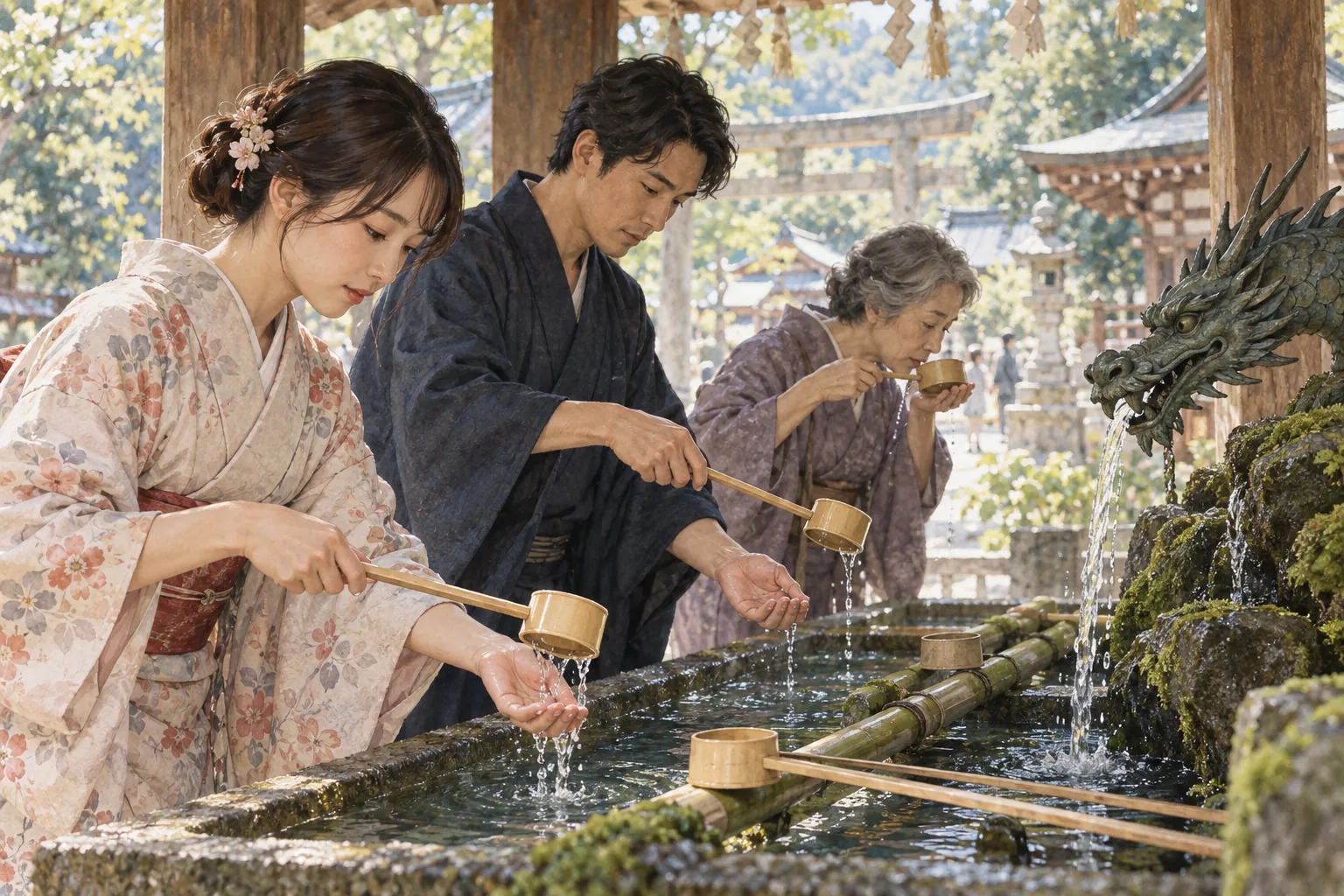
In one line
The shortest answer that works
The chozuya is the water basin at a shrine where you rinse your hands and mouth before praying.
手水舎とは、お参りの前に手と口をすすぐ、神社の水場のことです。
In 30 seconds
The standard explanation
Just inside the gate of a shrine there is a roofed stone basin with running water. You stop there before going to pray. With the ladle in your right hand, rinse your left hand, swap hands and rinse your right, then pour a little into your cupped left hand and rinse your mouth, spitting beside the basin, not into it. Finally tip the ladle up so the water runs down the handle.
神社の鳥居をくぐってすぐのところに、屋根のついた石の水盤があり、水が流れています。お参りの前にここに寄ります。右手で柄杓を持って左手を清め、持ちかえて右手を清め、左手に水を受けて口をすすぎ、水盤の中ではなく脇に出します。最後に柄杓を立てて、柄に水を流します。
As a short speech
A full paragraph you can read aloud
Before you pray at a Japanese shrine, you stop at the chozuya, a roofed basin of running water just inside the gate. The sequence is fixed and takes about fifteen seconds. Take the ladle in your right hand, pour water over your left hand, switch and pour over your right.
Then pour a little into your left palm, rinse your mouth from your hand, and spit quietly onto the gravel beside the basin. Never drink from the ladle and never spit into the basin. At the end, hold the ladle upright so the remaining water runs down the handle, cleaning it for the next person.
One thing to know: many shrines removed the ladles during the pandemic and never put them back. If there is no ladle, just rinse your hands in the running water. The point is to arrive at the prayer hall having symbolically washed off the outside world, and nobody will correct you if you get the order slightly wrong.
日本の神社でお参りする前に、手水舎に寄ります。鳥居をくぐってすぐにある、屋根のついた水盤です。順番は決まっていて、15秒ほどで終わります。右手で柄杓を持ち、左手に水をかける。持ちかえて右手にかける。
次に左手に水を受け、その手から口をすすぎ、水盤の脇の砂利に静かに出します。柄杓に直接口をつけない、水盤に吐かない。最後に柄杓を立てて、残った水を柄に流します。次の人のためです。
ひとつ知っておきたいのは、感染症のあいだに柄杓を片づけ、そのままにしている神社が多いことです。柄杓が無ければ、流れる水で手をすすぐだけで大丈夫です。大事なのは、外から持ち込んだものを形のうえで洗い流してから拝殿に向かうことで、順番が少し違っても誰も直しません。
Questions people actually ask
And how to answer them.
There's no ladle. What do I do?
Many shrines took them away during the pandemic and left the water running instead. Just hold your hands under the flow, rinse them, and go on. Rinsing the mouth is skipped in that case.
感染症のあいだに柄杓を外し、水を流したままにしている神社が多いです。流れる水に手を当ててすすぎ、そのまま進んでください。その場合、口をすすぐのは省きます。
Is the water drinkable?
Do not assume so. Some basins are fed by a spring that is safe, but many are not tested for drinking, and some carry a sign saying so. Rinse and spit it out.
飲めるとは考えないでください。湧き水で飲める場所もありますが、飲用として検査していない水盤も多く、その旨を掲示している場合もあります。すすいで出してください。
Do I have to do it at temples too?
Buddhist temples often have a basin as well, and you can use it the same way. Temples and shrines are different religions, but this particular gesture is common to both and nobody minds.
お寺にも水盤があることが多く、同じように使えます。寺と神社は別の宗教ですが、この所作は両方にあり、気にされることはありません。
A common misunderstanding
MYTHThe rinsing is about physical cleanliness before entering.
FACTIt stands for setting aside what Shinto calls impurity — the dust of ordinary life, illness, death you have been near. It is symbolic, which is why a few seconds of water is enough.
Phrases you can use
- Stop here and rinse your hands before you pray.お参りの前に、ここで手を清めてください。
- Left hand first, then right, then rinse your mouth.左手、次に右手、それから口をすすぎます。
- Don't put your mouth on the ladle.柄杓に直接口をつけないでください。
- Spit beside the basin, not into it.水盤の中ではなく、脇に出してください。
- If there's no ladle, just rinse under the running water.柄杓がなければ、流れる水で手をすすぐだけで結構です。
Words you need
- ladle, dipper柄杓
- basin水盤、手水鉢
- rinseすすぐ
- purification清め、お清め
- shrine gate鳥居
Watch
From YouTubeBackground (Japanese)
手水舎は「ちょうずや」のほか「てみずや」とも読む。もともと神社に参る前には川や海で全身を清める禊を行っていたとされ、それを簡略にしたものが手水だと説明される。水口が龍の形になっている社が多いのは、龍が水を司るとされたことによる。近年は感染症対策として柄杓を撤去し、竹筒や石から水を流し続ける形にした神社が増えた。花を浮かべる「花手水」は、柄杓を置けなくなった時期に広まり、そのまま季節の飾りとして続けているところもある。