ketsuekigata seikaku shindan
judging character by blood type
血液型性格診断(けつえきがたせいかくしんだん)
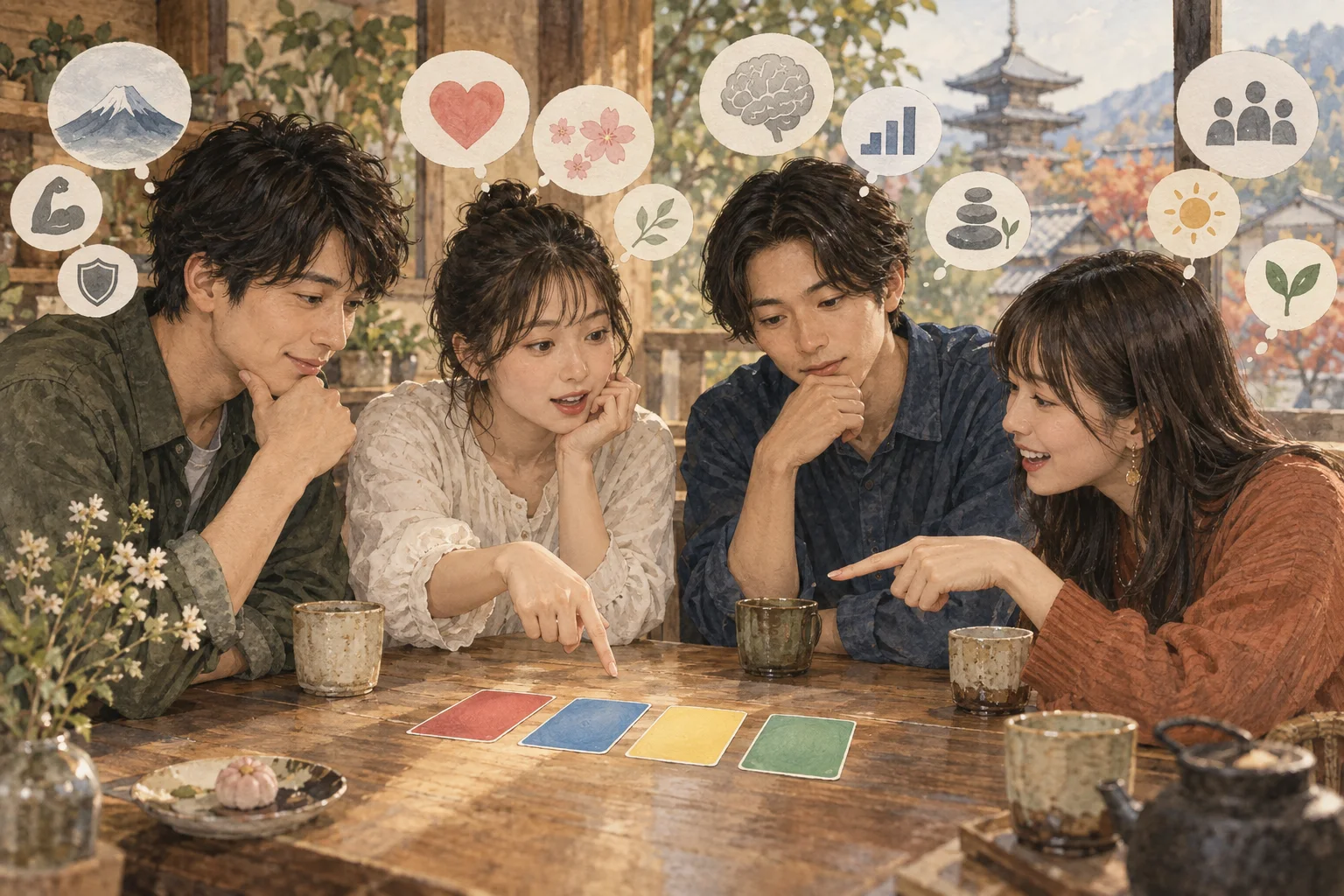
In one line
The shortest answer that works
Many Japanese people link blood type to personality, though there is no scientific support for it.
日本では血液型と性格を結びつける見方が広くありますが、科学的な裏づけはありません。
In 30 seconds
The standard explanation
In Japan, and also in South Korea, blood type is widely treated as a clue to personality: type A careful, type B individual, type O easygoing, type AB unpredictable. It appears in magazines, television and casual conversation. Research has not supported it, and using it in hiring has been criticized as discrimination.
日本や韓国では、血液型が性格の手がかりとして広く扱われています。A型は几帳面、B型はマイペース、O型はおおらか、AB型は読めない、といった具合です。雑誌やテレビ、日常の会話に現れます。研究はこれを支持しておらず、採用の場で用いることは差別だと批判されています。
As a short speech
A full paragraph you can read aloud
If you spend time in Japan someone will eventually ask your blood type, and it is worth knowing why. There is a widespread popular theory that blood type indicates personality: type A as careful and anxious about details, type B as individual and hard to pin down, type O as generous and easygoing, type AB as clever and unpredictable.
It fills magazine columns, morning television slots and small talk. The scientific position is straightforward: repeated studies have failed to find a real relationship, and the idea has been examined and rejected. Its history in Japan runs through a 1970s popular book that spread it widely, and it has never really gone away.
Most people who use it treat it as a conversational game rather than a belief, in the way horoscopes are used elsewhere. It has a serious side, though. Using blood type in hiring decisions has been criticized, and there is a Japanese term for harassment based on it.
日本にしばらくいれば、いつか誰かに血液型を聞かれます。その理由を知っておく価値があります。血液型が性格を示すという見方が広く行き渡っているからです。A型は几帳面で細かいことを気にする、B型はマイペースでつかみどころがない、O型はおおらかで寛大、AB型は頭がよく読めない、といった具合です。
これは雑誌の連載、朝のテレビ、世間話を埋めています。科学の側の立場は単純です。繰り返し行われた研究は実際の関係を見いだせず、この考えは検討のうえ否定されています。日本での経緯としては、1970年代の一般向けの本が広めたことが大きく、それ以来ずっと残っています。
使っている人の多くは、よその国で星占いが使われるのと同じように、信仰ではなく会話の遊びとして扱っています。ただし深刻な面もあります。採用の判断に血液型を用いることは批判されていて、これを理由とする嫌がらせを指す言葉も日本語にはあります。
Questions people actually ask
And how to answer them.
Do Japanese people actually believe it?
Most treat it as a light conversational topic, the way people elsewhere use star signs, while a minority take it more seriously. Either way, being asked your blood type is usually small talk, not an assessment.
多くの人は、よその国で星座が使われるのと同じ、軽い話題として扱っていますが、真剣に受け取る人も一部にいます。いずれにせよ、血液型を聞かれるのはたいてい世間話であって、評価ではありません。
What if I don't know my blood type?
That is an entirely normal answer, and in many countries people are never told. Saying you do not know usually ends the topic. Most Japanese people know theirs, though it is no longer routinely tested at birth, so some younger people do not.
まったくふつうの答えですし、知らされないまま育つ国も多くあります。知らないと言えば、たいていそこで話は終わります。日本人の多くは自分の血液型を知っていますが、今は生まれたときに必ず調べるわけではないので、知らない若い人もいます。
A common misunderstanding
MYTHBlood type is a recognized indicator of personality in Japan.
FACTIt is a popular belief with no scientific support. Studies have not found a reliable link, and using it to judge people at work is treated as a form of harassment.
Phrases you can use
- What's your blood type?血液型は何ですか。
- There's no scientific evidence for it.科学的な根拠はありません。
- It's small talk, like star signs.星座占いのような世間話です。
- In my country we usually don't know.私の国ではふつう知りません。
Words you need
- blood type血液型
- personality性格
- scientific evidence科学的根拠
- small talk世間話
Watch
From YouTubeBackground (Japanese)
血液型と気質を結びつける議論は戦前にも現れましたが、広く一般に定着したのは1970年代の一般向けの書籍によるものです。テレビ番組や雑誌の特集、キャラクターの設定にまで使われ、文房具や菓子の商品にもなりました。一方、採用や配置で血液型を用いることは「ブラッドタイプ・ハラスメント」と呼ばれて批判され、放送倫理の面からも取り上げられたことがあります。韓国や台湾にも同様の見方が広まっていますが、欧米ではほとんど知られていません。