“Fan the flames”の意味や使い方は?~1898年2月15日、戦艦メイン号爆沈とイエロー・ジャーナリズムの暴走~
英語には「Fan the flames(ファン・ザ・フレイムズ)」という比喩的なイディオムがある。直訳すると「炎をあおぐ」だが、実際には「状況を悪化させる」「対立や怒りを煽り立てる」という意味で使われる▼この表現の起源は、火に空気を送って燃え上がらせるという物理的な行為にある。比喩としての使用は少なくとも16世紀に遡り、19世紀にはディケンズが『骨董屋』の中で用いた。日本語の「火に油を注ぐ」に近い表現だが、英語では特にメディアや政治家が世論を煽る文脈で頻繁に登場する▼この表現が最もふさわしい歴史的事件がある。1898年2月15日、キューバのハバナ港でアメリカの戦艦メイン号が謎の爆発を起こし沈没、乗組員260名以上が命を落とした事件だ。スペインからの独立を求めるキューバの反乱の最中、米国市民保護の名目で派遣されていた同艦の沈没は、米西戦争の引き金となった▼爆発の原因は今も確定していない。1976年の調査では石炭庫の自然発火が有力とされたが、当時のアメリカではスペインの仕業と信じられた。その世論を決定的に煽ったのが、ハーストやピューリッツァーに代表される「イエロー・ジャーナリズム」だ。扇情的な見出しで国民の怒りを煽り立て、まさに「fanned the flames of war」したのである▼「リメンバー・ザ・メイン!スペインを地獄へ!」というスローガンが全米に広がり、わずか2か月後にアメリカはスペインに宣戦布告した。メディアが世論を動かし、国家を戦争へ導いた象徴的な事例である▼現代でも、SNSやニュースメディアが「fan the flames」する場面は後を絶たない。情報の真偽を見極める力が、かつてないほど求められている時代なのかもしれない。
【英語訳】
The True Meaning of “Fan the Flames”: The Sinking of the USS Maine and the Rampage of Yellow Journalism
English has a figurative idiom: “Fan the flames.” While its literal translation means “to blow air onto a fire,” it is actually used to mean “to worsen a situation” or “to stir up conflict and anger.”
The origin of this expression lies in the physical act of sending air into a fire to make it burn more intensely. Its metaphorical use dates back to at least the 16th century, and in the 19th century, Charles Dickens employed it in “The Old Curiosity Shop.” It is close to the Japanese expression “hi ni abura wo sosogu” (to pour oil on fire), but in English, it appears particularly frequently in contexts where the media or politicians are stirring up public opinion.
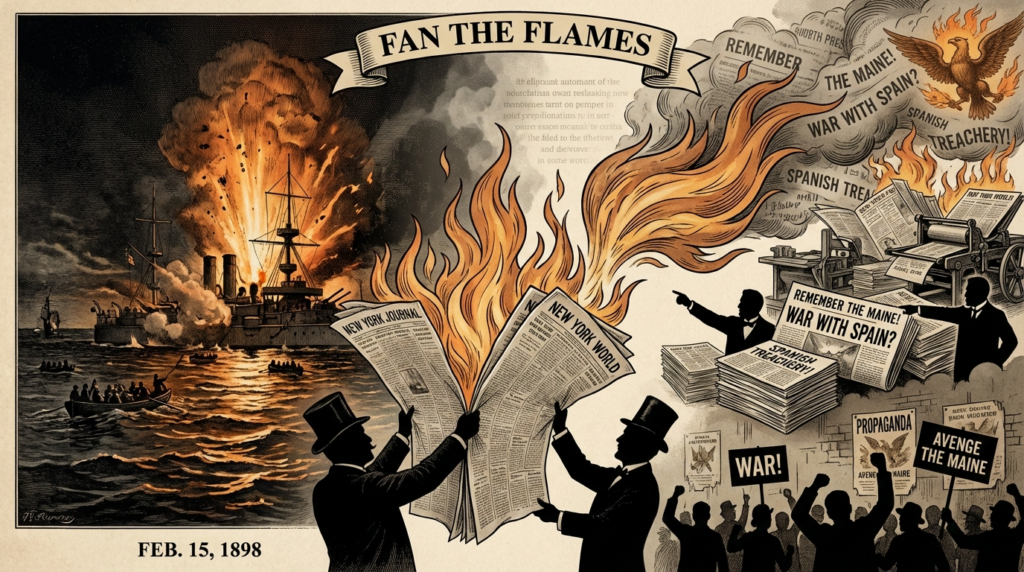
There is a historical event for which this expression is most fitting. On February 15, 1898, the American battleship USS Maine was rocked by a mysterious explosion in Havana Harbor, Cuba, and sank, claiming the lives of more than 260 crew members. Dispatched under the pretext of protecting American citizens amid Cuba’s rebellion for independence from Spain, the sinking of the ship became the trigger for the Spanish-American War.
The cause of the explosion has never been definitively established. A 1976 investigation concluded that spontaneous combustion in a coal bunker was the most likely cause, but at the time, Americans believed it to be the work of Spain. What decisively fanned the flames of public opinion was the “yellow journalism” epitomized by William Randolph Hearst and Joseph Pulitzer. With sensationalist headlines, they whipped up the public’s fury—they quite literally “fanned the flames of war.”
The slogan “Remember the Maine! To hell with Spain!” swept across the nation, and just two months later, the United States declared war on Spain. It remains a symbolic case of the media swaying public opinion and leading a nation into war.
Even today, instances of social media and news outlets “fanning the flames” show no sign of disappearing. We may be living in an era where the ability to discern the truth of information is more critical than ever before.