

 ワークシート
 ぬりえ
 迷路
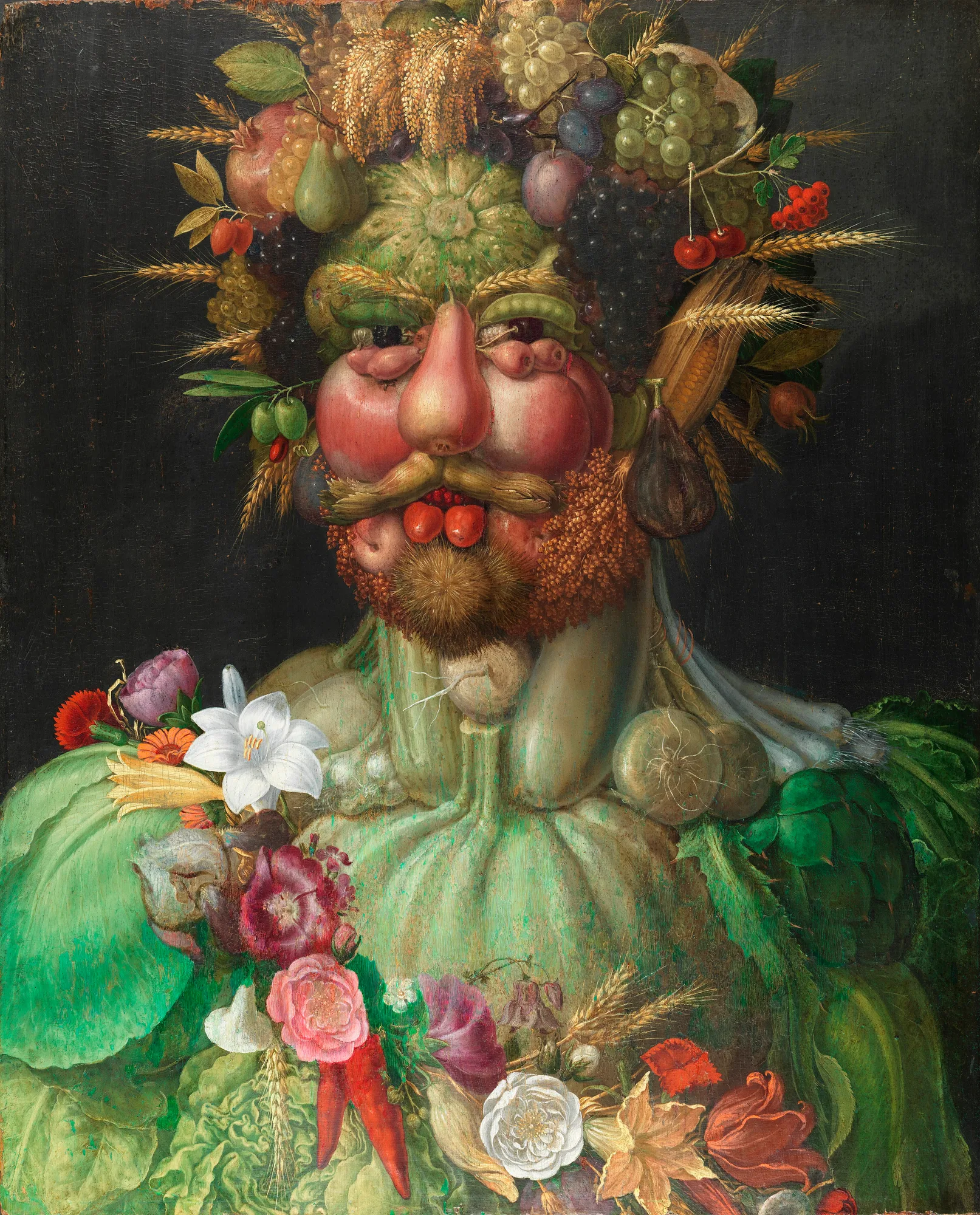
鼻は洋ナシ、くちびるはサクランボ。これが皇帝の肖像画!?A pear nose and cherry lips. Is this really an emperor's portrait?!
この作品のお話
Story果物、野菜、花、穀物を組み合わせて作った人の顔です。鼻は洋ナシ、ほおはリンゴ、くちびるはサクランボ、耳はトウモロコシ、まゆは麦の穂、ひげはクリのいがなど、遠くから見ると顔、近くで見ると八百屋さん。モデルは神聖ローマ皇帝ルドルフ2世で、四季と植物を守るローマの神ウェルトゥムヌスにたとえて描かれています。
This face is made of fruits, vegetables, flowers and grains. The nose is a pear, the cheeks are apples, the lips are cherries, the ear is an ear of corn, and the beard looks like chestnut husks. From far away, it is a face. Up close, it looks like a market stall. The model is Holy Roman Emperor Rudolf II, shown as Vertumnus, the Roman god of seasons and plants.
アルチンボルドはイタリア・ミラノ出身で、プラハやウィーンのハプスブルク家の宮廷に長く仕え、肖像画のほかお祭りの衣装や演出もまかされました。この絵は故郷ミラノにもどったあとに描いてプラハへ送ったもので、春夏秋冬の実りがひとつの顔に集まり、皇帝の治める世の豊かさをたたえています。
Arcimboldo was from Milan in Italy. For many years he worked for the Habsburg court in Vienna and Prague. Besides portraits, he designed costumes and court festivals. He painted this after returning to Milan and sent it to Prague. Fruits from all four seasons come together in one face, praising the rich world ruled by the emperor.
皇帝はこの絵をとても気に入ったと伝えられ、詩人コマニーニは絵をたたえる詩を書きました。ところが1648年、三十年戦争の終わりにスウェーデン軍がプラハをおそい、皇帝の美術品を戦利品として持ち去ります。この絵もそのひとつで、今もスウェーデンのスコークロステル城にあります。
It is said that the emperor liked it very much, and the poet Gregorio Comanini wrote a poem praising it. But in 1648, at the end of the Thirty Years' War, the Swedish army attacked Prague and took the emperor's art as war loot. This painting was one of them. It is still at Skokloster Castle in Sweden.
この顔を見てください!鼻は洋ナシ。くちびるはサクランボ。耳はトウモロコシ。これは皇帝の絵です。皇帝は怒りませんでした。とても気に入ったと言われています!
Look at this face! The nose is a pear. The lips are cherries. The ear is corn. This is a picture of an emperor. He was not angry. People say he liked it very much!
英語のレベルは上の「やさしい/ふつう」で切りかえられます。
えっ!?な裏ネタ
Secrets1648年、スウェーデン軍はプラハ城から皇帝ルドルフ2世の膨大なコレクションを運び出しました。この絵もそれ以来スウェーデンにあり、プラハに帰ることはありませんでした。今は湖のほとりのお城で見られます。
In 1648, the Swedish army carried away Emperor Rudolf II's huge art collection from Prague Castle. This painting has been in Sweden ever since and never went back to Prague. Today you can see it in a castle by a lake.
耳のトウモロコシや、頭のカボチャのなかまは、アメリカ大陸から伝わってまだ100年ほどの、ヨーロッパではめずらしい作物でした。めずらしい植物を集めて研究していた皇帝の宮廷らしく、当時の「めずらしい自然」が顔の中に入っているのです。
The corn ear and some of the squashes came from the Americas. They had reached Europe only about a hundred years before and were still exotic. The emperor's court collected and studied rare plants, so this face shows the exotic nature of the time.
野菜で顔を描かれたら怒りそうですが、ルドルフ2世はむしろ喜んだと伝えられています。アルチンボルドは長年の働きをみとめられ、1592年に皇帝から「宮中伯」という名誉ある称号をさずかりました。
You might think the emperor would be angry. But it is said that Rudolf II was pleased. In 1592, the emperor gave Arcimboldo the honorary title of Count Palatine for his many years of service.
アルチンボルドは死後長く忘れられていましたが、20世紀にシュルレアリスムの画家たちに「先輩」として注目され、再び人気になりました。だまし絵のような楽しさは、今も世界中の子どもと大人を笑わせています。
After his death, Arcimboldo was forgotten for a long time. In the 20th century, the Surrealist artists saw him as an early master, and he became popular again. His playful 'trick' pictures still make children and adults smile around the world.
ここを見て!
Look Closer1洋ナシの鼻The pear nose
ふっくらした洋ナシが鼻に。両側のほおは赤いリンゴです。
A round pear makes the nose. The cheeks on both sides are red apples.
2サクランボのくちびるThe cherry lips
2つのサクランボがくちびる。その上には麦の穂の口ひげ。
Two cherries make the lips. Above them is a mustache of grain.
3トウモロコシの耳The corn ear
耳はトウモロコシ。新大陸から来たばかりのめずらしい作物でした。
The ear is an ear of corn, a rare new crop from the Americas.
4花の胸かざりFlowers on the chest
白いユリやバラなど、春の花が胸をかざります。肩はキャベツの葉です。
Spring flowers such as a white lily and roses decorate the chest. The shoulders are cabbage leaves.
英語で名画を語ろう
Talk about Art in EnglishThe emperor's face is made of fruits and vegetables.
皇帝の顔は果物と野菜でできています。
💡 材料を言う基本表現。made of marble(大理石製)など素材にも。
英語で説明すると… Describe it
これは男の人の肖像画ですが、顔は食べ物でできています。鼻は洋ナシで、ほおはリンゴです。髪はブドウと麦でできています。胸にはたくさんの花があります。
This is a portrait of a man, but his face is made of food. His nose is a pear, and his cheeks are apples. His hair is made of grapes and wheat. On his chest, there are many flowers.
考えてみよう Think & Talk
- 自分の顔を食べ物で描くとしたら、どんな食べ物を選びますか?If someone painted your face with food, which foods would you choose?
- この絵は冗談でしょうか、それとも皇帝をたたえる方法でしょうか?どう思いますか?Is this painting a joke or a way to praise the emperor? What do you think?
この作品の英単語
WordsThe emperor's face is made of vegetables and fruits.
皇帝の顔は野菜と果物でできています。
His nose is a big pear.
彼の鼻は大きな洋ナシです。
The emperor liked this funny portrait.
皇帝はこのゆかいな肖像画を気に入りました。
Arcimboldo's paintings are clever and playful.
アルチンボルドの絵はかしこくて遊び心があります。
ミニクイズ
QuizQ. この絵のモデルになった人物は?Who is the model for this painting?
神聖ローマ皇帝ルドルフ2世を、季節の神ウェルトゥムヌスとして描いています。
It shows Holy Roman Emperor Rudolf II as Vertumnus, the god of the seasons.
ウソ?ホント? この絵は戦争のときにスウェーデン軍に持ち去られた。The Swedish army took this painting during a war.
1648年、三十年戦争の終わりにプラハから持ち去られました。
It was taken from Prague in 1648, at the end of the Thirty Years' War.
ウソ?ホント? 皇帝は野菜で描かれたことに怒り、画家を追放した。The emperor was angry about the vegetable face and sent the painter away.
皇帝は気に入ったと伝えられ、画家はのちに伯爵の位をもらいました。
The emperor is said to have liked it, and the painter later became a count.
 画像の出典とライセンス / Image credit
- PDVertumnus årstidernas gud målad av Giuseppe Arcimboldo 1591 - Skoklosters slott - 91503.jpg(Wikimedia Commons)
ライセンス:Public domain(パブリックドメイン)/作者・撮影者の表記:Giuseppe Arcimboldo/提供元:LSH 91503 (sm_dig7869)
この作品は、作者の死後長い年月がたち著作権の保護期間が終わった「パブリックドメイン」の作品です。画像は平面の作品を忠実に写したもので、新しい著作権は生じません(Wikimedia Commons の PD-Art の考え方)。 所蔵:スコークロステル城(Skokloster Castle)。画像は表示のために縮小・WebP 形式に変換しています。
