 ワークシート
 ぬりえ
 迷路
剣でマントを半分こ!やさしさのヒーロー、聖マルティヌス。He cuts his cloak in half! Saint Martin, a hero of kindness.
 美術館アンテナ:エル・グレコの作品に会える展覧会
この作品のお話
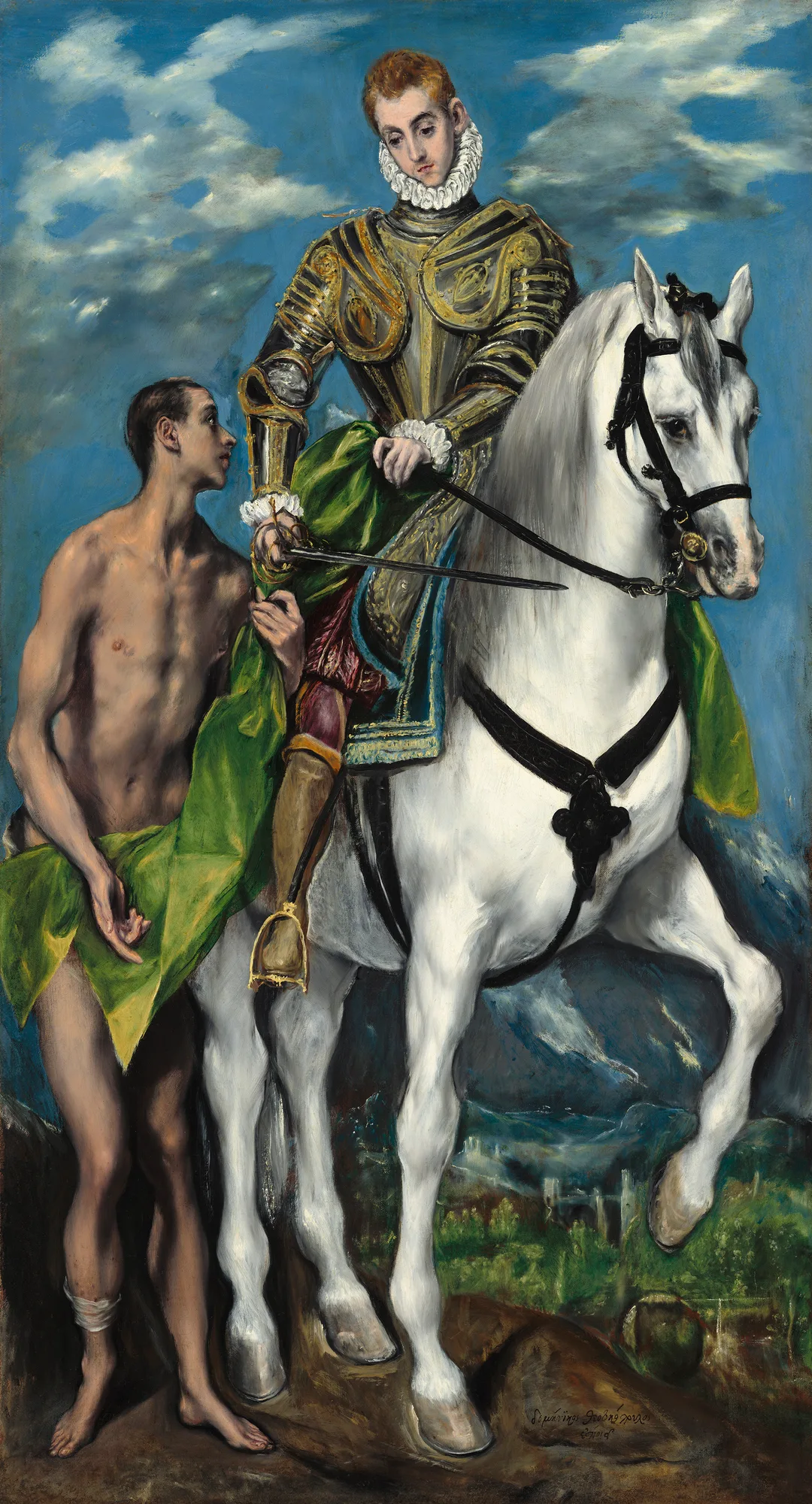
Story白い馬に乗った若い騎士が、剣で自分の緑のマントを切り、寒さにふるえる貧しい男に分けようとしています。4世紀の聖人、トゥールの聖マルティヌスの伝説の場面です。エル・グレコが1597〜99年に描いた作品で、今はワシントンのナショナル・ギャラリー・オブ・アートにあります。
A young knight on a white horse cuts his green cloak with a sword. He is sharing it with a poor man who is shaking with cold. This is a scene from the legend of Saint Martin of Tours, a saint from the 4th century. El Greco painted it in 1597–1599. It is now in the National Gallery of Art in Washington, D.C.
マルティヌスはローマの兵士だったころ、フランスのアミアンの町の門で、こごえそうな男に出会いました。持っていたのはマントだけ。そこで剣で半分に切って与えたのです。その夜、夢にキリストがそのマントを着てあらわれた、と伝えられます。この絵は、スペインのトレドにあるサン・ホセ礼拝堂の祭壇のために描かれました。
When Martin was a Roman soldier, he met a freezing man at the gate of Amiens, a town in France. Martin had only his cloak, so he cut it in half with his sword and gave one half away. That night, the story says, Christ appeared in his dream wearing the cloak. El Greco painted this for an altar in the Chapel of San José in Toledo, Spain.
エル・グレコは聖人を、昔の人ではなく、金の飾りのよろいを着た16世紀の若い貴族として描きました。低い地平線と大きな空のおかげで、人物は見上げるように大きく見えます。絵はのちに礼拝堂から売られ、アメリカのコレクターをへて、1942年にナショナル・ギャラリー・オブ・アートのものになりました。
El Greco showed the saint not as a man from long ago, but as a young 16th-century nobleman in gold-trimmed armor. The low horizon and the big sky make the figures look tall, as if we are looking up at them. The painting was later sold from the chapel. After belonging to an American collector, it came to the National Gallery of Art in 1942.
若い男が白い馬に乗っています。寒さにふるえる貧しい男を見つけます。彼は剣でマントを半分に切ります。そして半分を男にあげます。やさしさについての有名なお話です。
A young man rides a white horse. He sees a poor, cold man. He cuts his cloak in half with his sword. He gives one half to the man. It is a famous story about kindness.
英語のレベルは上の「やさしい/ふつう」で切りかえられます。
えっ!?な裏ネタ
Secrets右下の地面に、小さなギリシャ文字で画家の本名「ドメニコス・テオトコプーロス」が書かれています。エル・グレコとは「ギリシャ人」という意味のあだ名。クレタ島生まれの彼は、スペインに住んでもギリシャ語でサインし続けました。
At the lower right, the painter's real name, Domenikos Theotokopoulos, is written in small Greek letters. 'El Greco' is a nickname that means 'the Greek'. He was born on the island of Crete, and he kept signing in Greek even in Spain.
聖マルティヌスのマントの一部は、のちにフランク王国の王たちが大切にした聖遺物となり、王の礼拝所に納められたと伝えられます。ラテン語で「小さなマント」を意味するカッペラが、やがてその礼拝所を指すようになり、英語のchapel(礼拝堂)につながったといわれます。
Part of Saint Martin's cloak later became a holy relic of the Frankish kings and was kept in their royal chapel. The Latin word 'cappella', meaning 'little cloak', came to mean that place. This is said to be where the English word 'chapel' comes from.
4世紀の聖人なのに、着ているのは16世紀スペインの金の飾りつきのよろいと、首まわりの白いひだえり。昔の物語を「今の出来事」として見せることで、見る人に身近に感じてもらう工夫です。
He is a saint from the 4th century, but he wears 16th-century Spanish armor with gold and a white ruff collar. By showing an old story as a modern event, El Greco made it feel close to the people who saw it.
エル・グレコの細長い人物は、目の病気(乱視)のせいだという説が20世紀に唱えられました。しかし今の美術史では、この説は支持されていません。わざと長く描いた表現だと考えられていますが、そのねらいについてはいろいろな意見があります。
In the 20th century, some people said El Greco's long figures came from an eye problem called astigmatism. Art historians do not accept this idea today. They think he made the bodies long on purpose, but they still discuss exactly why.
ここを見て!
Look Closer1聖マルティヌスSaint Martin
白いひだえりをつけた若い騎士。下にいる男を、やさしく見下ろしています。
The young knight wears a white ruff. He looks down kindly at the man below.
2剣とマントSword and cloak
剣の刃が、緑のマントをまさに切ろうとしているところ。物語のいちばん大事な瞬間です。
The sword is just about to cut the green cloak. This is the key moment of the story.
3貧しい男The poor man
ほとんど服を着ていない男が、マントのはしをつかんでいます。足には包帯が見えます。
A man with almost no clothes holds the end of the cloak. You can see a bandage on his leg.
4ギリシャ文字のサインGreek signature
地面に書かれた小さなギリシャ文字。画家の本名です。
Small Greek letters on the ground. This is the painter's real name.
英語で名画を語ろう
Talk about Art in EnglishSaint Martin cuts his cloak in half with his sword.
聖マルティヌスは剣でマントを半分に切ります。
💡 in half は「半分に」。cut / break / fold ~ in half のように使えます。
英語で説明すると… Describe it
まん中では、金色のよろいの若者が白い馬に乗っています。左には、ほとんど服を着ていない貧しい男がいます。馬に乗った若者は、剣で緑のマントを切っています。後ろには白い雲のうかぶ青空が広がっています。
In the center, a young man in golden armor is riding a white horse. On the left, there is a poor man with almost no clothes. The rider is cutting his green cloak with a sword. Behind them, there is a blue sky with white clouds.
考えてみよう Think & Talk
- エル・グレコはなぜ、昔の物語を当時の服やよろいで描いたのだと思いますか?Why do you think El Greco painted an old story with new clothes and armor?
- こまっている人がいたら、あなたは何を分けてあげますか?What would you share with someone in need?
この作品の英単語
WordsMartin cut his cloak with a sword.
マルティヌスは剣でマントを切りました。
The beggar was very cold.
その貧しい男はとても寒がっていました。
He shared his cloak with a poor man.
彼は貧しい男とマントを分け合いました。
Saint Martin was a generous man.
聖マルティヌスは心の広い人でした。
ミニクイズ
QuizQ. 聖マルティヌスがマントを切るのに使ったものは?What did Saint Martin use to cut his cloak?
兵士だった彼は、腰の剣でマントを半分に切りました。
He was a soldier, so he cut the cloak in half with his sword.
ウソ?ホント? エル・グレコは、サインをギリシャ文字で書いた。El Greco signed his name in Greek letters.
右下に、本名をギリシャ文字で書いています。
He wrote his real name in Greek letters at the lower right.
ウソ?ホント? 騎士のよろいは、4世紀のローマ兵のものを正確に描いている。The knight's armor is an exact copy of 4th-century Roman armor.
描かれたのは16世紀のスペインのよろいです。
It is 16th-century Spanish armor.
 画像の出典とライセンス / Image credit
- PDEl Greco - San Martín y el mendigo.jpg(Wikimedia Commons)
ライセンス:Public domain(パブリックドメイン)/作者・撮影者の表記:El Greco
この作品は、作者の死後長い年月がたち著作権の保護期間が終わった「パブリックドメイン」の作品です。画像は平面の作品を忠実に写したもので、新しい著作権は生じません(Wikimedia Commons の PD-Art の考え方)。 所蔵:ナショナル・ギャラリー・オブ・アート(National Gallery of Art)。画像は表示のために縮小・WebP 形式に変換しています。