

 ワークシート
 ぬりえ
 迷路
井戸を掘ったら、地下から軍隊が出てきた!皇帝を守る推定8000の兵士。Farmers dug a well and found an army! About 8,000 soldiers may guard an emperor.
この作品のお話
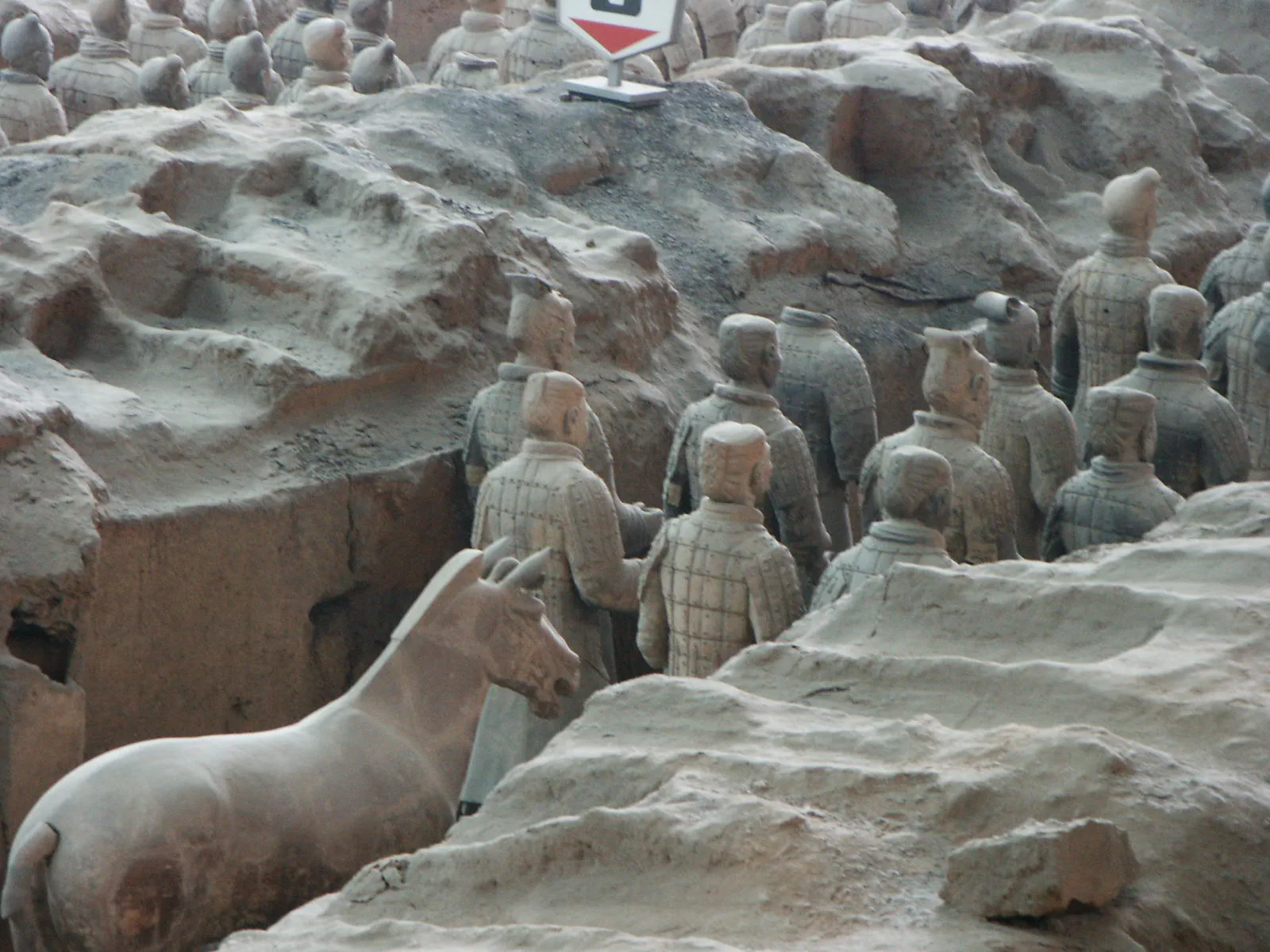
Story兵馬俑は、中国を初めて統一した秦の始皇帝の墓を守るために作られた、等身大の兵士と馬の焼き物です。紀元前210年ごろに作られ、西安の近くの地下に埋められました。兵士はおよそ8000体あると推定されています。この写真は、いちばん大きな「1号坑」の様子です。
The Terracotta Army is a group of life-size clay soldiers and horses. They were made to guard the tomb of the First Emperor of Qin, who first united China. They were buried near Xi'an around 210 BC. There may be about 8,000 soldiers. This photo shows Pit 1, the biggest pit.
始皇帝は、死んだあとの世界でも自分を守る軍隊が必要だと考えたようです。兵士たちは本物の軍隊のように隊列を組み、もとは本物の青銅の武器を持っていました。体は粘土で作って窯で焼き、顔や手は一体ずつていねいに仕上げられています。兵士の背の高さは、多くが今の大人と同じくらいかそれ以上です。
The emperor wanted an army to protect him after death. The soldiers stand in rows like a real army. They once held real bronze weapons. Their bodies were made of clay and fired in kilns, and their faces and hands were finished one by one. Many are as tall as an adult today, or taller.
1974年に農民が偶然見つけてから、発掘は今も続いています。1987年には始皇帝陵として世界遺産に登録されました。1号坑の上には体育館のような大きな屋根がかけられ、見学者は上から兵士たちを見下ろします。日本をふくむ世界各地で展覧会が開かれ、古代中国の力を伝える代表的な文化財になっています。
Farmers found them by chance in 1974, and the digging still continues today. In 1987, the site became a UNESCO World Heritage Site. A huge roof now covers Pit 1, and visitors look down on the soldiers from above. Exhibitions have been held around the world, including in Japan.
この兵士たちは土でできています。およそ8000体もいます!約2200年前のものです。中国の皇帝のお墓を守っています。1974年に農民が見つけました。
These soldiers are made of clay. There are about 8,000 of them! They are about 2,200 years old. They guard the tomb of a Chinese emperor. Farmers found them in 1974.
英語のレベルは上の「やさしい/ふつう」で切りかえられます。
えっ!?な裏ネタ
Secrets1974年、日照りに困った村の農民たちが井戸を掘っていると、土の中から人の形をした焼き物のかけらが出てきました。これが、2000年以上だれにも知られていなかった地下の大軍団の発見につながりました。
In 1974, during a dry season, village farmers were digging a well. They found pieces of clay figures in the ground. This led to the discovery of an underground army hidden for over 2,000 years.
兵士たちは、もとは赤・緑・青などで鮮やかにぬられていました。ところが掘り出して乾いた空気にふれると、絵の具の下のうるしが縮んで、数分で色がはがれ落ちてしまうことがあります。そのため、保存の方法を確かめながら、慎重に発掘が進められています。
The soldiers were once painted in red, green, blue and other colours. When they are exposed to dry air, the lacquer under the paint can shrink, and the colour may flake off within minutes. This is one reason why archaeologists dig very carefully.
歴史家の司馬遷は『史記』に、始皇帝の墓の中には水銀で川や海が作られていると書きました。実際に墓の上の土を調べると、まわりより高い濃度の水銀が検出されています。皇帝の墓そのものは、今もまだ発掘されていません。
The historian Sima Qian wrote that the emperor's tomb had rivers and seas of mercury. Tests of the soil above the tomb found high levels of mercury. The tomb itself has still not been opened.
兵士の像は、別々に作った土の部品を組み合わせ、顔や髪型、ひげなどを手で仕上げました。一人ひとりちがう人物に見えるように作られ、同じ顔は二つとないと言われます。服装や髪型から、将軍・歩兵・弓兵などの区別もつきます。
The figures were put together from separately made clay parts. Faces, hair and beards were finished by hand. They were made to look like different people, and it is said that no two faces are the same. Clothes and hairstyles also show rank, such as general, foot soldier or archer.
ここを見て!
Look Closer1焼き物の馬Clay horse
手前の馬は、戦車を引くための馬です。耳を立て、今にも走り出しそうです。
This horse once pulled a war chariot. Its ears are up, as if it is ready to run.
2よろいの兵士Soldier in armour
背中には、小さな板を組み合わせたよろいの模様が細かく再現されています。
On his back, you can see armour made of many small plates.
3奥に並ぶ隊列Rows in the back
奥にも兵士がずらりと並んでいます。1号坑には何千もの兵士がいると考えられています。
More soldiers stand in long rows at the back. Pit 1 may hold thousands of soldiers.
英語で名画を語ろう
Talk about Art in EnglishThe clay soldiers stand in rows.
土の兵士たちは列になって立っています。
💡 人や物が並ぶ様子に。in a row(一列に)、in rows(何列にも)。
英語で説明すると… Describe it
これは土で作られた昔の軍隊の写真です。手前には土の馬がいます。その奥には、兵士たちが列になって立っています。頭のない兵士もいます。
This is a photo of an old army made of clay. In the foreground, there is a clay horse. Behind it, soldiers are standing in rows. Some soldiers have no heads.
考えてみよう Think & Talk
- 皇帝はなぜ、死んだあとにも軍隊がほしかったのだと思いますか?Why do you think the emperor wanted an army after he died?
- 皇帝の墓は今すぐ開けるべき?それとも待つべき?それはなぜ?Should we open the emperor's tomb now, or wait? Why?
この作品の英単語
WordsThe emperor had a clay army.
皇帝には土でできた軍隊がありました。
The First Emperor united China.
始皇帝は中国を統一しました。
The soldiers guard the emperor's tomb.
兵士たちは皇帝の墓を守っています。
The soldiers are life-size.
兵士たちは実物大です。
ミニクイズ
QuizQ. 兵馬俑はどうやって見つかった?How was the Terracotta Army found?
1974年、井戸を掘っていた農民が焼き物のかけらを見つけました。
In 1974, farmers digging a well found pieces of clay figures.
ウソ?ホント? 兵馬俑の兵士は、もとは色がぬられていた。The terracotta soldiers were once painted.
赤や緑、青などで鮮やかにぬられていました。
They were painted in bright colours like red, green and blue.
ウソ?ホント? 兵士はすべて同じ型で作られ、顔もまったく同じである。All the soldiers have exactly the same face.
顔は一体ずつ手で仕上げられ、同じ顔はないと言われます。
Faces were finished by hand, and it is said no two are alike.
 画像の出典とライセンス / Image credit
- CC0Qin Shihuang Terracotta Army, Pit 1.jpg(Wikimedia Commons)
ライセンス:CC0(パブリックドメイン提供)/作者・撮影者の表記:Gary Todd
この作品は、作者の死後長い年月がたち著作権の保護期間が終わっています。写真は撮影者がパブリックドメインとして公開したもの、または著作権の保護期間が終わった古い写真です。 所蔵:秦始皇帝陵博物院(Emperor Qinshihuang's Mausoleum Site Museum)。画像は表示のために縮小・WebP 形式に変換しています。
