

 ワークシート
 ぬりえ
 迷路
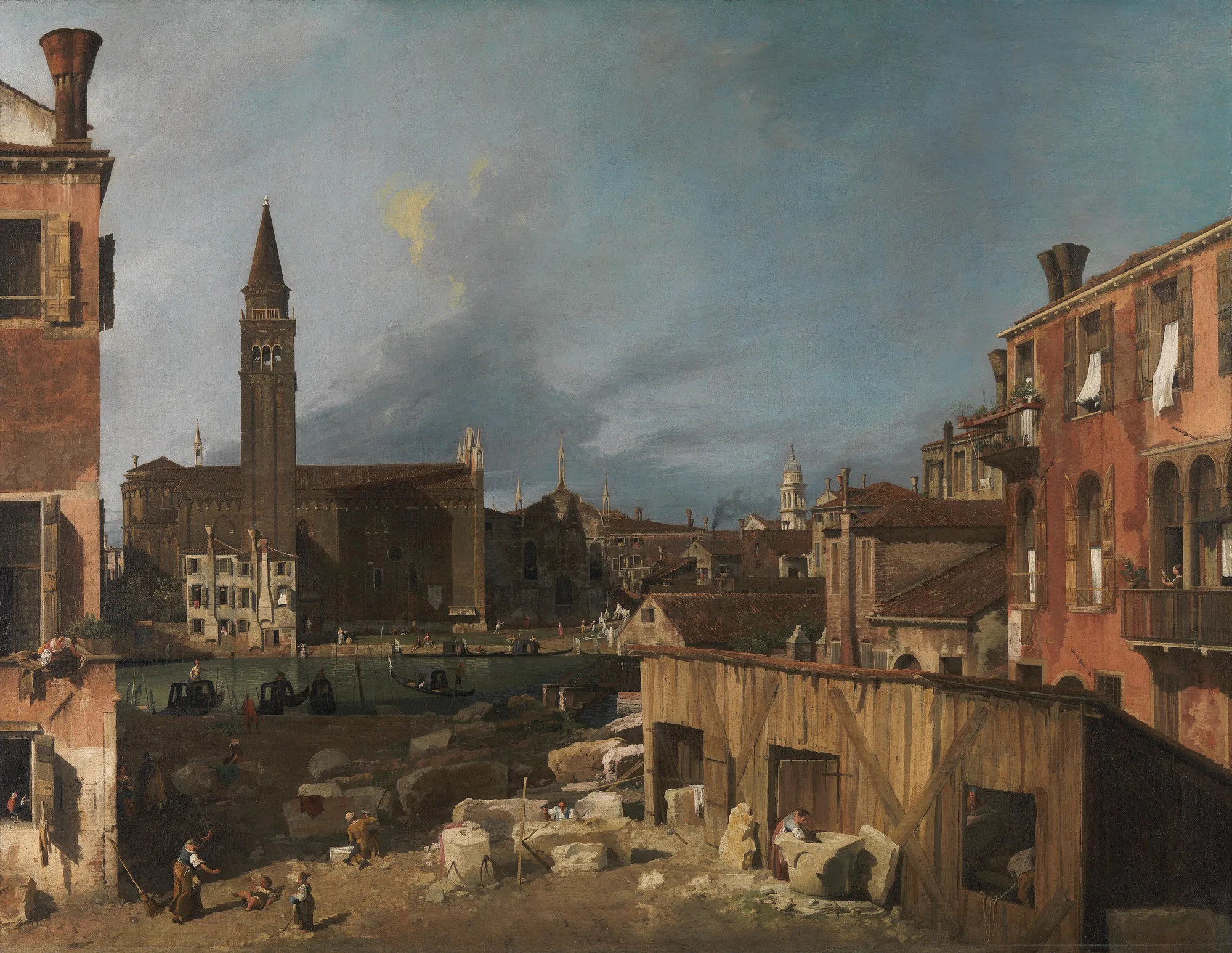
観光名所じゃない!水の都ヴェネツィアの「工事現場」。Not a tourist view! A building site in Venice.
この作品のお話
Story水の都ヴェネツィアの、大運河に面したサン・ヴィダル広場が、教会の工事のための石工の仕事場になっている場面です。手前では職人たちが大きな石を切ったりけずったりし、地面には石くずが散らばっています。運河の向こうには、サンタ・マリア・デッラ・カリタ聖堂と、とがった鐘楼。洗たく物がゆれ、ゴンドラが行きかう、暮らしのにおいがする風景です。
This is Campo San Vidal in Venice, a square by the Grand Canal. Here it has become a stonemason's yard for building work on a church. In the foreground, workers cut and shape big stones, and chips of stone cover the ground. Across the canal stands the church of Santa Maria della Carità with its pointed bell tower. With laundry hanging out and gondolas passing by, it feels like real daily life.
カナレットは、ヴェネツィアの名所を細かく描いた絵で、イギリスの旅行者に大人気になった画家です。ところがこの絵は、有名な観光名所ではなく、ふだんの町の工事現場。若いころの作品で、光と影の強いくらべや、石や木の手ざわりまで伝わる描き方から、彼の最高傑作のひとつとされています。
Canaletto became very popular with British travelers for his detailed views of famous places in Venice. But this painting shows an everyday building site, not a famous sight. It is an early work. With its strong light and shadow, and the feel of stone and wood, it is thought to be one of his very best paintings.
絵の中の鐘楼は、1744年にくずれ落ちてしまいました。聖堂の建物は、のちにヴェネツィアの美術学校と美術館(アカデミア美術館)になります。今は大運河にアカデミア橋がかかり、この景色をそのまま見ることはできません。絵はイギリスの収集家ボーモント卿が持っていたもので、1828年にナショナル・ギャラリーに入りました。
The bell tower in the painting fell down in 1744. Later, the church buildings became Venice's art school and the Accademia Gallery. Today the Accademia Bridge crosses the Grand Canal here, so you cannot see this exact view anymore. The painting once belonged to the British collector Sir George Beaumont, and it entered the National Gallery in 1828.
これはヴェネツィアの広場です。職人たちが大きな石を切っています。水の向こうに、高い鐘楼があります。その塔は1744年に倒れてしまいました!左下を見てください。小さな子どもも転んでいますよ。
This is a square in Venice. Workers are cutting big stones. Across the water, there is a tall bell tower. That tower fell down in 1744! Look at the lower left. A little child fell down, too.
英語のレベルは上の「やさしい/ふつう」で切りかえられます。
えっ!?な裏ネタ
Secrets絵の左にそびえるカリタ聖堂の鐘楼は、1744年に倒れ、塔の前にあった家をこわしてしまいました。この絵は、今はもうない塔の姿を伝える、貴重な記録にもなっています。カナレットは、消えてしまう前の町の姿を残したのです。
The bell tower of the Carità church, on the left, fell in 1744 and destroyed the house in front of it. The painting is now a valuable record of a tower that no longer exists. Canaletto saved a view of the city before it changed.
左下をよく見ると、小さな子どもが転んで、びっくりしておしっこをもらしてしまっています。お母さんがあわてて駆けよっていますね。名所の絵が得意なカナレットですが、こんなほほえましい一瞬もしっかり描きこんでいます。
Look at the lower left. A little child has fallen over and, in surprise, is peeing! His mother is rushing to help. Canaletto was famous for grand views, but he also painted funny little moments like this.
1852年、ナショナル・ギャラリーがこの絵を含む何点かの絵を洗浄すると、「洗いすぎだ」という批判が起こりました。1853年にはイギリス議会の特別委員会が、美術館の洗浄・修復のやり方を調べました。「名画をどう修復するか」は、昔から大論争になるテーマなのです。
In 1852, the National Gallery cleaned several paintings, including this one. Critics said they had been cleaned too much. In 1853, a special committee of the British Parliament looked into how the Gallery cleaned and restored paintings. How to restore great paintings has always caused arguments.
左下の窓辺ではニワトリが鳴いています。右の家のバルコニーでは糸をつむぐ女性、小屋のそばには井戸から水をくむ女性も。大きな絵のすみずみに、ヴェネツィアの人々の小さな物語がつまっています。
A rooster is crowing on a windowsill at the lower left. A woman spins thread on a balcony on the right, and another draws water from a well near the shed. Every corner of this big picture is full of small stories of Venetian life.
ここを見て!
Look Closer1カリタ聖堂の鐘楼Bell tower of the Carità
運河の向こうにそびえる鐘楼。1744年に倒れ、今はもうありません。
The bell tower across the canal. It fell in 1744 and no longer exists.
2転んだ子どもThe fallen child
転んで泣く子どもと、駆けよるお母さん。思わず笑ってしまう一場面です。
A child has fallen and is crying, and his mother rushes over. It is a funny little scene.
3石をけずる職人Stonemasons at work
大きな白い石に向かって作業する職人たち。教会を建てるための石です。
Workers shape big white stones. The stones are for building a church.
4窓の洗たく物Laundry at the window
赤い家の窓に干された白い洗たく物。ヴェネツィアのふだんの暮らしが見えます。
White laundry hangs from a window of the red house. It shows everyday life in Venice.
英語で名画を語ろう
Talk about Art in EnglishAcross the canal, there is a church with a tall bell tower.
運河の向こう側に、高い鐘楼のある教会があります。
💡 across は「〜を渡った向こうに」。across the street(通りの向こうに)も同じ使い方です。
英語で説明すると… Describe it
これはヴェネツィアの運河ぞいの広場です。手前では、職人たちが大きな石を切っています。右側には、木の小屋と、洗たく物を干した赤い家があります。運河の向こうには、高い鐘楼のある教会があります。
This is a square next to a canal in Venice. In the foreground, workers are cutting big stones. On the right, there is a wooden shed and a red house with laundry. Across the canal, there is a church with a tall bell tower.
考えてみよう Think & Talk
- カナレットはなぜ、有名な名所ではなく工事現場を描いたのだと思いますか?Why do you think Canaletto painted a building site instead of a famous place?
- この広場では、どんな音やにおいがすると思いますか?What sounds and smells do you imagine in this square?
この作品の英単語
WordsThe stonemasons are cutting big stones.
石工たちが大きな石を切っています。
A worker carves the stone carefully.
職人がていねいに石を彫っています。
Canaletto painted an everyday scene in Venice.
カナレットはヴェネツィアの日常の風景を描きました。
Gondolas move along the canal.
ゴンドラが運河を進んでいきます。
ミニクイズ
QuizQ. 絵の中の鐘楼は、その後どうなった?What happened to the bell tower in the painting?
1744年にくずれ落ち、塔の前にあった家もこわしました。
It fell in 1744 and destroyed the house in front of it.
ウソ?ホント? この絵には、有名な観光名所サン・マルコ広場が描かれている。This painting shows the famous Piazza San Marco.
描かれているのは、工事のための石工の仕事場になったサン・ヴィダル広場です。
It shows Campo San Vidal, used as a stonemason's yard.
ウソ?ホント? 左下には、転んだ子どもが描かれている。A child who has fallen over is painted at the lower left.
お母さんがあわてて駆けよっています。
His mother is rushing to help him.
 画像の出典とライセンス / Image credit
- PDCanaletto - The Stonemason's Yard.jpg(Wikimedia Commons)
ライセンス:Public domain(パブリックドメイン)/作者・撮影者の表記:Giovanni Antonio Canal
この作品は、作者の死後長い年月がたち著作権の保護期間が終わった「パブリックドメイン」の作品です。画像は平面の作品を忠実に写したもので、新しい著作権は生じません(Wikimedia Commons の PD-Art の考え方)。 所蔵:ナショナル・ギャラリー(ロンドン)(The National Gallery, London)。画像は表示のために縮小・WebP 形式に変換しています。
