

 ワークシート
 ぬりえ
 迷路
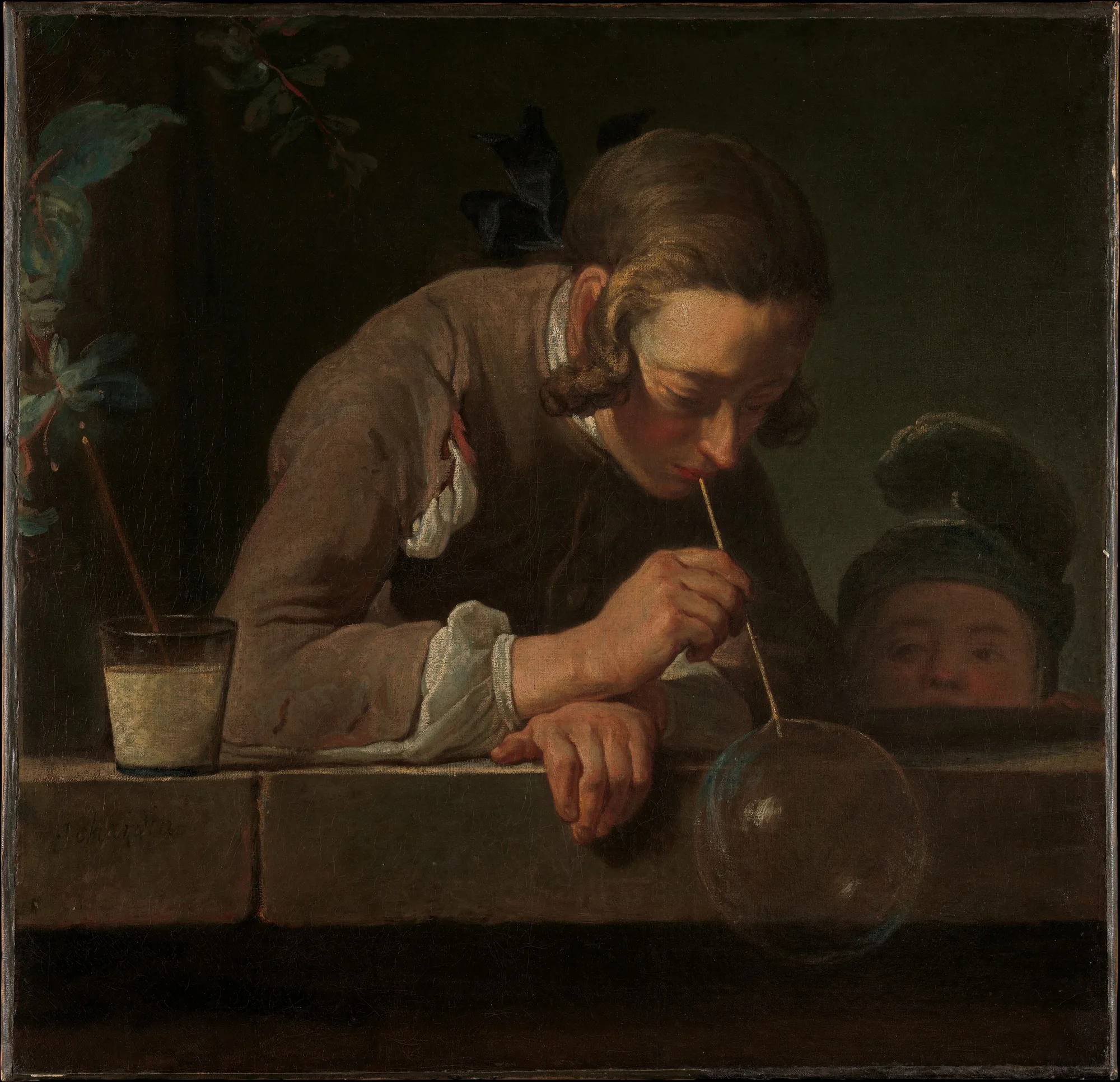
今にも割れそうなシャボン玉。見ている私たちも息を止めてしまう!A bubble about to pop. You'll hold your breath, too!
この作品のお話
Story窓の石の手すりにひじをついて、若者がストローでシャボン玉をふくらませています。シャボン玉は今にも割れそうなほど大きくなり、うしろでは小さな子どもが手すりから顔を出して、じっと見つめています。左には石けん水の入ったコップ。多くの人が子どものころに親しんだ遊びの、息をのむ一瞬です。
A young man leans on a stone window ledge and blows a soap bubble through a straw. The bubble has grown so big that it might pop at any moment. Behind him, a small child peeks over the ledge and watches closely. On the left is a glass of soapy water. It is a breathless moment from a game many people enjoyed as children.
シャルダンは18世紀フランスの画家で、はじめは果物や台所道具などの静物画で知られていました。1730年代から、こうした人物の出てくる日常の場面も描くようになります。シャボン玉は、ヨーロッパでは「人生ははかなく、すぐに消える」ことの象徴でもありました。シャルダンが教訓をこめたのかはわかりませんが、楽しい遊びの絵が、命のはかなさを思い出させることもあったのです。
Chardin was an 18th-century French painter. At first, he was known for still lifes of fruit and kitchen objects. In the 1730s, he began to paint everyday scenes with people, like this one. In Europe, soap bubbles were also a symbol of how short and fragile life is. We do not know if Chardin meant to teach a lesson, but a happy game could also remind people that life is short.
シャルダンはこの場面を、少なくとも3つの版で描きました。ニューヨークのメトロポリタン美術館、ロサンゼルス・カウンティ美術館、ワシントンのナショナル・ギャラリーにあります。シャボン玉はその後も人気のテーマとなり、19世紀にはフランスのマネやイギリスのミレイもシャボン玉を吹く子どもを描いています。
Chardin painted at least three versions of this scene. They are now in the Metropolitan Museum of Art in New York, the Los Angeles County Museum of Art and the National Gallery of Art in Washington. Soap bubbles stayed a popular subject. In the 19th century, Manet in France and Millais in Britain also painted children blowing bubbles.
若い男の人がシャボン玉をふいています。シャボン玉はとても大きいです。小さな子どもが、うしろからそれを見ています。もうすぐ割れるかな?シャルダンは、この楽しい一瞬を少なくとも3回描きました!
A young man blows a soap bubble. The bubble is very big. A little child watches it from behind. Will it pop soon? Chardin painted this happy moment at least three times!
英語のレベルは上の「やさしい/ふつう」で切りかえられます。
えっ!?な裏ネタ
Secrets1886年、イギリスの画家ミレイが孫をモデルに描いた『シャボン玉』は、石けん会社ペアーズに買われ、広告に使われて大ヒットしました。名画が商品の宣伝に使われた有名な例です。シャルダンの絵の約150年後のことでした。
In 1886, the British painter Millais painted his grandson blowing bubbles. The soap company Pears bought the painting and used it in a very successful ad. It is a famous case of fine art being used to sell a product, about 150 years after Chardin.
ヨーロッパには「ホモ・ブッラ(人間はシャボン玉)」というラテン語の言い回しがあります。命は美しいけれど、あっという間に消えてしまう、という意味です。シャボン玉の絵は、それを思い出させる「ヴァニタス(むなしさ)」の絵でもありました。
There is an old Latin saying in Europe: "Homo bulla" (Man is a bubble). It means life is beautiful but disappears quickly. Paintings of bubbles were also "vanitas" pictures that reminded people of this idea.
シャルダンは「人は絵の具を使うが、描くのは感情でだ」と語ったと伝えられています。神話や歴史の大事件ではなく、ふつうの人のふつうの時間を描いた画家。静かな場面に心がこもって見えるのは、この考えがあったからかもしれません。
Chardin is said to have told another painter, "We use colors, but we paint with feeling." He painted ordinary people in ordinary moments, not myths or great events. Maybe that is why his quiet scenes seem so full of heart.
長編小説『失われた時を求めて』で有名なフランスの作家プルーストは、若いころシャルダンについてのエッセイを書きました。台所の道具やふつうの暮らしの中にも美しさがあることを教えてくれる画家だ、とたたえています。
The French writer Marcel Proust, famous for the novel "In Search of Lost Time," wrote an essay about Chardin when he was young. He praised Chardin for showing that there is beauty even in kitchen tools and ordinary life.
ここを見て!
Look Closer1大きなシャボン玉The big bubble
すき通ったシャボン玉。表面に光が映り、今にも割れそうな薄さが伝わってきます。
A clear bubble. Light shines on its surface, and you can feel how thin it is.
2のぞきこむ子どもThe peeking child
手すりの向こうから顔の上半分をのぞかせて、シャボン玉を見つめる小さな子。わくわくが伝わります。
A small child peeks over the ledge and watches the bubble. You can feel his excitement.
3石けん水のコップGlass of soapy water
白くにごった石けん水と、もう1本のストロー。シャボン玉はここから生まれます。
Cloudy soapy water and another straw. This is where the bubbles come from.
英語で名画を語ろう
Talk about Art in EnglishA young man is blowing bubbles at the window.
若者が窓辺でシャボン玉をふいています。
💡 blow は「息をふく」。blow out the candles(ろうそくをふき消す)も同じ動詞です。
英語で説明すると… Describe it
若い男性が、石の窓の手すりにもたれています。ストローで大きなシャボン玉をふくらませています。左側には、石けん水の入ったコップがあります。彼のうしろでは、小さな子どもがシャボン玉を見ています。
A young man is leaning on a stone window ledge. He is blowing a big soap bubble through a straw. On the left, there is a glass of soapy water. Behind him, a small child is watching the bubble.
考えてみよう Think & Talk
- このシャボン玉は、このあとどうなると思いますか?What do you think will happen to the bubble next?
- シャルダンはなぜ、こんなにシンプルな一瞬を描いたのだと思いますか?Why do you think Chardin painted such a simple moment?
この作品の英単語
WordsThe bubble is getting bigger and bigger.
シャボン玉はどんどん大きくなっています。
He blows gently through the straw.
彼はストローにそっと息をふきこみます。
A soap bubble is very fragile.
シャボン玉はとてもこわれやすいものです。
A little child peeks over the ledge.
小さな子が手すりの向こうからのぞいています。
ミニクイズ
QuizQ. シャボン玉は、昔のヨーロッパで何の象徴だった?In old Europe, what did soap bubbles stand for?
美しいけれどすぐ消えるシャボン玉は、「はかない命」の象徴でした。
Bubbles are beautiful but disappear quickly, so they stood for the shortness of life.
ウソ?ホント? シャルダンは、この場面を1枚だけ描いた。Chardin painted this scene only once.
少なくとも3つの版があり、アメリカの3つの美術館にあります。
There are at least three versions, in three museums in the United States.
ウソ?ホント? うしろには、シャボン玉を見つめる小さな子どもがいる。A small child behind the young man is watching the bubble.
手すりの向こうから顔をのぞかせて、シャボン玉を見つめています。
He peeks over the ledge and watches the bubble.
 画像の出典とライセンス / Image credit
- CC0Soap Bubbles MET DP356133.jpg(Wikimedia Commons)
ライセンス:CC0(パブリックドメイン提供)/作者・撮影者の表記:Jean-Baptiste-Siméon Chardin/提供元:This file was donated to Wikimedia Commons as part of a project by the Metropolitan Museum of Art. See the Image and Data Resources Open Access Policy
この作品は、作者の死後長い年月がたち著作権の保護期間が終わった「パブリックドメイン」の作品です。画像は平面の作品を忠実に写したもので、新しい著作権は生じません(Wikimedia Commons の PD-Art の考え方)。 所蔵:メトロポリタン美術館(The Metropolitan Museum of Art)。画像は表示のために縮小・WebP 形式に変換しています。
