 ワークシート
 ぬりえ
 迷路
白い服で、ぽつんと立つ道化。2024年に名前が変わった名画!A lonely clown in white, whose painting got a new name in 2024!
この作品のお話
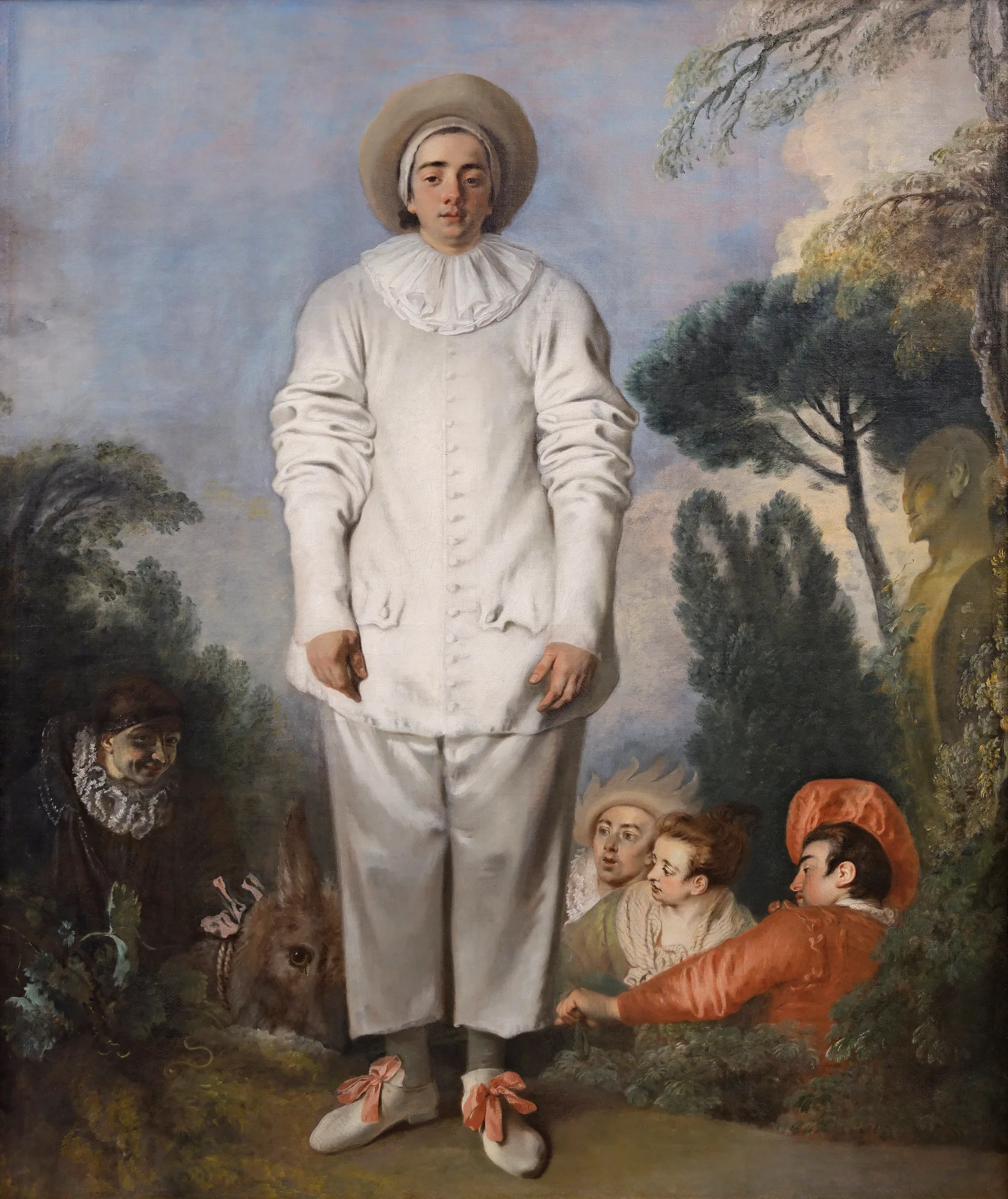
Story白いだぶだぶの服に大きな丸い帽子をかぶった道化役者ピエロが、腕をだらりと下げ、正面を向いて立っています。足もとの丘のかげには、ロバに乗った「博士」や赤い服の男など、イタリア喜劇の仲間たちがいて、楽しそうに話しています。でもピエロだけは無表情で、どこかさみしげ。ヴァトーが描いた、ただ一つの等身大の人物像です。
Pierrot, a clown in loose white clothes and a big round hat, stands facing us with his arms hanging down. Below him, behind the hill, other actors from Italian comedy chat happily, such as the "Doctor" on a donkey and a man in red. But Pierrot has no expression. He looks a little lonely. This is the only life-size figure Watteau ever painted.
ピエロは、17〜18世紀のヨーロッパで大人気だったイタリア喜劇「コメディア・デラルテ」の登場人物で、いつもからかわれる、まじめでうぶな役でした。この大きな絵が何のために描かれたのかは、わかっていません。役者をやめたベローニという人物の店の看板だった、という説もあります。18世紀の記録にまったく出てこない、なぞの多い作品です。
Pierrot was a character in the commedia dell'arte, a kind of Italian comedy that was very popular in Europe in the 17th and 18th centuries. He was a serious, innocent character who was always teased. No one knows why this big painting was made. One idea is that it was a sign for a shop run by Belloni, a retired actor. It does not appear in any 18th-century records, so it is full of mysteries.
19世紀には、似た役柄の「ジル」とまちがえられ、長いあいだ『ジル』という題名で呼ばれてきました。2024年、ルーヴル美術館は大がかりな修復を終え、題名を本来の『ピエロ』に改めました。黄ばんだニスが取りのぞかれ、白い服の微妙な色合いや、空の青さがよみがえりました。
In the 19th century, people confused him with a similar character called Gilles, so the painting was called "Gilles" for a long time. In 2024, the Louvre finished a major restoration and changed the title back to "Pierrot." Yellow varnish was removed, and the delicate colors of the white costume and the blue of the sky came back.
ピエロは白い服の道化です。とても静かに立っています。うしろでは仲間たちが笑って話しています。でもピエロは笑いません。どうしてこんなに静かなのでしょう?だれにもわかりません!
Pierrot is a clown in white clothes. He stands very still. His friends laugh and talk behind him. But Pierrot does not smile. Why is he so quiet? Nobody knows!
英語のレベルは上の「やさしい/ふつう」で切りかえられます。
えっ!?な裏ネタ
Secrets19世紀のはじめ、この絵を売ろうとした画商は、なかなか買い手がつかず、絵の下にチョークで「あなたに気に入ってもらえたら、ピエロはどんなに幸せでしょう」と書いたと伝えられています。そして、ナポレオンの美術館長ヴィヴァン・ドノンが150フランで買いました。
In the early 19th century, an art dealer could not sell this painting. It is said he wrote in chalk at the bottom: "How happy Pierrot would be if he could please you!" Then Vivant Denon, Napoleon's museum director, bought it for 150 francs.
その後、絵は何人もの手をわたり、そのたびに値段が上がっていきました。そして19世紀なかば、医師で収集家のルイ・ラ・カーズのものになります。ラ・カーズは1869年、自分のコレクションをルーヴル美術館に遺し、この絵も美術館の宝になりました。
The painting then changed hands several times, and its price kept rising. By the mid-19th century, it belonged to the doctor and collector Louis La Caze. In 1869, he left his collection to the Louvre, and this painting became one of the museum's treasures.
ピエロの左下では、ロバがこちらをじっと見つめているように見えます。にぎやかな仲間たちとはちがう、静かな目。ピエロの気持ちをいちばんわかっているのは、このロバかもしれません。
At Pierrot's lower left, a donkey seems to stare out at us. Its quiet eye is different from the noisy actors around it. Maybe the donkey understands Pierrot best.
右はしの木かげには、ギリシャ神話の牧神(サテュロス)の石像が立ち、にやりと笑っているように見えます。まじめなピエロと、いたずら好きの牧神。ヴァトーは、こんな小さな対比でも物語をつくっています。
Under the trees on the far right stands a stone statue of a satyr, a playful creature from Greek myth. It seems to grin. Serious Pierrot and the mischievous satyr: Watteau tells a story even with small contrasts like this.
ここを見て!
Look Closer1ピエロの顔Pierrot's face
ほおを少し赤らめ、まっすぐこちらを見る顔。笑っても泣いてもいない、ふしぎな表情です。
His cheeks are a little pink, and he looks straight at us. He is not laughing or crying. It is a mysterious face.
2ロバThe donkey
しげみのかげから顔を出すロバ。静かな目でこちらを見ています。
A donkey's head appears from the bushes. It looks at us with a quiet eye.
3ロバに乗った博士The Doctor on the donkey
黒い服とひだ襟の「博士」。イタリア喜劇でおなじみの、ものしり顔の役です。
The "Doctor" in black with a ruffled collar. He is a know-it-all character from Italian comedy.
4牧神の石像Statue of a satyr
木かげに立つ牧神の像。にやりと笑って、ピエロを見守っているようです。
A satyr statue stands under the trees. It seems to grin as it watches Pierrot.
英語で名画を語ろう
Talk about Art in EnglishPierrot stands out in his bright white costume.
ピエロは、明るい白い衣装でひときわ目立っています。
💡 out は「外へ」。まわりから飛び出して見えるイメージ。stand out from the crowd も定番です。
英語で説明すると… Describe it
白い衣装の男性が、まん中に立っています。大きな丸い帽子と、ピンクのリボンがついた白い靴を身につけています。うしろには、木々と青空があります。足もとのしげみには、ほかの役者たちとロバがいます。
A man in a white costume is standing in the middle. He is wearing a big round hat and white shoes with pink bows. Behind him, there are trees and a blue sky. Below him, other actors and a donkey are in the bushes.
考えてみよう Think & Talk
- ピエロはどんな気持ちだと思いますか?それはなぜですか?How do you think Pierrot is feeling? Why?
- ヴァトーはなぜ、ピエロをこんなに大きく描いたのだと思いますか?Why do you think Watteau painted Pierrot so big?
この作品の英単語
WordsThe clown wears loose white clothes.
道化はだぶだぶの白い服を着ています。
Pierrot looks lonely in the crowd.
ピエロは人々の中でさみしそうに見えます。
The other actors often tease Pierrot.
ほかの役者たちは、よくピエロをからかいます。
His white costume shines in the light.
彼の白い衣装は光の中でかがやいています。
ミニクイズ
QuizQ. 2024年の修復のあと、この絵の題名はどうなった?What happened to the title after the 2024 restoration?
似た役の「ジル」とまちがえられていたので、本来の「ピエロ」に戻されました。
He had been confused with Gilles, so the painting got its proper name, "Pierrot," back.
ウソ?ホント? この絵は、ヴァトーが描いたただ一つの等身大の人物像だ。This is the only life-size figure Watteau painted.
高さ約1.8メートル。ヴァトーの絵はふつう、もっと小さな人物ばかりです。
It is about 1.8 meters tall. Watteau usually painted much smaller figures.
ウソ?ホント? この絵は、描かれた当時の記録にくわしく残っている。Records from Watteau's time describe this painting in detail.
18世紀の記録にはまったく出てこず、何のための絵かもなぞです。
It does not appear in any 18th-century records, and its purpose is a mystery.
 画像の出典とライセンス / Image credit
- PDPierrot - Antoine Watteau - Musée du Louvre Peintures MI 1121 - après restauration 2024.jpg(Wikimedia Commons)
ライセンス:Public domain(パブリックドメイン)/作者・撮影者の表記:Jean-Antoine Watteau/提供元:photo Shonagon 2026-01-02
この作品は、作者の死後長い年月がたち著作権の保護期間が終わった「パブリックドメイン」の作品です。画像は平面の作品を忠実に写したもので、新しい著作権は生じません(Wikimedia Commons の PD-Art の考え方)。 所蔵:ルーヴル美術館(Musée du Louvre)。画像は表示のために縮小・WebP 形式に変換しています。